


India achieved a major milestone in its defence modernisation programme when the RudraM-II air-to-surface missile was flight-tested. The successful trials on 2 June 2006 demonstrated the missile’s capability for precision attack, the effectiveness of the missile’s guidance system and the missile’s match with the air-launch platform.
These trials are a further step towards the realisation of Aatmanirbhar Bharat, a drive for self-reliance for high-end defence technology in India.
DRDO, built with industry, has established the RudraM-II to provide the IAF with the capability to attack high-value targets with precision at a standoff range from enemy air-defence systems.
ALSO READ- Agni-6 Missile: India’s Next ICBM Giant Redefining Nuclear Defence
What Is RudraM-II?
RudraM-II Indian air-to-surface missile (AGM-type) suitable for launch from combat aircraft. The missile is being developed to meet the Indian Armed Forces’ advanced anti-ship strike requirement with the supreme objectives of increased range and high precision capability.
This is an important addition to the missile technologies indigenously developed in India and adds to India’s long-term defence preparedness.
Information on the Flight Tests-
The updated flight tests were jointly carried out by the DRDO with the Indian Air Force, with instrumentation and monitoring support by the Integrated Test Range (ITR).
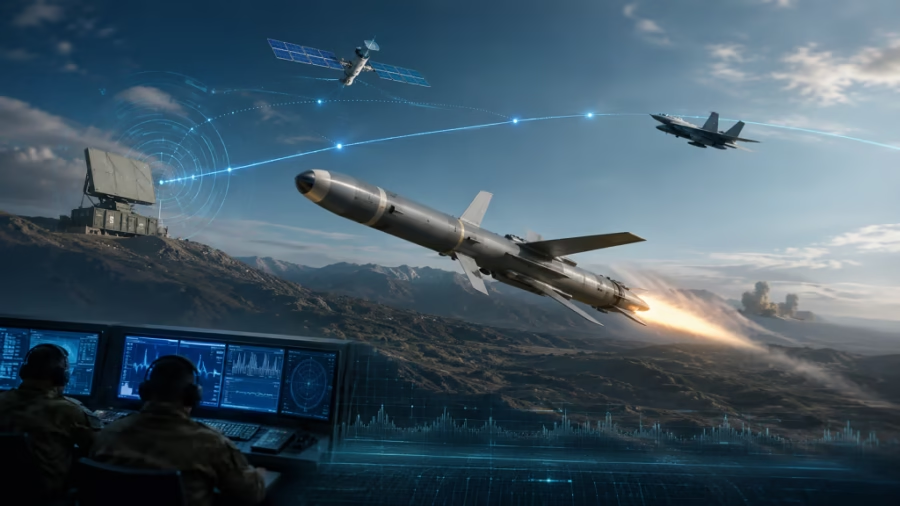
Important Features of the Tests:
- Air launched from a military aircraft in a severe operational environment.
- Verification of missile separation from the launching platform.
- Propulsion system performance must meet requirements after release.
- Navigation and guidance systems checked.
- Collection of telemetry &flight performance data.
- Secures proper target designation.
From all the data gathered, it appears that the missile carried out all mission objectives, ready to execute what they were meant to in a severe operational environment.
Technical Objectives Achieved-
Contemporary missile systems are extensively tested under simulated real-life conditions. Several parameters are tested, including but not limited to, during RudraM-II trials.
Separation Dynamics:
Perhaps the most vital feature of an air-launched missile is safe separation from the aircraft. Engineers tested the missile’s clean disengagement and subsequent stable flight.
Successful separation during mission flight ensures the safety of the missile and the launch aircraft.
Guidance and Navigation Performance:
All tests validated the navigation and guidance systems of the missile through the flight profile. Proper guidance allows a missile to hit its target while on the proper course.
The successful trials demonstrated that the onboard navigational and control systems were dependable under operational conditions.
Propulsion System Validation:
The missile propulsion system functioned as designed upon launch. This steady generation of thrust is important in keeping the missile on course and gaining mission objectives.
The propulsion system was successfully ignited and operated, which further assisted in the achievement of the mission objectives.
Telemetry and Data Collection:
The missile was monitored by several telemetry and tracking systems during the entire test flight. Engineers gathered useful data, including:
- Flight behaviour
- Management of the guidance operation
- System reliability
- Structural response
Accuracy of Mission plays the most important factor in terms of this report, as the closer the aircraft gets to its target, the better the results will be. This was due to the damage being calculated according to how many aircraft dropped their bombs closest to the target.
This will assist in future upgrades and drive performance enhancements and production readiness activities.
Role of DRDO and Industry Partners-
RudraM-II programme also involved different DRDO laboratories, defence PSEs and private participants.
Important contributors consist of:
- Research Centre Imarat (RCI)
- Defence Research and Development Laboratory (DRDL)
- High Energy Materials Research Laboratory (HEMRL)
- Armament Research and Development Establishment (ARDE)
- Integrated Test Range (ITR)
- Hindustan Aeronautics Limited (HAL)
More strengths and opportunities to the programme consist of the involvement of Development-cum-Production Partners (DcPPs) and several private-sector suppliers for manufacturing, testing and quality control.
Strategic Importance of RudraM-II-

The successful validation of RudraM-II thus has important consequences for Indian defence.
Enhanced Precision Strike Capability:
The missile offers the IAF a modern stand-off weapon for attacking high-value targets while minimising the vulnerability of its aircraft to enemy air defence.
Strengthening Self-Reliance:
The programme is geared toward meeting an Indian objective of cutting down on imported defence technology by creating an advanced indigenous weapon system.
Boosting Defence Manufacturing:
The project is helping to nurture the domestic defence-industry ecosystem in India by promoting joint efforts of government laboratories, public-sector enterprises and private companies.
Export Potential:
As indigenous defence technologies are perfected, India might well establish a foothold in the defence markets of the world with successful systems like RudraM-II, though, of course, this is entirely subject to policies and interests of the Government.
Operational Advantages-
The successful development of RudraM-II offers several operational benefits.
Airborne Flexibility:
The missile can be launched from combat aircraft under varying operational conditions, providing commanders with greater tactical flexibility.
High Accuracy:
Precision-guided weapons help improve mission effectiveness while reducing the risk of unintended damage.
Network-Centric Operations:
Future integration with advanced combat platforms and network-enabled warfare systems could further enhance the missile’s operational effectiveness.
Multi-Mission Potential:
The missile’s capabilities may support a variety of mission profiles, including engagement of strategic targets, critical infrastructure, and other high-priority objectives.
Next Steps in the Programme-
Following the successful flight tests, engineers will analyse the collected telemetry and performance data in detail. Future activities are expected to include:
- Additional validation trials.
- Software and hardware refinements.
- Production-readiness assessments.
- Quality assurance verification.
- Integration with operational aircraft platforms.
- User evaluation and induction planning.
These steps are essential for transitioning the missile from developmental testing to operational deployment.
Conclusion-
The success of the vertical flight tests of RudraM-II is a milestone in India’s indigenous missile-development history. Setting benchmarks for several developments such as mid-effort guidance, powerpacks, and aircraft launch integration, the trials have proved the advancing state-of-the-art in India‘s complex field of precision strikes.
The programme also demonstrates the value of partnership between DRDO labs, the Indian Air Force, public-sector companies, and private industry partners. As the programme moves toward operational induction, the RudraM-II should be an important contributor to enhancing the nation’s air-launched strike strength, security and the nation’s indigenous defence technology ambitions.