
In early June 2026, a Comprehensive Economic Partnership Agreement (CEPA) pact was imposed between India and Oman, which was signed on December 25, during PM Modi’s visit to Muscat. It went into effect in June 2026, though the visit happened later. This is Oman’s first such deal since its pact with the US back in 2006. The agreement was supposed to boost their trade, but it’s also a major step for both economies in the Gulf region during a time when U.S.-Iran tensions are prevailing. It includes rules for trading goods and services, investments, and worker mobility, which help the numerous Indian immigrants in Oman, offering them benefits in labour matters. Additionally, it positions Oman as a key entry point for India to reach the GCC and East Africa. Read the article further to get a thorough overview of the agreement and how it will enhance the Indian economy on the global front.
ALSO READ- RudraM-II Flight-Tests: Boost India’s Precision Strike Power
Historical Outlook of India-Oman Economic Ties-
- Before the agreement was signed, the India-Oman relationship had strengthened over time with connections based on economics, culture, and friendships between folks from both nations.
- Oman counts as one of India’s top GCC partners and has been cooperative in areas like trade, energy, defence, and investments.
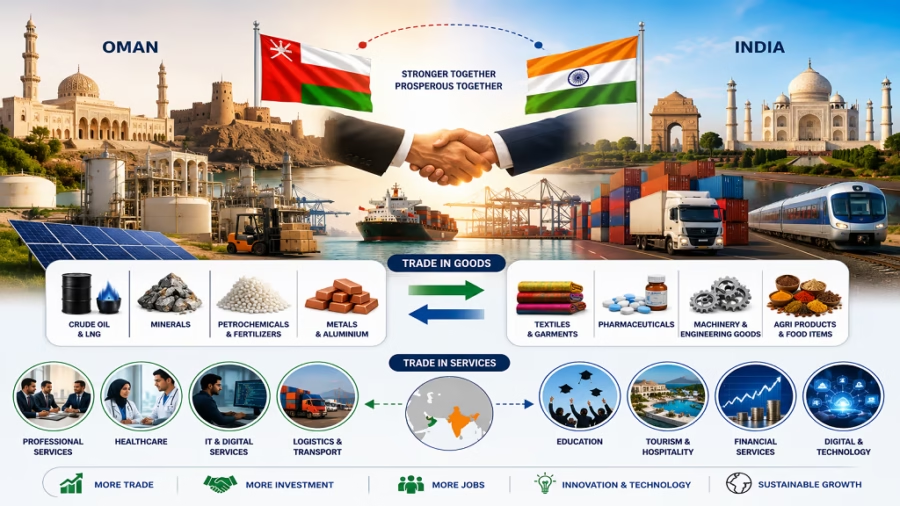
- India buys tangible goods such as oil, gas, and fertiliser from Oman, and in return, ships them food, clothes, and medicines. Many Indian firms operate in Oman too, where Indians make up the biggest group of immigrants.
- For centuries, these nations have been old and the second-biggest trading partner in the Gulf region in exporting and importing with old dhows, ferrying goods and mingling cultures over time.
- The new CEPA agreement of 2026 is part of India’s strategic plan to boost West Asian trade, much like its deal with the UAE.

What is CEPA?
CEPA, or the Comprehensive Economic Partnership Agreement, is an official agreement between India and Oman signed on PM Modi’s foreign visit on 18 Dec, 2025, in Muscat. Recently, the pact was enforced on June 1, 2026, slashing import duties. Now, 99.38% of India’s shipments head to Oman tax-free – way up from 15.3%. Moreover, 98.08% of Oman’s tariff routes are open for Indian imports. The pact includes the exchange of tangible goods and services, FDIs, and policies, boosting sectors like pharmaceuticals, engineering, textiles, devices, and automobiles.
- Oman is a strategic trading partner in the UAE and a crucial gateway for Indian leather, gems, and agricultural products into West Asia and Africa.
- For India, it marks the second CEPA with a GCC member, following the UAE and benefits the Indian workers with favourable immigrant policies.
- The agreement enhances the intra-company transfers to between 20% and 50%, and contract workers can now stay for up to two years rather than just 90 days.
- In 2024-25, trade between India and Oman hit $10.5 billion, with exports at $4.06 billion and imports at $6.5 billion.
- As per Commerce Minister Piyush Goyal, this CEPA opens doors for growth, especially for students, artisans, women, farmers, fishermen, and small businesses. Additionally, Prime Minister Modi says it will create jobs and enhance prosperity for both countries.

Objectives of Signing the Bilateral Agreement-
The main objective of the enforcement of the Comprehensive Economic Partnership Agreement (CEPA) 2026 will probably be to cut tariffs on different goods and services for import and export.
- This means Indian exporters sell more textiles, drugs, machinery, foods, and chemicals in Oman, economically benefiting them.
- Oman might also export more energy products, minerals, and industrial materials to India, which could boost their sales back home.
- With the prevailing geopolitical tensions, like the US-Iran conflict, causing shipping problems in the Strait of Hormuz, India can use this agreement to find different routes for trade.
- By tying its economy more closely to Oman, India gets a backup plan to keep its trade flowing and protect its supply chains from risks in Hormuz.
Advantages of India-Oman CEPA-
Here are some advantages listed on the enforcement of the bilateral agreement signed between India and Oman:
- Based on Investments: The agreement will likely have rules to push money flowing between the countries. Indian firms could look into Oman’s special zones, ports, and green projects. Meanwhile, Omanis could check out India’s expanding infra, manufacturing, and tech industries.
- Energy Partners: Energy is a big part of the India-Oman connection. Oman sells more crude oil and LNG to India and can do more through the Comprehensive Economic Partnership Agreement (CEPA), and there is an opportunity to partner on renewables and clean tech.
- Logistics Assistance: Oman’s geographical location between Asia, Africa, and the Middle East is key for logistics. Working together on ports, shipping, and transport could boost regional links and expand trade.
CEPA Benefits to India: India-Oman CEPA 2026 is an advantage to both nations as it gives better access to Oman’s market and beyond.
- India can sell more drugs, clothes, machines, crops, technology, minerals and provide human resources for facilitating tech services.
- It strengthens energy ties, ensuring India gets secure supplies. India’s strengths in IT, healthcare, education, and finance make it a significant bilateral deal on the global stage. It allows Indian marketers easier access to Oman’s market, and service providers could grow and help Oman develop.
- Infrastructure and logistics, tourism and hospitality projects are other aspects that can benefit India to get a boost from increased investment and align with global supply networks.
- Overall, CEPA aligns with India’s plan to strengthen its economy in the Gulf, which is an area vital for trade and energy needs.
CEPA Benefits to Oman: The CEPA 2026 deal could really push Oman forward and help diversify trade with the exchange of goods, services and culture that is crucial for overall economic development.
- Some key advantages are more foreign investment from India, access to a huge consumer market of food, textiles and spices, and an expansion of non-oil exports.
- Also, it will aid in developing their industrial and logistics sectors, creating jobs and transferring tech know-how.
- The pact will boost their involvement in regional value chains along with the induction of Indian skills in IT, healthcare, education, and manufacturing.
- Involvement of Indian products and human force can assist Oman in being better positioned to reach its long-term targets under Vision 2040.
Challenges to CEPA-
Despite the promising prospects mentioned in CEPA, negotiating a comprehensive trade agreement still brings several challenges for both nations:
- Both countries have to strike a balance between protecting sensitive sectors and increasing market access. Figuring out how much liberalisation to handle without harming domestic industries isn’t easy.
- Different rules and standards of both nations can really slow things down. The protocols and regulations must align, which is required for CEPA’s success.
- Many industries might struggle with increased competition once some trade barriers drop. To help them adjust, governments may need to pitch in with various support programs and initiatives to assist the ventures.
- Lastly, just having a solid CEPA isn’t enough, as the main issue is in its implementation, proper monitoring, and good dispute resolution systems that satisfy the participants, and the deal works as intended.