
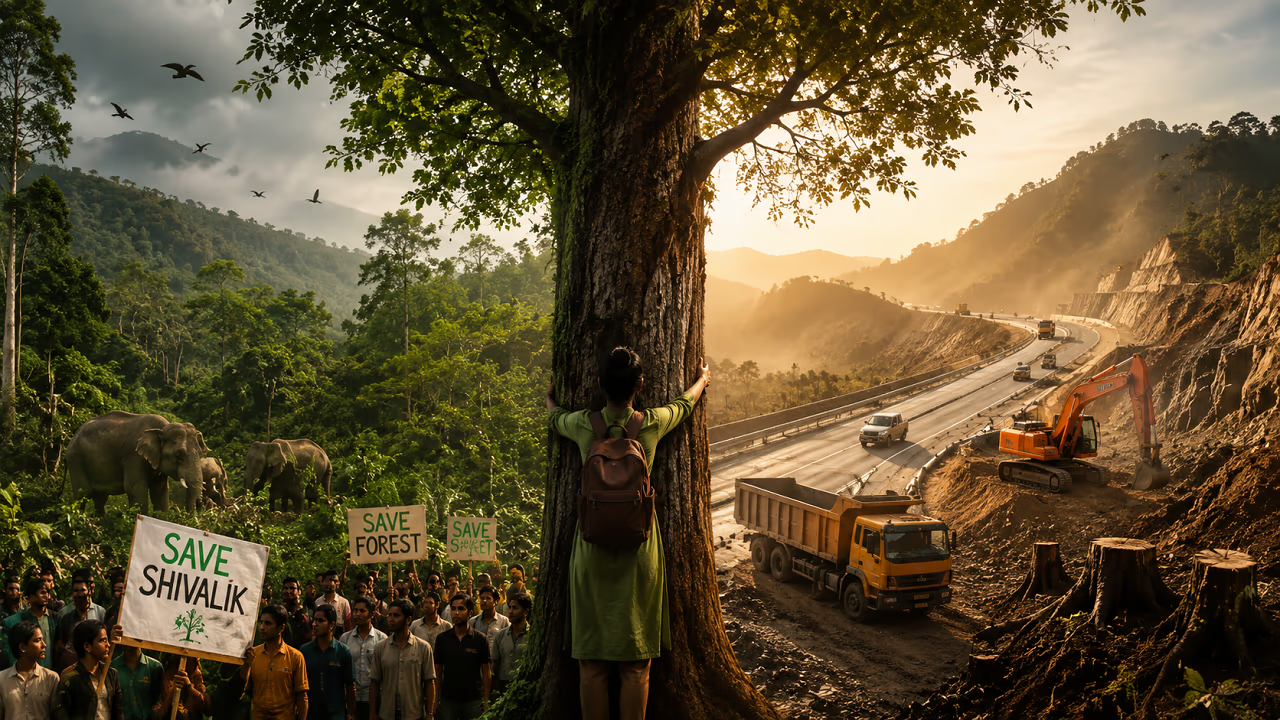
In 2026, the Save Shivalik Protest turned out to be one of the most widespread environmental movements in India. Thousands of inhabitants, students, environmentalists and civil society organisations gathered against the cutting down of 4,369 trees along the widening of the Bhaniyawala-Jolly Grant-Rishikesh section of National Highway-7 in Uttarakhand.
The movement has brought back memories of the Chipko Movement. Protesters hug trees, holding dharnas and raising slogans for sustainable alternatives rather than mass destruction.
This has become a national issue balancing road construction with protecting the environment.
ALSO READ- What Is Kimi K3? China AI Model Domination Over OpenAI
Why Is the Save Shivalik Protest in the News?
This controversy is between a 19-20 km highway widening project from Dehradun, Jolly Grant Airport to Rishikesh.
According to project plans:
- 4,369 trees were targeted for removal.
- It was suggested that 754 trees could be transplanted.
- Around 3,605 trees were to be cut down.
- Approximately 400 trees had already been cut down before the government intervened.
The environmentalists are also opposed to the project as it passes through the ecologically fragile Shivalik forests, which happen to be a vital elephant corridor linking it to the Rajaji landscape.
The protests grew louder when the villagers claimed that the mature forests could not be substituted by timely plantation through transplantation.
Background: The 2025 Uttarakhand High Court Order-
The current movement came out of the legal cases initiated many years ago.
In March 2025, the Uttarakhand High Court ordered a stay on the felling of close to 3,000 trees on hearing a Public Interest Litigation (PIL) filed by Dehradun resident Renu Pal.
Complained that road widening would prevent elephants from passing through the Shivalik Elephant Reserve.
The High Court ordered the government to provide all statutory permissions before the commencement of further felling, while reemphasising the ecological significance of the area.
What Triggered the 2026 Protests?
Public anger intensified quickly when tree cutting, which had been previously approved, was undertaken again.
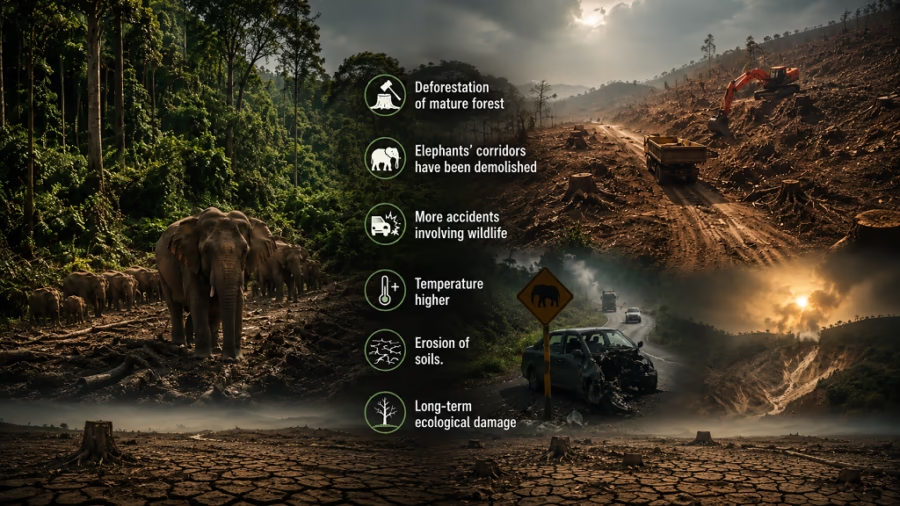
Residents feared:
- Deforestation of mature forest
- Elephants’ corridors have been demolished
- More accidents involving wildlife
- Temperature enhancement
- Erosion of soil
- Long-term ecological damage
Chanting slogans and hugging trees, hundreds of demonstrators at Saat Mod aimed to prevent trees from being cut down by block saws, and appeared to be imitating the Chipko movement.
Outcomes of the Save Shivalik Protest-
The movement has already gained several significant achievements.
Tree Felling Suspended:
Chief Minister Pushkar Singh Dhami announced a ban on cutting trees with immediate effect following an ongoing agitation.
Stakeholder Consultations Ordered:
The government directed officials to consult:
- Native residents
- Rephrased by environmental experts
- Representatives of the public
- Organisations of civil society
- Before making any further decision.
National Attention:
The media was covering the issue nationwide, leading to stress and re-exposing the environmental governance in Himalayan States.
Democratic Participation:
This demonstrated how peaceful participation by the public could affect government policy without heaping rejection on development.
What Are the Future Expectations?
The controversy is far from over. Many possible results are expected.
Alternative Highway Alignment:
Experts may cross-check routes that require fewer trees to be removed.
Wildlife-Friendly Infrastructure:
Authorities could increase the use of:
- Wildlife underpasses
- Elephant crossings
- Eco-bridges
- Wildlife culverts
to decrease habitat fragmentation.
Judicial Oversight:
Future work is likely to remain subject to court directions regarding environmental compliance.
Stronger Environmental Assessments:
The ruling can lead to demands for more stringent environmental impact assessments of development projects within naturally sensitive Himalayan areas.
Development with Sustainability:
For upcoming highway planning, public dispute can be important because it gives more focus on the economic and the ecological.
Previous Nature Conservation Movements in India-
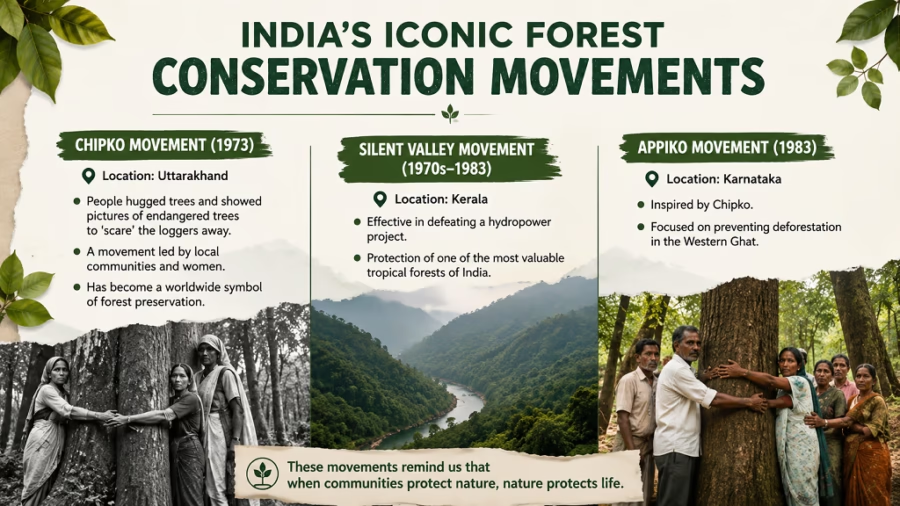
India has witnessed many landmark environmental movements that shaped conservation policies.
Chipko Movement (1973):
- Location: Uttarakhand
- People hugged trees and showed pictures of endangered trees to ‘scare’ the loggers away.
- A movement led by local communities and women.
- Has become a worldwide symbol of forest preservation.
Silent Valley Movement (1970s–1983):
- Location: Kerala
- Effective in defeating a hydropower project.
- Protection of one of the most valuable tropical forests of India.
Appiko Movement (1983):
- Location: Karnataka
- Inspired by Chipko.
- Focused on preventing deforestation in the Western Ghats.
Narmada Bachao Andolan:
- Disagreed with displacement and environmental effects of large dams.
- Stressed sustainability and rehabilitation issues.
Save Aarey Movement:
- Location: Mumbai
- Protested tree felling for metro infrastructure.
- Prompted nationwide discussion about the role of urban forests.
Hasdeo Arand Movement:
- Location: Chhattisgarh
- Residents of the area threatened coal mining in the dense forest.
- Drew attention to biodiversity and tribal polity.
Is the Save Shivalik Protest Against Development?
No. Protesters have, by and large, stressed that they are not campaigning against the road itself.
Instead, they seek:
- Additional road alignments
- Drop in tree loss
- Getting more sustainable in terms of planning the environment
- Ensuring the preservation of elephant habitats
- More public involvement
The movement suggests that infrastructural development must be carried out in a manner that is not detrimental to the long-term ecological needs of this planet.
Difference Between Save Shivalik Protest and BRO’s Project SHIVALIK-
One of the controversial issues is the name Shivalik.
They used two quite separate subjects.
Save Shivalik Protest: A citizen’s environmental movement against large-scale tree felling to widen roads in Uttarakhand.
SHIVALIK: Border Roads Organisation (BRO) project set up in 2009 under the Ministry of Defence for the development & maintenance of strategic roads in the state of Uttarakhand to facilitate the war efforts towards the Indo-China border. It caters to defence logistics, Char Dham connectivity, disaster response & border infrastructure.
The current agitation is not directed at BRO‘s Project SHIVALIK, but the proposed tree-cutting involved with the widening of NH-7 Highway near Rishikesh.
Why the Shivalik Forests Matter-
The Shivalik forests provide several critical ecological services:
- Hunting grounds for elephants, leopards and other wildlife
- Wildlife corridor linking protected areas
- Recharge of groundwater
- Soil conservation
- Storage of carbon
- Regulation of the climate
- Tourism and scenic quality
Reforestation market environmentalists contend that once mature, forests across a watershed cannot be quickly replanted with plantations.
Conclusion-
Shivalik Save Protest was thus the most significant environmental movement in present-day Uttarakhand. Though the construction of the highway provided more connectivity between Dehradun, Jolly Grant Airport and Rishikesh, the uprooting of thousands of trees paved the way for serious questions on development in the fragile Himalayan eco-regions.
This decision to halt felling and redress consultations can be regarded as a step forward. However, its results will be determined not only by the courts, but also by science and the ability of the state to maintain two-way discourse with neighbouring villages. As India pushes forward with its infrastructure projects, the Save Shivalik movement could be a significant milestone in demonstrating how development and conservation need not be mutually exclusive.