
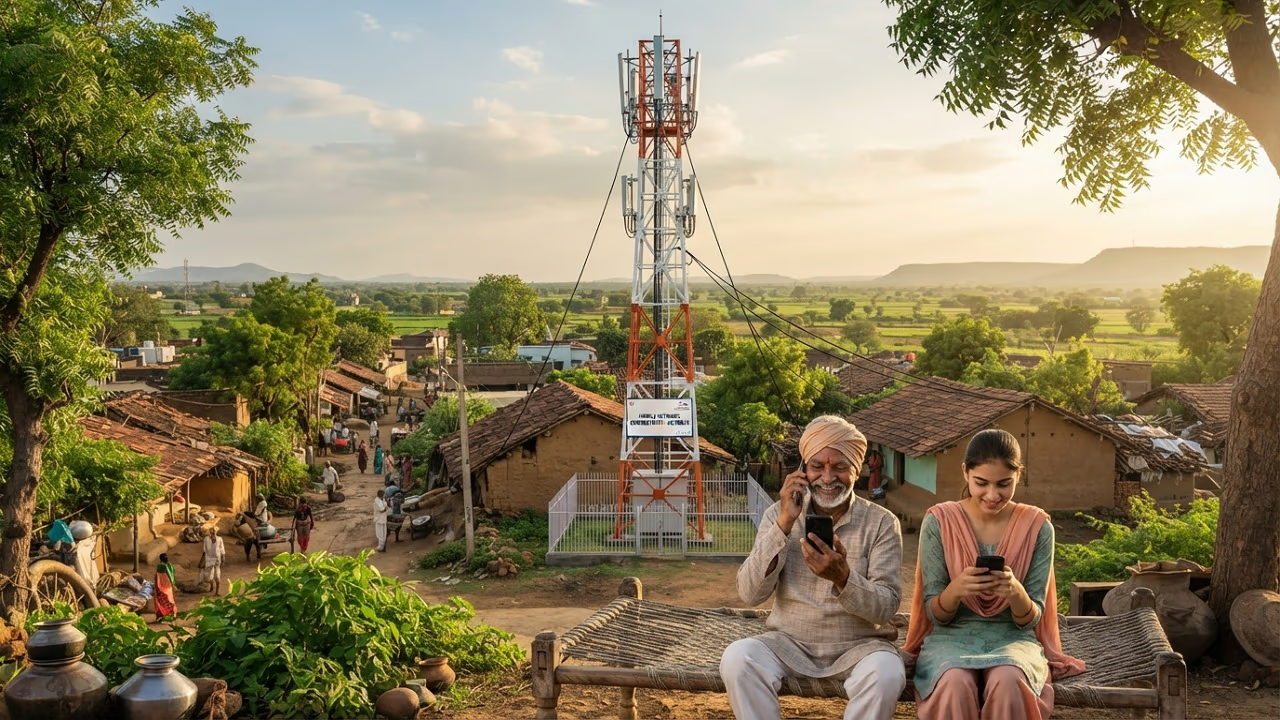
In a major initiative to expand rural net connectivity, the Department of Posts (DoP) and the Telecom Regulatory Authority of India (TRAI) have jointly conducted India‘s largest Village-Level Telecom Network Performance Survey covering more than 5.68 lakh villages to assess the quality of services provided by mobile network providers.
The survey is being undertaken by the Department of Posts under the guidance of Shri Jyotiraditya M. Scindia, Union Minister for Communications and Development of North Eastern Region. The Department of Posts’ extensive presence on the ground will help provide independent field-level data at a time when the country is moving forward with the Digital India mission. The initiative also aims to create awareness among the millions of rural citizens about better telecommunication services.
ALSO READ- Green Oscars 2026
Department of Posts and TRAI Sign Memorandum of Understanding-
The Department of Posts and TRAI entered into a formal Memorandum of Understanding (MoU) in New Delhi for undertaking the national telecom network evaluation.
The agreement was signed by:
- Ms Manisha Bansal Badal, General Manager (Citizen Centric Services & Rural Business), Department of Posts
- Shri S. M. K. Chandra, Joint Advisor (Broadband & Policy Analysis), TRAI
Representatives from both organisations were present at the signing ceremony, commencing a collaboration between both for the subsequent one year, to measure the quality of telecom networks in each state and UT.
What Is the Village-Level Telecom Network Performance Survey?
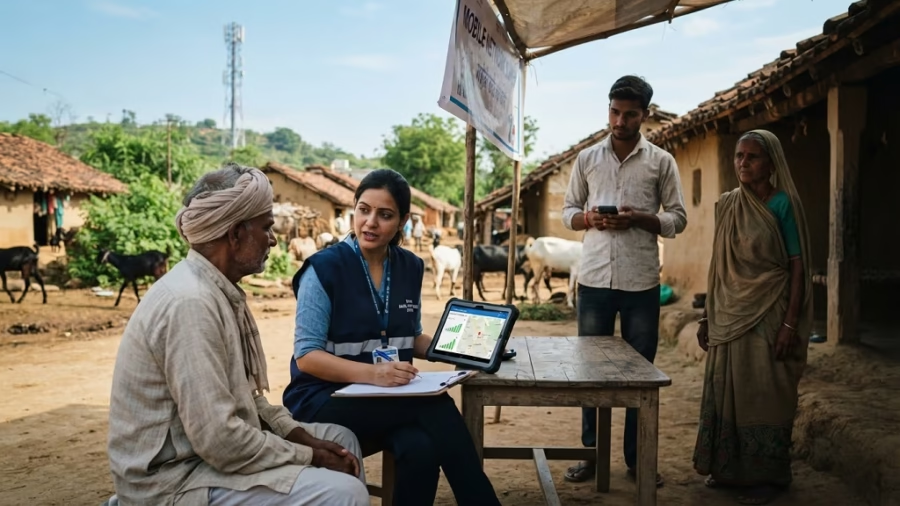
The Village-Level Telecom Network Performance Survey is a survey measuring the actual quality of mobile network services received by rural users across the country.
Unlike the self-reported data from the telecom operators, this survey will seek to provide independent, on-the-ground information gathered directly from the villages. The program will assess the performance of the major TSPs, such as:
- Bharti Airtel
- Reliance Jio
- Vodafone Idea (Vi)
- BSNL
The collected data will help regulators identify areas suffering from weak connectivity and recommend improvements to strengthen India’s telecom infrastructure.
Objectives of the Nationwide Survey-
The main aim of this survey is to develop an accurate database of mobile network performance throughout rural India.
Key objectives include:
- Village assessment of mobile network coverage.
- Measures the strength of the signal that it is receiving and the availability of a network.
- Assess the quality of voice calls and the productivity of mobile data.
- Identify gaps in telecom connectivity.
- Provide authoritative, robust field-level evidence to support policy.
- Improve telecom infrastructure in the last underdeveloped regions.
- Strengthen Digital India.
The survey will enable regulators to have real data which accurately represents the mobile experience. Operators are not always the best source of information.
How Will the Survey Be Conducted?
This program makes innovative use of the country‘s vast postal network. The Department of Posts has an extensive network of over 1.40 lakh rural Branch Post Offices spread over the country, the largest public network.
The survey will be carried out through:
- Gramin Dak Sevaks (GDSs)
- Rural postal employees
- Routine postal delivery operations
- A specially developed Android-based survey application created by TRAI
While the postal operator‘s staff is moving in and through villages, they will gather telecom performance data by means of the mobile application. This way, the postal operator‘s existing activities will generate telecom data covering the whole country without extra cost.
Role of the Department of Posts-
The Department of Posts, one of the most trusted public institutions of India especially helpful for those living in villages.
Under this initiative, its responsibilities include:
- Telecom surveys are conducted at the field level.
- Network performance data collection.
- Covering villages in all states and Union territories.
- Ensuring valid and reliable data collection.
Assistance at the national scale in the upbuilding of digital infrastructure. In the view of Ms Manisha Bansal Badal, these joint efforts will show the States and the department‘s serious commitment to citizen-centric governance and the Digital India vision.
TRAI’s Responsibilities-
TRAI will control the technical issues of the project and will make sure the relevant information is provided for regulatory decisions.
Its responsibilities include:
- Designing the Android-based survey application.
- Offering technical support.
- Training postal workers.
- Monitoring of survey implementation.
- Analysing the data received from the network.
- Making recommendations to enhance policy.
The regulator will use the results to compare the network performance of different telecom operators and find some areas where service quality needs to be improved.
Benefits of the Survey for Rural India-
The need to have a dependable Mobile connection has become a necessity. There are also likely to be a few long-term benefits that can be gained from the survey.
Improved Telecom Infrastructure:
Independent data will help identify weak network zones, enabling authorities and telecom operators to prioritise infrastructure development.
Better Digital Services:
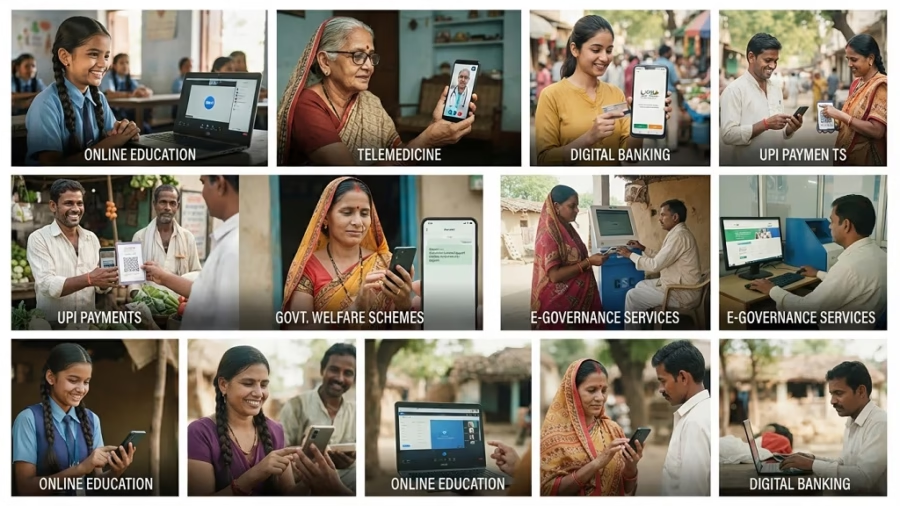
Enhanced connectivity will improve access to:
- Online education
- Telemedicine
- Digital banking
- UPI payments
- Government welfare schemes
- E-governance services
Bridging the Digital Divide:
There is still some patchy coverage in various remote villages. The survey will enable the planning of necessary interventions to bring down the digital divide between urban and rural India.
Stronger Consumer Experience:
With improved monitoring, telecom operators will be motivated to do a better job in terms of service quality, and hence, we will see a trend of better signal strength, voice clarity and quicker access to mobile internet.
Importance of Independent Field Data-
The biggest benefits from this initiative are the independent field-level measurements. Regulators have traditionally relied on telecommunications companies‘performance reports. This survey brings more transparency by capturing experimental data within actual villages.
Independent field data will help:
- Cross-check all telecom operators’ claims of performance.
- Enhance regulatory supervision.
- Support policymaking that is grounded in evidence.
- Enhance the accountability of telecom service providers.
- Build stronger consumer confidence.
Supporting the Digital India Mission-
Digital India aspires to create a digitally empowered society and knowledge economy in India. Yet, digital services can only thrive if dependable telecom connectivity ensures coverage of all villages. The Village-Level Telecom Network Performance Survey supports Digital India by:
- Expand rural digital infrastructure.
- Improving the quality of mobile networks.
- Digital governance, this includes providing support to enhance a country‘s digital governance frameworks.
- Foster a more inclusive expansion of digital.
- Improve access to online public services.
The initiative also supports government schemes BharatNet and National Broadband Mission aimed at facilitating broadband reach in rural India.
Why This Survey Matters for India’s Telecom Sector-
India owns a large telephone subscriber base across the world. Although there has been great progress over the last 20 years, the quality of the network is still very different in urban and rural areas.
The survey will help:
- Improve telecom service standards.
- Drive healthy field competition.
- Should inform future investments in infrastructure.
- Improve regulatory decision-making.
- Enhance rural digital ecosystems.
The output data may also be used to help with long-term spectrum planning and the development of new infrastructure.
Conclusion-
The Village-Level Telecom Network Performance Survey is an important initiative under the Digital India Program. It looks to utilise the Department of Posts’ large village network and the expertise of TRAI to evaluate the performance of mobile networks in over 5.68 lakh villages in India. The survey will work to determine connectivity deficiencies, bolster the telecom infrastructure and support a decision-driven policy. It is also reflected in the broader Digital India mission and will contribute towards increased access to education, health care, banking, e-governance and other critical digital services.