
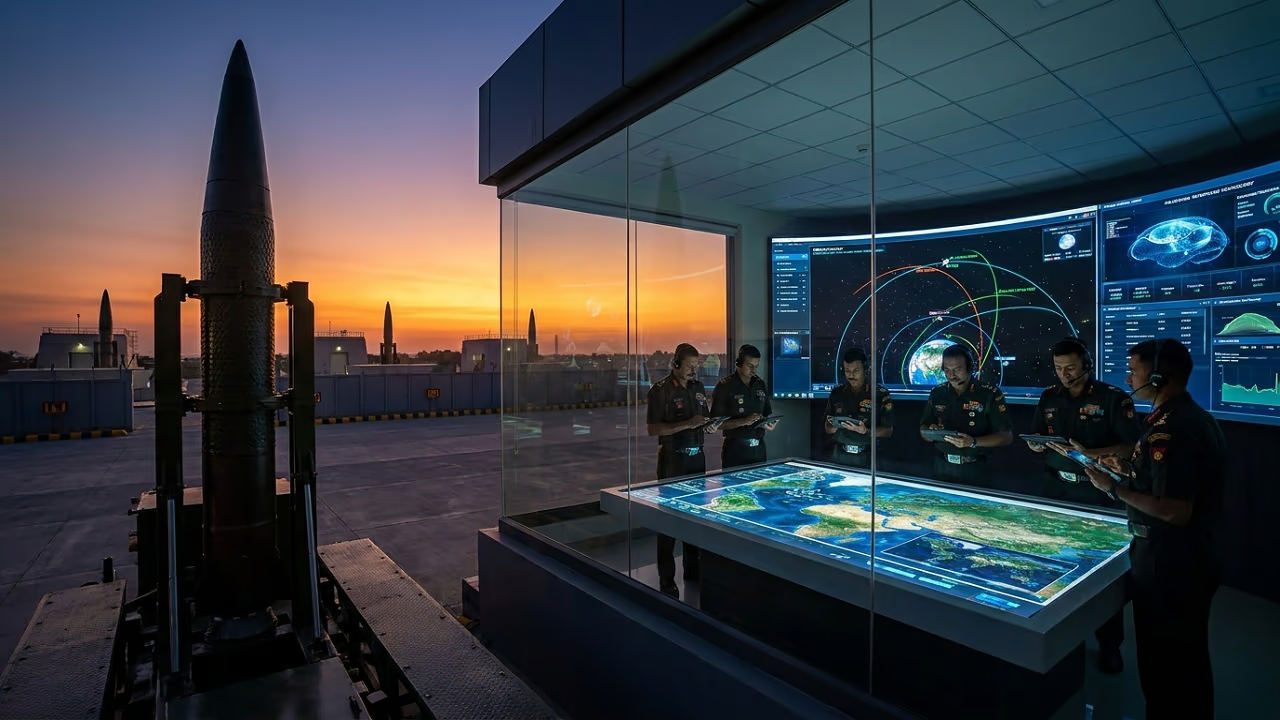
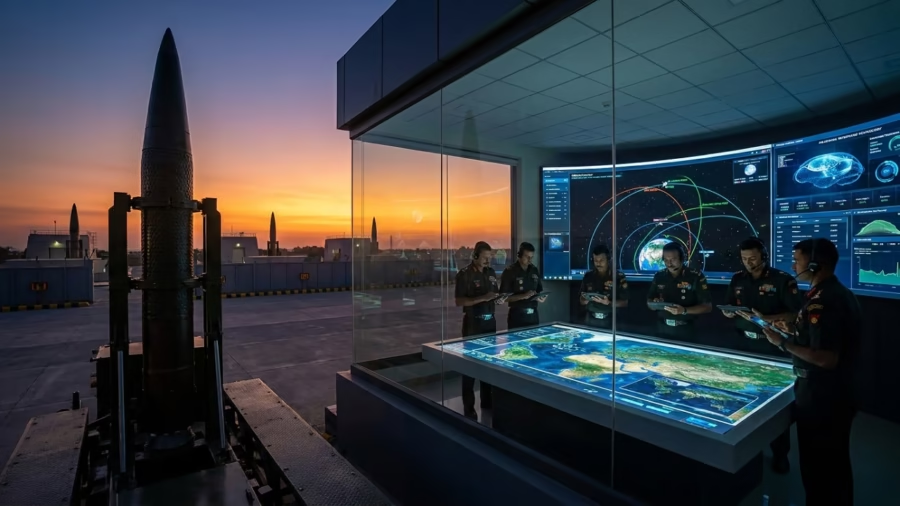
India has maintained itself as one of the world’s top military powers in the world, as revealed in the 2026 SIPRI Yearbook. The report further advises that India’s projected arsenal of nuclear weapons stands at 190 warheads, 10 more than Pakistan’s estimated stockpile of 170 nuclear warheads. India has also been witnessing sharp increases in expenditure on long-range missile systems, high-technology military equipment and defence modernisation programmes.
This best characterises a broader trend within the contemporary South Asian security environment where technological controls, improved military readiness and strategic deterrence are increasing in importance. With the changing geopolitical equation, India’s defence policy has been driven towards sustained credible deterrence.
SIPRI Report 2026 Important Keys: India’s Nuclear Expansion-
The respected think tank around the world on security and military matters, the Stockholm International Peace Research Institute (SIPRI), has published its Yearbook 2026, containing a detailed overview of world military spending, nuclear arsenals, arms transfers and growth in international security.
The report identified that there were an estimated 190 nuclear warheads possessed by India in January 2026, compared to 170 warheads by Pakistan. This was, in part, a slight edge of 20 warheads in India’s favour. It also indicates continuous growth in India’s strategic nuclear weapons provided.
Main Outcomes from the report consist of :
- The number of nuclear warheads possessed by India: 190 warheads.
- Pakistan’s Tentative Nuclear Arsenal: 170 Warheads
- A difference of between the two countries in the order of 20 warheads
- Ongoing modernisation of nuclear forces by both states, with greater attention to long-distance missile development
Though the numbers seem small, think tanks believe military ability encompasses much more than the total number of warheads. They aver that it also encompasses the reliability of delivery systems, command infrastructure, and the sophistication of technology.
India’s Strategic Focus Is Gradually Shifting-
The striking report regarding Armament is the change in the Indian approach to the use of nuclear weapons.
India’s defence planning has historically been focused primarily on Pakistan, although SIPRI points out that it is now also focused on the wider security issues of the region; this, says SIPRI, is mainly due to the competition with China.
The report also concludes that India’s perceived investments in the development of long-range missile systems point to a shift in Indian strategic thought aimed at increasing deterrence beyond its immediate neighbourhood.
Factors Driving India’s Strategic Evolution-
Several developments are influencing India’s changing defence posture:
- A widening competition for geopolitical leverage in Asia
- Border security issues
- The increasing significance of long-range strike features
- We can also mention the fact that fast evolutions in weapons technology.
- Requirement for multi-pronged deterrence strategies
Thus, the experts of India are now trying to develop such systems that could be efficient at higher ranges and could adapt themselves to a broader spectrum of contingencies.
Nuclear Modernisation Continues Across South Asia-
As the SIPRI report showcases, the rivalry among South Asian states enlarges beyond traditional military balance or nuclear stockpiles.
Rather, States throughout the particular area are investing heavily in cutting-edge defence technologies focused on upgrading operational efficiency and strategic deterrence.
This process of modernisation is also changing the security picture and adding a whole new dimension to military competition.
New Technologies Updating Regional Security-
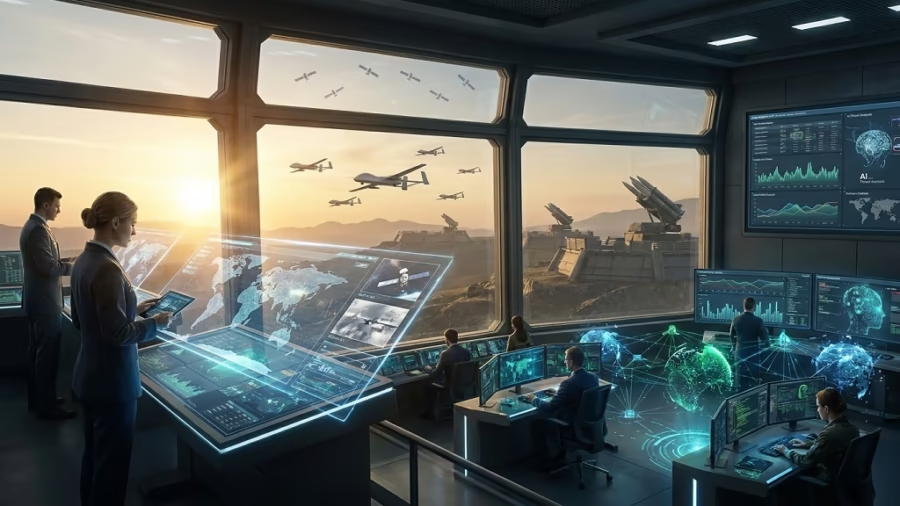
Many of the new technologies are playing a growing role in military planning:
- Long-range missile system
- Armed drones
- Defence platforms equipped with Artificial Intelligence
- Cyber warfare capabilities
- More sophisticated surveillance systems
- Satellite-enabled intelligence monitoring networks
- Electronic Warfare technology
These measures are now widely recognised as vital elements of any modern national security strategy and are certain to shape the future development of the region’s defence planning.
India Remains Among the World’s Largest Defence Spenders-
Besides increasing its strategic potential, India remains one of the largest military spenders worldwide.
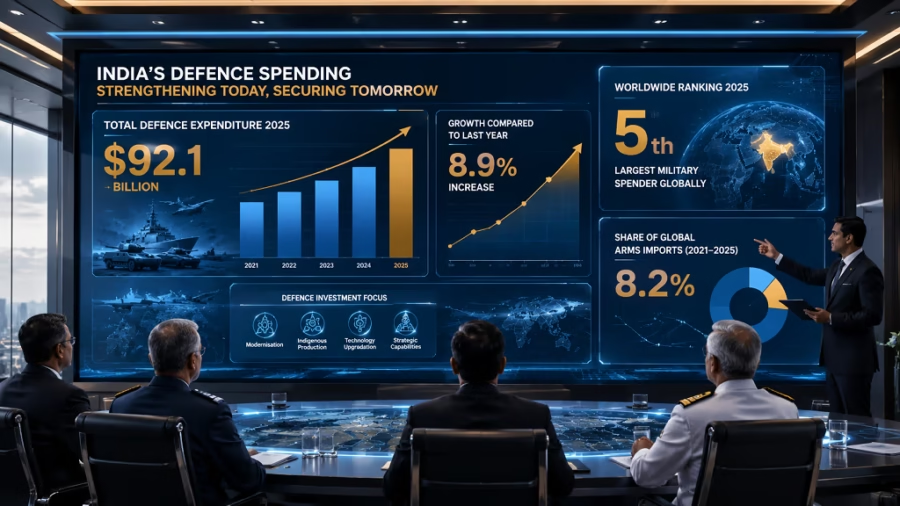
SIPRI reports that India’s imports went up to around $92.1 billion in 2025. This was an increase of 8.9% from 2024, which was a positive indication of the country’s continued efforts in improving military power.
This increase mirrors an increase in theglobal rateof military spending around the world.
India’s Defence Spending Snapshot:
- Total 2025 defence expenditure: $92.1 billion
- The development in comparison to last year (8.9%)
- Worldwide ranking: Number 5 in military expenditure.
- Share of global arms imports (2021–2025): 8.2%
The long-term rise in defence expenditure sustains upgrading programmes for each of the three armed services and promotes indigenous defence manufacturing projects.
What India’s Growing Defence Budget Supports-
Investment in defence is not entirely about the nuclear deterrence that India possesses.
Military modernisation of the country consists of equipping with the best technology, including modernisation of the latest arms and ammunition, elevating the country’s indigenous defence production, and leading technological application to military activity.
Important Areas to Look:
Defence Modernisation Priorities:
- Development of indigenous missile systems
- Expansion of air defence capabilities
- Modernisation of naval assets
- Integration of Artificial Intelligence technologies
- Enhanced cyber security infrastructure
- Advanced surveillance and reconnaissance systems
- Strengthening strategic deterrence capabilities
These initiatives are aimed at ensuring long-term military readiness while reducing dependence on foreign suppliers.
Understanding SIPRI and Its Global Influence-
Stockholm International Peace Research Institute is one of the world’s leading organisations on conflict, armaments, military expenditure and international security research.
Since its establishment in 1966, SIPRI has earned a reputation as an independent and data-based source of information utilised by governments, policy makers, researchers and international agencies across the globe.
Key Facts About SIPRI:
- Full Name: Stockholm International Peace Research Institute
- Founded: 1966
- Headquarters: Stockholm, Sweden
- Specialisation: Arms control, military expenditure, nuclear forces, and security studies
- Flagship Publication: SIPRI Yearbook
The annual SIPRI Yearbook remains one of the most widely referenced sources for understanding global defence and security trends.
What the Latest Findings Mean for South Asia-
The SIPRI Yearbook 2026 describes a changing region.
As India builds up its nuclear arsenal, increases defence spending and invests more in sophisticated military technologies, it appears to be pursuing a policy of protection enhancement in India as dynamic strategic conditions change in the country. At the same time, in Pakistan, the indigenous modernisation of the armed forces remains very much in process, implying that strategic competition will continue to have a central role in South Asian security.
Although nuclear deterrence is still number one, other new technologies, cyber capabilities, missile systems, and AI-driven defence platforms will influence security calculations even more.
Conclusion-
The SIPRI Yearbook 2026 focuses on India’s evident expansion of strategic capabilities, as well as its focus on defence modernisation. With an estimated 190 nuclear warheads, India has observed an increase in its benefit over Pakistan’s 170-warhead stockpile, whilst simultaneously growing resources for long-range missiles, cutting-edge technologies, and military preparedness.
As regional and global security environments evolve, so does India’s approach to balancing threats to national security. Likewise, the report also focuses on the way modern war is being driven by innovation such that technological supremacy will be as important as conventional military dominance in the years to come.