
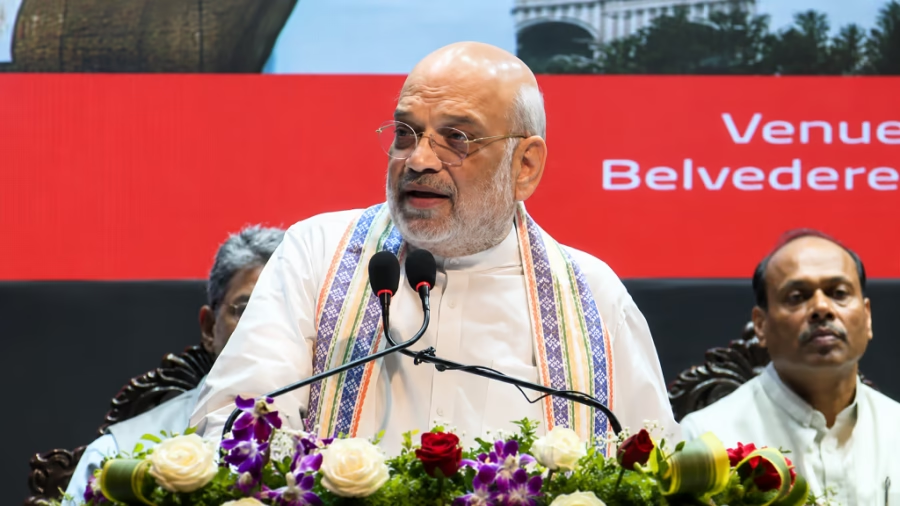
Indians take pride in their linguistic tradition, which includes many languages, thousands of dialects, scripts of centuries past, and great literature. However, until now, no such museum has been established in the country that would tell the whole story about the languages in India. This has been solved by establishing Shabdalok, the first-of-its-kind immersive language museum of India that has gathered more than 350 languages in one place. An investment of Rs. 14+ crore is provided to complete the first phase of development, and this museum is located in the National Library of Kolkata, the capital of West Bengal. The AI Language Museum project has been developed by the Ministry of Culture at the National Library and inaugurated by the Home Minister of India, Shri Amit Shah, on 19 July 2026. This platform intends to honour the history, culture, stories, and innovative digital technologies. Let’s dive deeply into the First Language Museum, Shabdalok, and discover how languages have come alive through technology.
ALSO READ- Shivalik Movement: Development Vs Forest Conservation
What is Shabdalok?
The meaning of “Shabdalok” comes from the translation of the phrase “World of Words” or “Museum of Words”. This museum is the first of its kind in India, which shows the evolution of Indian languages from the era of orally conveyed words to written words in the form of manuscripts, printed books and digital communication in contemporary times.
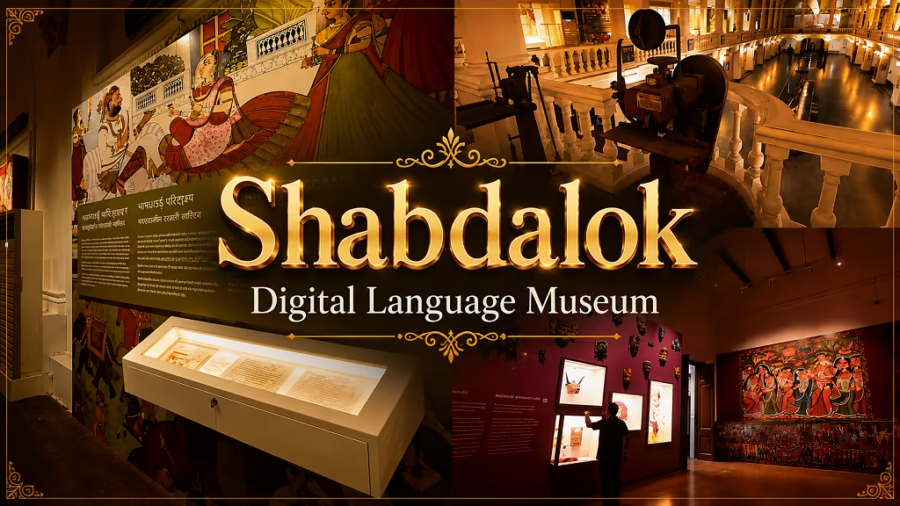
Regular museums merely show visitors the exhibits behind glass windows; Shabdalok creates an interactive experience for the visitors through the use of multimedia installations, digital projections, motion sensors, hologram presentations and other forms of immersion. Languages not only serve the purpose of communication but also carry history, culture, traditions, emotions and memories. The museum gives special commemoration to the 22 languages mentioned in the Eighth Schedule of the Indian Constitution, although there are many more regional languages.
For this, the museum will be using technologies such as AR (augmented reality), VR (virtual reality), AI (artificial intelligence), holograms and digital visuals to display the evolution of the ancient manuscripts, scriptures and oral traditions to the electronic texts.
The Shabdalok can be found inside the well-known house called Belvedere House, which is an old house located on the campus of the National Library in Kolkata.
Since 1948, Belvedere House has served as the residence of the National Library, which happens to be one of the most prominent places in the country. The creation of this museum has come up with the intention of elevating the significance of the library.
Features of Shabdalok: A Digital Language Library-
The first technology-driven language library, Shabdalok, is equipped with certain features that make it a unique and advanced library in India. Here are a few key features of this library:
- First Immersive Language Museum in India: Shabdalok museum in India is the first museum dedicated to languages through immersive experiences, with inclusion of digital innovation. Rather than being a static display of items, it immerses you in the language history of India, attracting visitors with its appealing approach to introducing India’s diverse linguistic culture.
- Interactive Interface of Digital Learning: Rather than just showing the objects, Shabdalok utilises the following technologies to make the language learning inclusive and effective. The digital museum includes:
- Interactive touchscreens
- Digital storytelling
- Multimedia presentations
- Animated screens
- Projection mapping
This approach makes the study of languages interesting and easy to understand for everyone.
- Hologram and Motion Sensor Technology: Shabdalok will use 3D hologram display technology at the museum, along with motion-sensor technology that responds to the exhibit when visitors move around, which will make the experience ethereal.
- Features More Than 380 Indian Languages: With Shabdalok, there are over 380 languages of India on display in the form of interactive, physical, and audio-visual displays.
- Gesture-Based Interaction: Visitors may use simple hand movements or gestures to go through scripts, watch the evolution of language history, and interact with the digital exhibits on the large projection screens.
- AR & VR Experiences: The AR(augmented reality) & VR(virtual reality) installations allow visitors to go through the ancient manuscripts, scriptures, stories, and events in a highly interactive 3D display.
- Immersive Audio Technology: Audio technology that consists of specially designed acoustic zones and surround-sound technologies allows visitors to listen to Indian languages, dialects, songs, and pronunciations without sound interference between exhibits.
- Projection Mapping: The most innovative technology in projection allows the transformation of wall space and exhibits into storytelling surfaces through the use of maps and scripts. Future stages will include architectural projection mapping of Belvedere House.
Shabdalok Nine Thematic Galleries-
The museum has nine distinct galleries devoted to each different element of the linguistic culture of India, such as the creation of languages, scripts, literature, oral traditions, libraries, and future communication.
- Evolution of Human Communication: The first pillar tells about the development of human communication from gestures and sounds to spoken languages.
- Ancient Writing: It communicates about the Indian scriptures and ancient writing methods used to record and retain knowledge for generations.
- Tradition of Oral Storytelling: Celebrates the tradition of storytelling through Indian folktales, epics, and songs orally transmitted through generations.
- Mother Tongues and Regional Languages: Celebrates India’s unique linguistic wealth through regional languages and dialects.
- Linguistic Legacy: Discusses the linguistic history of India through its ancient scriptures, classical literature, poetry, manuscripts, and literature.
- Language and Performance Arts: Shows how language is brought alive through performance arts like music, dance, theatre, and folk performances.
- Tribute to Poets and Scholars: The digital language museum pays tribute to some great poets, renowned writers, philosophers, and scholars who created and contributed to the linguistic and literary legacy of India.
- Preservation of Languages through Libraries and Manuscripts: Describes the important function played by libraries, manuscripts, books, and archives in the preservation of India’s intellectual wealth.
- Languages in the Age of Technology: Discusses the effects of technology, artificial intelligence, digital publishing, and electronic communication on languages.
Traditional Museum Vs Shabdalok-
| Traditional Museum | Shabdalok (Digital Language Museum) |
| In traditional museums, visitors see and observe the artefacts or things through glass or displayed in open spaces. | Shabdalok allow exhibits through touchscreens, motion sensors, projections, and immersive technology. |
| Information is presented using text panels, labels, and static displays. | Stories are brought to life using holograms, multimedia, audio-visual effects, and digital storytelling. |
| The primary function of these museums is to preserve historical objects and artefacts. | It preserves and celebrates India’s linguistic heritage through engaging digital experiences. |
| Learning is mostly passive and non-interactive. Visitors have to read the information on their own. | Learning is interactive, allowing visitors to explore languages through sound, visuals, and hands-on activities. |
| Limited use of modern technology and visitor participation. | Uses cutting-edge technologies such as immersive projections, interactive installations, and AI-enabled experiences to make language learning engaging for all ages. |
Why Was The Shabdalok Museum Necessary?
1. To Preserve India’s Linguistic Heritage: Hundreds of languages and dialects are endangered in India. With this museum, it will help preserve India’s languages for generations to come.
2. To Celebrate India’s Language Diversity: Although 22 Scheduled Languages are recognised in the Constitution, there are more than these that are not recognised, other than 121 languages. Shabdalok celebrates the language diversity of India.
3. To Make Language Learning Interactive: Traditional museums can only provide static exhibits. Shabdalok uses interactive technology like digital projection, touch screens, and soundscapes to make your learning more engaging.
4. To Encourage Young Generations: Younger generations are losing touch with their mother tongues as well as regional literary traditions. The museum serves as an inspiration for them to explore the language and literary tradition of India.
5. To Preserve Culture along with Languages: Languages not only consist of linguistic traditions but also of folklore, songs, literature, customs, and history. With language preservation, culture is being preserved too.
Brief Details for Visiting Shabdalok-
Planning to visit Shabdalok for an extensive language learning experience? Check out the details:
- Venue: National Library, Kolkata (West Bengal)
- Almost 380 languages will be on display through digital innovation
- The Museum will close one day a week, i.e., Monday
- Till 15 August 2026, entry to the Shabdalok Museum is free; after that, visiting charges are applicable.