
The concept of flex-fuel vehicles is no longer a part of automotive exhibitions but has emerged as a cheaper option to combat the rising fuel cost crisis in India. The objective behind introducing flex fuel is to reduce foreign crude oil dependency and emissions targets set by 2026. More than 4 million consumers purchased cars last year that run on petroleum fuels, which are made from imported crude oil from other nations, according to statistics derived from the Indian automobile market. With E20 fuel being rolled out nationwide and E85 fuel laws and regulations imposed, these vehicles are set to become increasingly essential. In this article, we will look into what flex fuel vehicles are, how they work, why they are relevant in the Indian automotive industry, and the new models of such vehicles that will soon be hitting the Indian market.
ALSO READ- India’s Green Transformation Explained: Vital Initiatives By PM Modi
Flex fuel is a type of fuel that has a mix of gasoline and ethanol at various proportions. Unlike normal fuel, it may have different concentrations of ethanol ranging from E20 (20% ethanol) to E85 (85% ethanol). Such fuels are referred to as flex fuels, and cars designed for use with various blends are called Flex Fuel Vehicles (FFV).
- Flex fuel is made from renewable sources in the form of ethanol obtained from agriculturally grown crops such as sugarcane, corn, maize, and other forms of biomass. This is an alternative to imported crude oil, which is expensive.
- Being a domesticated biofuel, ethanol contributes towards minimising dependence on crude oil imports while reducing carbon emissions due to its environmental benefits.
- This fuel provides flexibility to the user, in the sense that FFV will automatically detect the presence of ethanol in the fuel and adjust the engine settings accordingly and does not require any manual setting from the driver’s side.
Flex Fuel Vehicle (FFV) run on flex fuel (fuel blended with ethanol) as its source of energy are manufactured using sensors and engine controls. The technology is used for detecting the ethanol in the fuel tank and adjusting the performance as per the ethanol levels. The Indian government emphasises using ethanol blend-based vehicles as they are cheaper than petroleum fuels. Due to geopolitical tensions, crude oil prices are rocketing, making imports expensive.
| Fuel | Ethanol % | Petrol % | Vehicle Compatibility |
| E10 | 10% | 90% | Older Vehicles |
| E20 | 20% | 80% | Post 2023 Vehicles |
| E85 | 85% | 15% | FFVs Only |
| E100 | ~100% | No | FFVs and Ethanol Compatible Vehicles |
Why are Flex Fuels Needed and Their Evolution?
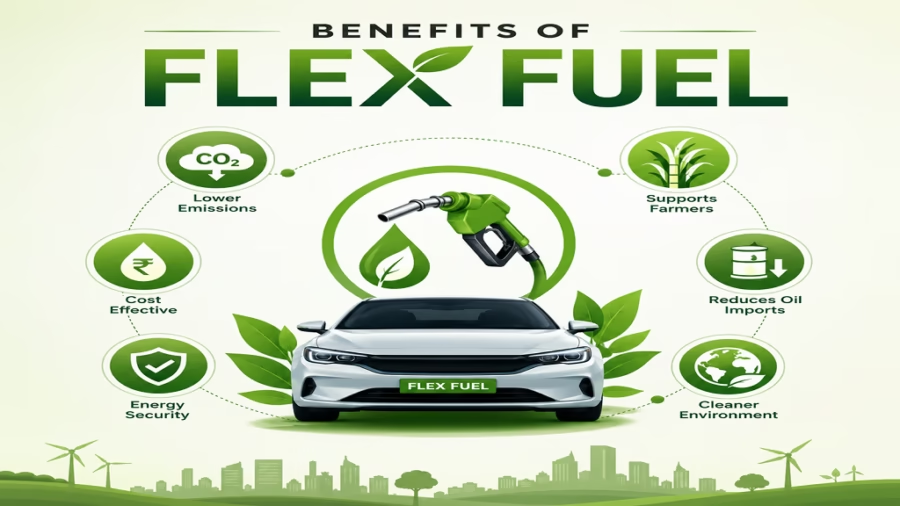
Flex fuel was introduced as a response to two global challenges:
- Dependence on imported crude oil, which is costlier
- Rising environmental concerns are causing air pollution and degradation
Several countries were seeking alternative energy sources during the oil crisis in the 1970s to reduce their dependence on crude oil. Brazil emerged as a leader by introducing the concept of using ethanol made from sugarcane as an alternative to petrol. The development of automobiles, both petrol and ethanol, paved the way for FFVs.
Now the importance of FFVs is growing in many aspects, such as rising fuel costs, concerns about energy security, and stringent standards for emissions. Seeking cleaner alternatives that can be produced within its borders, ethanol provides an ideal choice for India, as it produces more agricultural resources; much of its crude oil depends on imports from other countries.
The government will be expanding their ethanol blending programs and also looking forward to shifting towards the use of high blends like the E85. In addition, they will be instrumental in reducing dependence on imported oil.
Technology Inclusion in Flex Fuel Vehicle-
Flexible Fuel Vehicles (FFVs) are designed using sophisticated ethanol-compatible fuel system components that allow one to switch between fuel blends.
- It uses advanced engine and fuel-management technologies that enable it to operate on petrol, ethanol, or any blend of the two, making it a compatible partner.
- The Software Fuel Sensor is the key device that automatically measures the ethanol in the fuel tank and the amount of fuel used. This information is passed to the Engine Control Unit (ECU), which is the authorised computerised system to regulate the performance of FFVs.
- Once the ethanol level in the tank is determined, an automatic adjustment is made by the computerised engine based on several factors, such as the fuel injection duration, the air-to-fuel mixture, and the ignition timing.
- It is because even though there is less energy output from the ethanol fuel compared to the gasoline fuel, it can still produce high-octane proportions that will be more efficient for the engine’s performance.
- Additionally, the FFV cars have parts that protect them from corrosion by the fuel since ethanol fuel can be corrosive and tends to absorb water.
Future of Flex Fuel Vehicles in India-
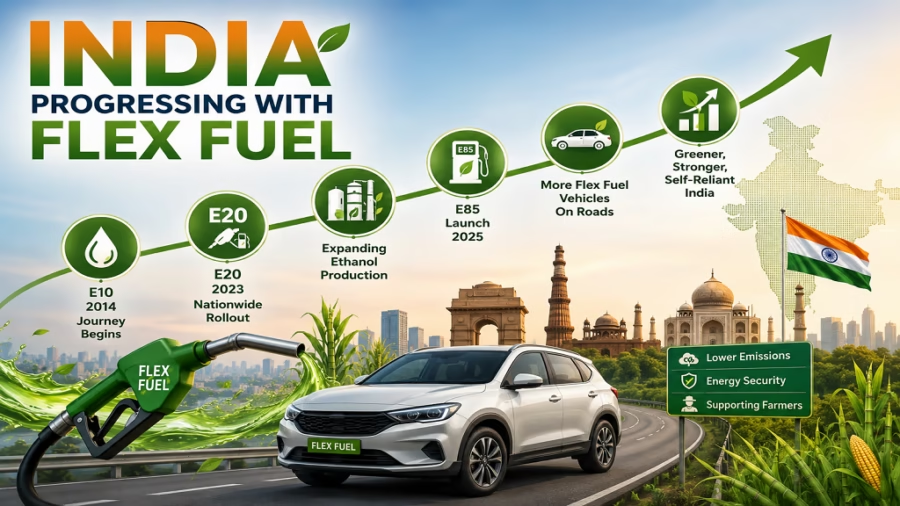
- The prospects for flex fuel vehicles in India appear to be bright as the country gears up to decrease its reliance on imported crude oil, decrease carbon footprints, and achieve energy independence.
- The introduction of E20 fuel nationwide is well underway, and the talk of introducing E85 standards is increasing. Under such conditions, FFVs have a good potential to become a vital part of India’s automotive landscape.
- Several government policies support ethanol utilisation by promoting higher blending rates encouraging production and development of biofuel infrastructure. Thus, the atmosphere is ripe for automobile manufacturers to launch flex-fuel vehicles in the Indian market.
- Role of FFVs: FFVs provide an effective path for transitioning to cleaner transport. Unlike electric vehicles, there is no need to invest in massive charging systems or changes in driving habits. The use of FFVs allows for continued fueling at conventional service stations, along with enhanced fuel versatility and potentially reduced operating costs.
- Over the next ten years, the rise of ethanol produced from sugar cane, corn, and agricultural waste may give another boost to FFVs. While the number of electric vehicles will be rising, the flex-fuel approach can prove effective as a complement, contributing towards achieving India’s energy and environmental objectives.
India’s Position in the Global FFV Market-
India has become a key nation where FFVs will play a significant role because of its robust program to introduce ethanol-blended gasoline and decrease the country’s reliance on foreign crude.
- India is the third largest consumer of oil in the world, and it has to import crude oil from foreign countries like Russia, Iraq, the UAE, Saudi Arabia and the U.S. to meet its oil needs.
- Deliberate programs on flex fuel usage: Due to excess imports and the purchase of crude oil at increased prices, the government is organising certain programs to increase the usage of ethanol blends, such as the use of E20 fuel and biofuel policy strategies. The country will experience development in ethanol utilisation, due to its agricultural background and thriving sugarcane production required for production.
- Leading in FFV Tech: Nations like Brazil and the US dominate the international flex fuel vehicle industry. India has positioned itself as the upcoming growth destination for flex fuel technology. Automobile companies are set to launch FFVs designed to cope with the Indian traffic environment.
- Leading as a Clean Biofuel Producer: With the increased ethanol manufacturing capabilities and favourable regulatory changes, there is room for India to take the lead in becoming the global leader of biofuel-based vehicles that connect regular internal combustion engines to the future.

Current India FFVs Launches-
There are reports from several automobile manufacturers regarding the evaluation and development of flex fuel variants for some of their most successful models, such as Maruti Suzuki Fronx, Tata Punch, Hyundai Creta, and further Toyota models.
Currently Launched by the Indian Automobile Sector:
- Maruti Suzuki WagonR is the first publicly-launched flex fuel passenger car model, which uses flex fuel with a maximum of E85 blend and inspiration for future flex-fuel cars as well.
- Hero Splendour flex fuel motorcycle is designed to be capable of running on 85% ethanol-blend fuel or E85 in the mass-vehicle market.
- Hero HF Deluxe is another E85-compatible commuter motorcycle aimed at affordable and sustainable mobility with cleaner emissions.
- Toyota Urban Cruiser Hyryder is a strong, hybrid prototype that combines ethanol blend compatibility with hybrid technology for lower emissions and fuel consumption.
- Toyota Innova HyCross has showcased a flex-fuel strong-hybrid version of the Innova HyCross capable of operating on high-ethanol blends.
Expected Future Launches:
Many automobile manufacturers and companies are looking forward to testing or developing their exclusive flex-fuel models, including the Maruti Suzuki Fronx, Tata Punch, Hyundai Creta, and other models from Toyota. However, the launch date and the features of the FFV models have not been revealed.
Conclusion-
We conclude with the flex fuel vehicle as the most reliable and more realistic path towards a sustainable mobility solution in India. Flex fuel helps to save expenditure by reducing dependency on imported crude oil, but also minimises the carbon footprints of transportation systems while providing benefits to agriculture. While the technology in India is fairly new and yet to evolve completely, it is getting more acceptance with the support of the government, increased ethanol production, and the involvement of automobile manufacturers in the process. On the other hand, FFV offers the consumer the convenience of having an internal combustion vehicle that does not rely solely on traditional fuels. The major drawbacks include fuel availability and the limited number of models available. However, FFVs can prove to be a valuable addition to India’s plans for multi-fuel mobility along with electric cars.