
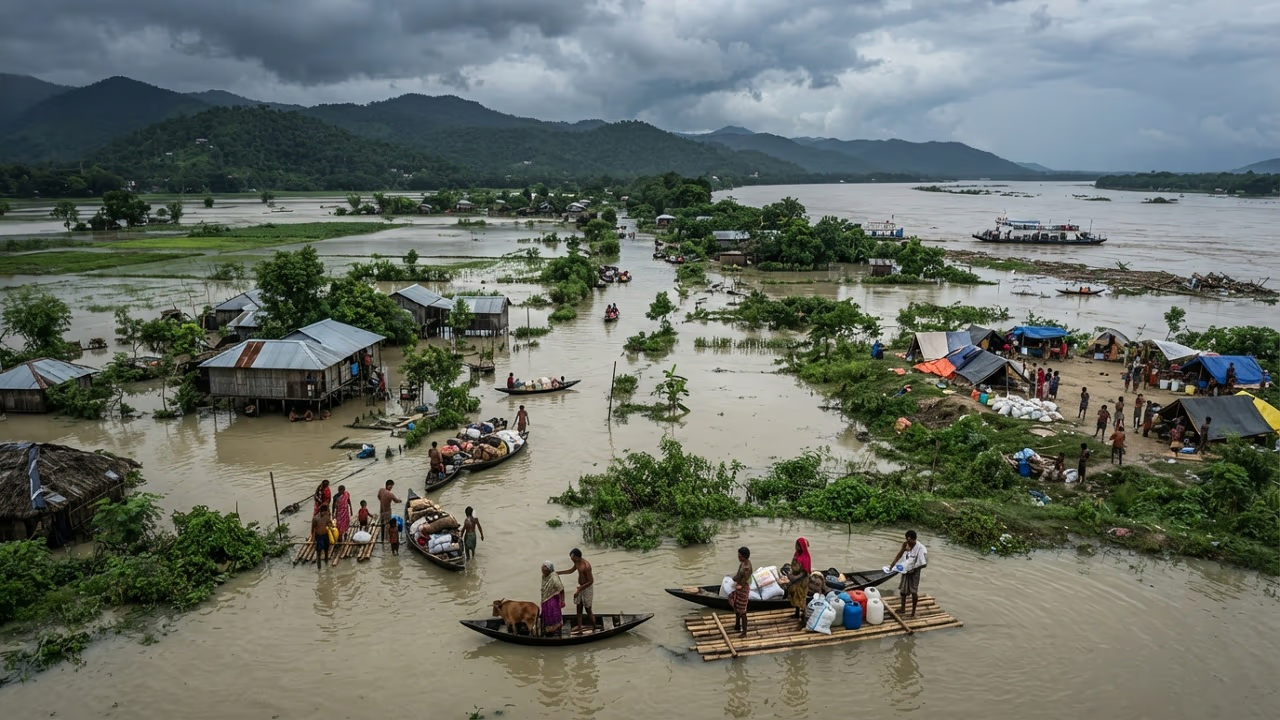
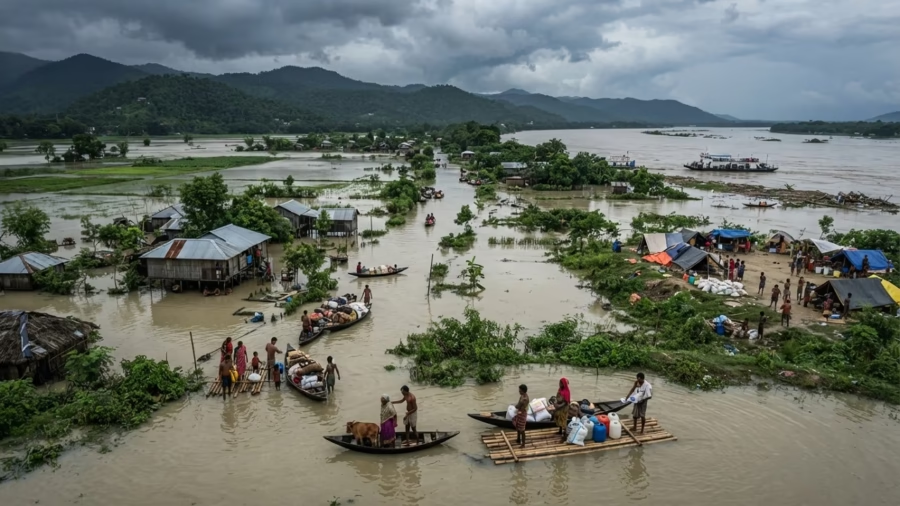
The flood situation in Assam is gradually improving with the water receding in most of the affected districts. But the situation is not yet over, as 5.24 lakh people in nine districts continue to remain affected. Major rivers have receded below the danger level in all, but the Dhansiri River at Numaligarh, and thousands of families have been shifted to relief camps, and services are being restored.
The Assam government, disaster response agencies, army, air force and several NGOs continue to be involved in the rescue, relief and rehabilitation work.
Why Is Assam Flood 2026 in the News?
Assam experienced a rare severity of flood spells in 2026.
According to the latest updates:
- A total of 524 K remained affected.
- Flooding has affected 763 villages of 24 Revenue circles.
- The death toll from floods is now 68.
- There are over 37,700 persons in 109 relief camps.
In addition, government agencies are making relief and rehabilitation efforts on a large scale. Even though the flood waters are receding, there are still considerable humanitarian and economic effects.
What Caused the Assam Floods?
Several natural and geographical factors contributed to the flooding.
Heavy Monsoon Rainfall:
Persistent monsoon rains in Assam and adjoining states led to the inundation of villages due to overflow of rivers.
Rising River Water Levels:
Dhansiri River was recorded at the danger level, but many other rivers were observed to have caused temporary flooding and then receded.
Low-Lying Geography:
Being situated in the Brahmaputra River basin, the state of Assam remains on the receiving end during the season.
Climate Change:
According to researchers, changing rainfall distribution and intensity, along with frequent extreme events, are causing a rise in intensity and frequency of floods in the region.
Latest Flood Situation-
In many districts, the floods have receded to some extent. However, the disaster continues to affect:
- Charaideo
- Sivasagar
- Jorhat
- Golaghat
- Dibrugarh
- Hojai
- Kamrup
- Kamrup Metro
- Nagaon
Among these districts:
- Charaideo has experienced the most damage.
- Relief camps are maximum in Sivasagar.
- Jorhat is still experiencing crop off-takes in magnitude.
Authorities are still keeping a watch on the river level and possible weak embankments.
Humanitarian Impact-
Floods have uprooted millions of families.
Current relief efforts include:
- 109 relief camps
- 245 centres for relief distribution
- In excess of 37400 people who took refuge
- More than 1.5 lakh people receiving relief assistance.
Another initiative the government has made is the supply of electricity in various places through road blasting.
Damage to Agriculture and Livestock-
Reports indicate:
- Over 88,000 animals impacted.
- More than 26,500 cattle and poultry washed away.
The losses are expected to affect rural livelihoods for months.
Infrastructure Damage-
Flood water has affected public facilities in several districts.
Reported damage includes:
- Over 105 roads impassable
- Destroyed several hundred houses
- Over 1,600 houses partly damaged
- More than 1,000 cattle shelters destroyed
Fortunately, no significant bridge collapse or embankment failure occurred during the recent inspection.
Rescue and Relief Operations-
Rescue/relief work is still going on in most of the affected districts as various agencies are providing support in a coordinated manner.
The response includes personnel from:
- State Disaster Response Force (SDRF)
- National Disaster Response Force (NDRF)
- Indian Army
- Indian Air Force
- Assam State Disaster Management Authority (ASDMA)
- District administrations
At present, there are 36 rescue vessels, 2 helicopters, and 152 health rapid response teams caring for patients, evacuating affected individuals and providing emergency aid.
Relief Materials Distributed-
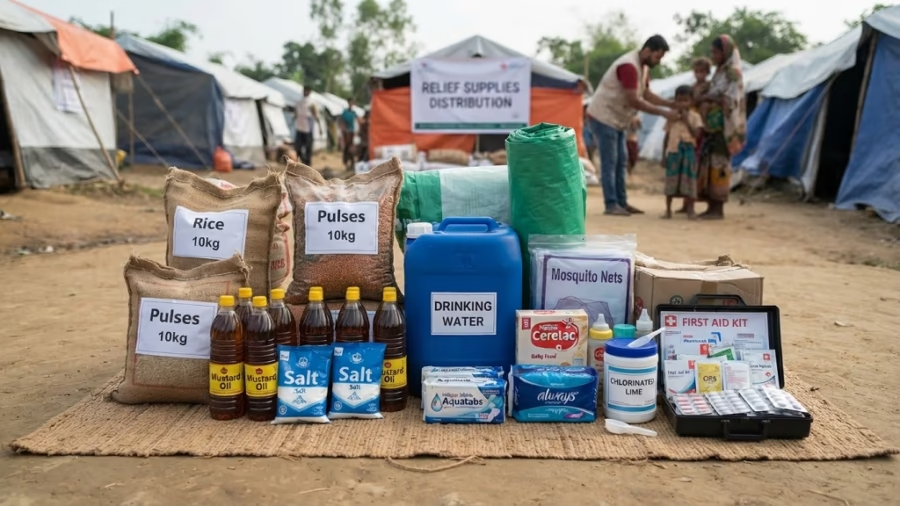
Authorities have distributed thousands of tonnes of essential relief materials to flood-affected families.
The supplies include:
- Rice
- Pulses
- Salt
- Mustard oil
- Safe drinking water
- Tarpaulins
- Mosquito nets
- Baby food
- Halogen tablets
- Sanitary napkins
- Bleaching powder
- Essential medicines
Relief supplies are still reaching inaccessible mountain villages from government agencies, voluntary agencies and local communities.
Government Response-
Assam Chief Minister Himanta Biswa Sarma has assured the people that the government is making every possible effort to restore normalcy as soon as possible.
The government’s priorities include:
- Restore power supply
- Fixing roadways/lift levels.
- Health services must be available and affordable.
- Assistance with displaced families
- Maintaining the provision of relief items.
Even district administrations have issued advisories requesting that residents not take paths through rivers that are still above the danger mark until the water level can be considered under total control.
Economic Impact-
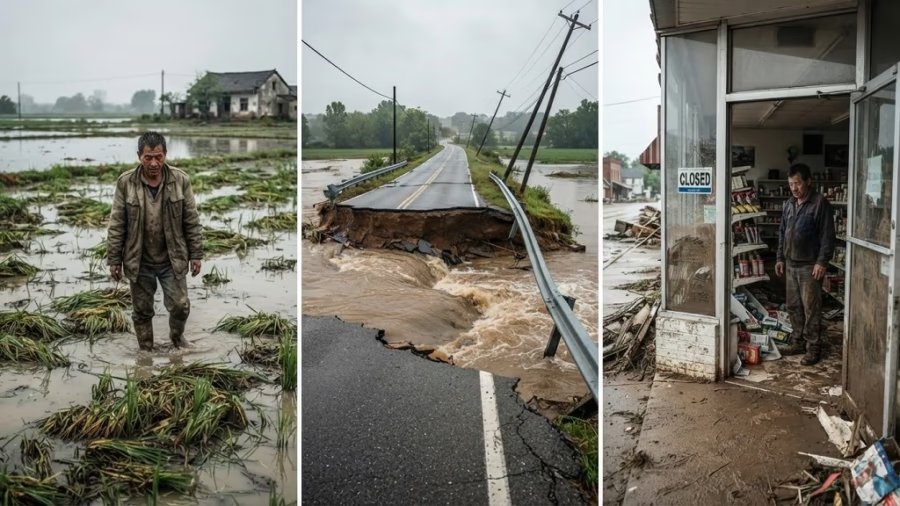
The floods affected the economy of Assam in the following sectors:
Major impacts include:
- Severe crop depletion
- Essentially, the level of damage to the transportation infrastructure.
- Increasing cost of rehabilitation
- Interrupting local business operations.
- A decrease in tourism activities
- The loss of livestock
- Hindrances to Rural Development Project Timelines:
According to experts, full economic recovery will not be achieved until there is continuous financial assistance, reconstruction of infrastructure and help given to affected farmers and businesses.
Environmental Impact-
The natural ecosystems of Assam have also been negatively affected by the floods.
Key environmental concerns include:
- Riverbank erosion
- Soil degradation
- Water contamination
- Loss of biodiversity
- Damage to wetlands
- Increased risk of water-borne diseases
While seasonal flooding generally restores nutrients to the fertile floodplains, the impacts of severe flooding can cause permanent environmental destruction and loss of habitat.
Challenges Ahead-
Despite improving conditions, several critical challenges remain.
These include:
- Rehabilitation of displaced families
- Reconstruction of damaged houses
- Repair of roads and public infrastructure
- Agricultural recovery
- Prevention of disease outbreaks
- Protection of vulnerable communities during future floods
The following weeks are likely to be important in establishing the speed of recovery across the affected districts.
Future Plans for Flood Management-
To reduce the effects of future floods, it is expected that Assam will enhance its flood management plan by means of several long-term measures.
Improved Early Warning Systems:
More and earlier real-time flood prediction and community-level warning systems will help to allow more rapid evacuations and improve awareness and response.
Stronger Embankments:
Construction, re-enforcement and routine maintenance of embankments will mitigate flood hazards in the vulnerable zones.
Climate-Resilient Infrastructure:
Anticipated roads, bridges, schools, and public facilities of this century are likely to be constructed to survive occasional severe weather.
Better River Management:
Enhanced desiltation, drainage and scientific monitoring of rivers would definitely help reduce the severity of floods.
Community Preparedness:
Community resiliency will be enhanced through greater public knowledge, disaster preparedness training, and evacuations.
Technology-Based Monitoring:
Increased application of satellite imagery, drone photography, GIS mapping, and real-time monitoring systems will enhance flood forecasting and disaster response.
Safety Tips During Floods-
Journeys should happen as in official safety instructions to minimise danger during a flood.
Follow government guidelines.
- Stay clear of waterlogged roads, rivers, and banks.
- Have emergency supplies available.
- Drink clean or treated water.
- Keep yourself informed by official weather bulletins.
- Proceed to the in-charge relief camps if directed.
Foremost and most effective ways of reducing the risk of floods are through proactive measures.
Conclusion-
Despite the receding flood waters indicating an improving Assam Flood 2026 situation, the humanitarian crisis is far from over, with over 5.24 lakh people still suffering from floods. Thousands of people are still in relief camps awaiting rehabilitation. Large-scale devastation of agriculture, infrastructure, livestock and housing reflects the continuing vulnerability of Assam to seasonal flooding. Moving ahead, mitigation efforts in terms of massive investments to build climate-resilient infrastructure, enhance flood prediction capabilities, strengthen embankments, adopt sustainable river management practices, as well as community resilience programs on a long-term basis would be necessary to infuse resilience into Assam.