
Recently, the Government of India has extended the subsidy timeline for e-2Ws (electric two-wheelers) registration till July 31st, 2026, and for e-3Ws (electric three-wheelers such as e-rickshaws and e-carts), the registration date is postponed till March 31st 2028. However, the original budget of ₹10,900 crore for the PM E-DRIVE scheme has been fully utilised; hence, an extension will necessitate a new budget allocation by the government. Some changes were made in the PM E-DRIVE guidelines earlier this year:
- Subsidies can be availed up to the notified dates of registration or until the budget is exhausted, whichever is sooner.
- Electric two-wheelers eligible for the scheme should be registered by the notified cut-off date to avail the subsidy.
- The scheme operates on the basis of “first come, first served” basis.
ALSO READ- China Unveils World’s Largest Fusion Magnet for Artificial Sun
What is the PM E-DRIVE Scheme?
The PM E-DRIVE (Prime Minister Electric Drive Revolution in Innovative Vehicle Enhancement) Scheme is a pioneering program introduced by the Government of India under the Ministry of Heavy Industry (MHI) headed by the Honourable Prime Minister Shri Narendra Modi in September 2024. The scheme aims to promote the use of electric vehicles (EVs) in India and develop a strong clean mobility ecosystem within the country. The budget investment for the PM E-DRIVE Scheme is ₹10,900 crore, along with incentives for selected electric vehicles and building public charging stations for e-vehicles across the nation.
Objectives of PM E-DRIVE:
The primary objective of PM E-DRIVE is to facilitate the faster adoption of electric vehicles, expand the charging infrastructure, reduce air pollution, and boost India’s electric vehicle manufacturing sector. This policy intends to replace the Electric Mobility Promotion Scheme (EMPS) 2024 and is based on previous FAME (Faster Adoption and Manufacturing of Electric Vehicles) policies.
- Some of the other objectives of the scheme are reducing air pollution, reducing the dependency on fossil fuels, encouraging the “Make in India” initiative, and developing sustainable modes of transportation.
- The government is also focused on creating nationwide e-charging networks and boosting manufacturing industries under this scheme.
Vehicles Covered in the PM E-DRIVE Scheme-
The following vehicles are eligible for this subsidy scheme:
- Electric 2 Wheelers (e-2Ws)
- Electric 3 Wheelers (e-3Ws) inclusive of registered e-rickshaws & e-carts and L5
- Electric Ambulances
- Electric Trucks
- Electric Buses
- Charging infrastructure
- Upgrading of Testing Agencies
With increased focus towards provision of low-cost and eco-friendly mode of public transportation for masses, the scheme will apply mainly to such e-2Ws and e-3Ws which have been registered for commercial usage. Moreover, besides being used for commercial purposes, privately or corporately owned registered e-2Ws will also be covered under the scheme. To promote the use of advanced technology, the incentives provided will apply to only such EVs which have advanced batteries fitted to them. However, private e-cars are not covered in this scheme due to the purchase incentive component.
Purchase Incentive Component: In the PM E-DRIVE Scheme, the Government of India will provide an upfront fee for the purchase of eligible e-vehicles under the scheme so that the buyer pays a lower fee at the time of purchasing the vehicle. In this scheme, e-2Ws and e-3Ws are eligible.
PM E-DRIVE Budget Allocation-
The total budget allocated to the PM E-DRIVE Scheme is ₹10,900 crore, which has been divided into different components for balanced growth of the EV ecosystem. The budget allocation for the E-DRIVE scheme not only benefits buyers but industries too.
Major budget allocations are as follows:
- Incentives for demand creation of EVs.
- Purchase of electric buses.
- Creation of EV charging infrastructure on a national level.
- Electric ambulance.
- Electric trucks.
- Testing, certification, and implementation.
Components of the PM E-DRIVE Scheme-
- Subsidies / Demand Incentive worth Rs. 3,679 crore for incentivising e-2Ws, e-3Ws, e-ambulances, e-trucks and other upcoming EVs.
- E-Voucher for EV purchasers to get demand incentive under the scheme.
- Spending Rs. 500 crore on the deployment of e-ambulances.
- Expenditure of Rs. 4,391 crore for procuring 14,028 e-buses from STUs / public transport corporations.
- It will provide 22,100 fast chargers for e- 4Ws, 1800 fast chargers for e-buses, and 48,400 fast chargers for e-2Ws/3Ws.
Who can benefit from the PM E-Drive Scheme?
Many stakeholders will gain from the PM E-DRIVE program, which includes:
- Individual EV buyers
- Fleet owners
- Public transport organizations
- Commercial vehicle owners
- Manufacturers of EVs
- Manufacturers of batteries
- Charging facilities
- Technology firms
- Component suppliers
- Logistics and delivery agencies
Features of the PM E-DRIVE Scheme-
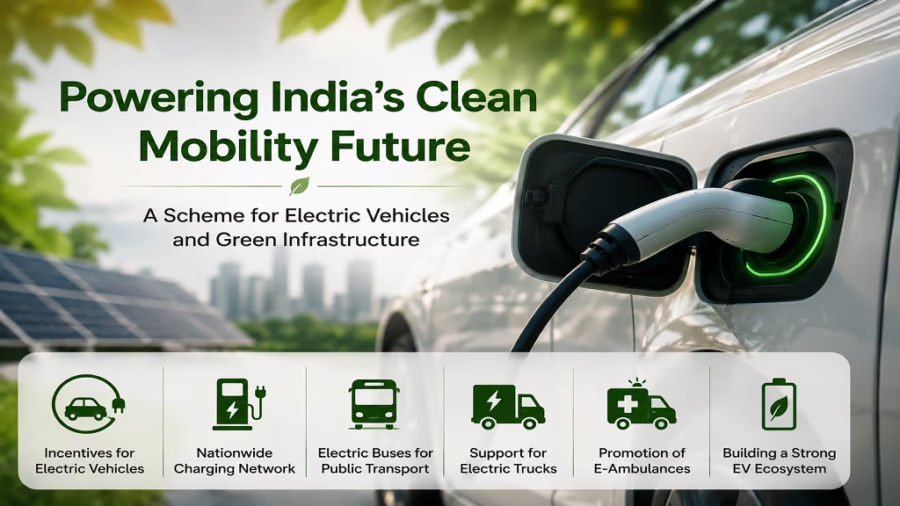
The features of the PM E-DRIVE Scheme are as follows:
- Demand Incentives for Electric Cars: The major feature of the EDRIVE program is the demand incentives for qualified electric cars. The incentives will help in lowering the initial cost of the EVs. Subsidies make it unnecessary for buyers to make different applications, as the incentive program is normally built into the vehicle cost by the manufacturers.
- Multiple Types of Vehicles Supported: The program encompasses an array of electric vehicles such as e-2Ws, e-3Ws, e-buses, e-trucks and e-ambulances. Thus, the advantages of going electric have been spread out not only for individual usage but also for commercial purposes.
- Infrastructure Development for Electric Vehicle Charging Stations: A strong electric vehicle charging infrastructure is critical to the uptake of EVs. PM E-DRIVE provides financial assistance for the purchase of e-vehicles:
- Metro cities
- State highways
- National highways
- Railway stations
- Airports
- Commercial centers
- Petrol stations
- Advocacy of Electric Public Transportation: The initiative will help purchase thousands of electric buses to be used by transport undertakings owned by the state and urban local authorities. Clean transportation will greatly reduce pollution in cities, besides saving fuel expenses for transport organisations.
- Stimulation of Electric Lorries: Heavy lorries are responsible for significant levels of pollution. PM E-DRIVE is one of the first national schemes that specifically aims to stimulate the use of electric trucks, thus encouraging logistics firms and fleet managers to turn towards greener transport.
- Electric Ambulances: Electric ambulances are yet another innovative element of the scheme. These could be used not only to lower pollution but also to build environmentally friendly healthcare infrastructure.
Benefits Driven by the PM E-DRIVE Scheme-
- Cleaner Environment: Pollution from vehicles has been found to be one of the main contributors to air pollution. The implementation of more electric vehicles will help in reducing the amount of carbon dioxide and harmful pollutants emitted into the environment.
- Reducing Fuel Imports: India is currently importing the majority of its crude oil needs. The initiative will help in reducing the country’s need for petroleum products that are imported.
- Operational Savings: Electric cars are generally cheaper to run and maintain than traditional petrol and diesel cars. Consumers and companies are likely to save in the long run through decreased maintenance and fuel costs.
- Manufacturing Benefits: This initiative will result in the manufacture of locally-made electric vehicles, batteries, motors, controllers, and other relevant components of electric vehicles. It will help in realising the goal of the “Make in India” program.
- Job Creation: As the demand for electric vehicles increases, it results in employment creation in areas such as manufacturing, battery manufacturing, charging equipment installation, research, software engineering, vehicle maintenance, and renewable energy systems.
- Public Transport Improvement: The adoption of electric buses will help improve the transport system in cities by providing clean and quiet buses with efficient operation.
Wrapping it Up…
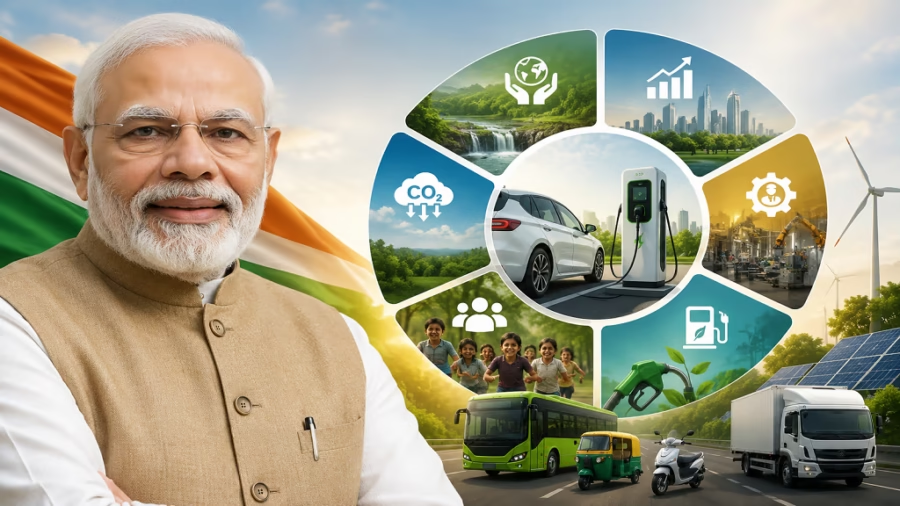
At last, the PM E-DRIVE Scheme is one of the crucial endeavours of India towards the faster adoption of electric mobility. The scheme not only includes financial incentives but also focuses on infrastructure development, electrification of public transport, and manufacture of domestically built cars. Apart from promoting purchases of electric vehicles, it is working towards creating an advanced and future-proof mobility system that caters to the needs of people, businesses, and the environment. India’s efforts towards becoming a developed country are further supported by the PM E-DRIVE Scheme, which promises to change the transportation industry.