
Updates on the Operation Project Freedom-
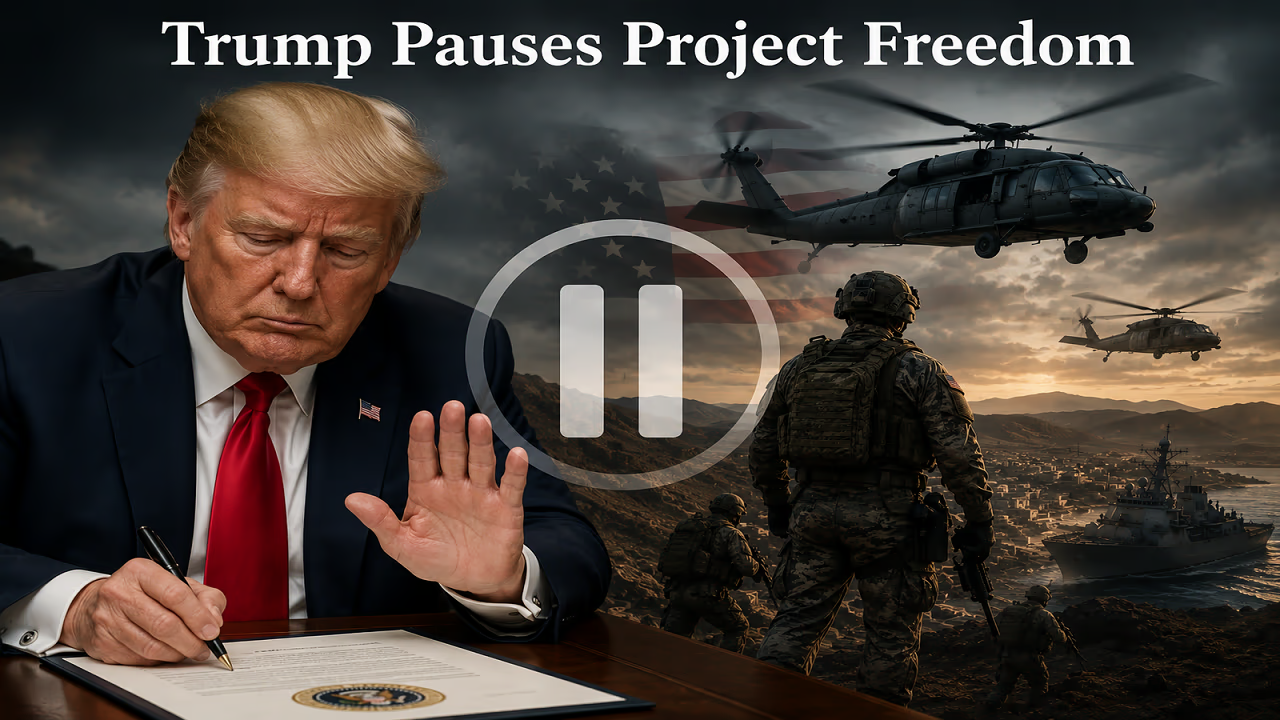
- On 5-6 May 2026, the pause was imposed on Project Freedom, announced by U.S. President Trump, for a short period to allow space for potential discussions on an agreement with Iran, related to the Strait of Hormuz.
- The US forces were quick to destroy the six Iranian ships that posed a threat to the shipping vessels by deploying Apache helicopters and other weaponry, while the Defence Secretary, Pete Hegseth, announced overwhelming firepower for future attacks on US vessels.
- On May 5th, the President, Donald Trump, decided to put a hold on the operations after one day in consideration of achieving the “Complete and Final Agreement” with Iran, along with the appeals of Pakistan and others.
- The operation ‘Project Freedom’ is still on hold, with the attention now on past Operation Epic Fury. There have been no reports of its restart in light of the unstable ceasefire negotiations.
- On Thursday, 7 May 2026, after the pause imposed by the U.S. on Operation Project Freedom, the Ports & Maritime Organisation of Iran celebrated it as their victory. Further, they stated that it is available to provide necessary assistance to stranded commercial ships operating in the vital Strait of Hormuz region and surrounding areas.
ALSO READ- Hantavirus Killed 3 on Atlantic Cruise Ship
What is Operation Project Freedom?
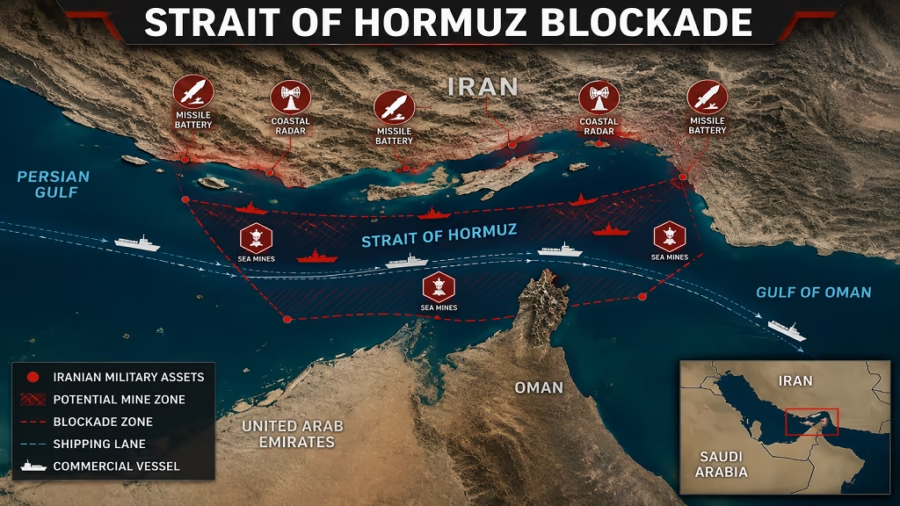
U.S. President Donald Trump launched a short-lived military diplomatic initiative, “Project Freedom” or “Operation Project Freedom” on 3 May 2026 (Sunday) as an attacking response to Iran’s attack on the U.S. convoys passing through the Strait of Hormuz. Through this route, the 20% of the global oil trades take place, and resume the commercial shipping. The operation is said to be the second stage of Operation Epic Fury. ‘Operation Project Freedom’ was targeted at assisting the ships of other countries trapped in the Strait of Hormuz due to being innocent bystanders without any connection to the events happening in Western Asia. According to Trump, a number of those ships had run out of provisions such as food, drinking water, and all other things needed by the large crews for maintaining hygiene aboard.
Operation Epic Fury was implemented on Feb. 28, 2026, when the United States military began its operations as per the command and instructions from Donald Trump, President of the United States. American forces have targeted areas that present a danger to the stability of the Iranian regime’s security apparatus.
For Operation Project Freedom, the U.S. deployed 100 military aircraft, guided missile destroyers, surveillance drones and around 15,000 military personnel, thus creating a blockade on Iranian ports.
However, the U.S. President put a pause on the operation to see the scope of negotiations with Iran. Moreover, President Trump mentioned that the decision to put the talks on hold was meant “to see if the Agreement could be finalised and signed between Tehran and Washington.”
Primary Goals of Operation Project Freedom-
President Trump implemented Operation Project Freedom to achieve the following targets:
- Escort and protect the transits of commercial ships.
- Remove the blockade enforced by Iran, which led to the disruption of the oil trade.
According to the U.S., 1550 vessels representing 87 countries were stranded, and 22,500 mariners were trapped, unable to proceed further.
The blockade has also increased energy costs. In response to the disruption in oil supplies, prices quickly shot up above $100 per barrel at the peak of the crisis. The International Monetary Fund (IMF) predicted that despite an immediate end to hostilities, several months would be required for the economic reverberations to settle down. - Restart the freedom of navigation for merchants for whom the trade corridor, Strait of Hormuz, is of economic importance.
- Protection of vessels from Iranian missile attacks by offering a defence system with aerial protection.
- According to Trump, the move followed requests made by Pakistan, which had acted as an intermediary trying to arrange a peaceful agreement between the United States and Iran, among other nations.
Major Reasons to Put a “PAUSE” on the Operation-
- Diplomatic breakthrough: Significant progress was made towards achieving an absolute and definitive peace treaty with Iran through negotiations.
- Requested by Pakistan: The halt was due to Pakistan and other nations’ requests for a peaceful settlement.
- Military victory attained: President Trump used the “tremendous Military Success” that was recorded during the U.S. war with Iran as a reason for the halt.
- Test diplomatic strategy: The halt was meant to determine whether the peace treaty could be reached without more military engagements.
- Blockade still in effect: During the halt of Project Freedom, the U.S. maritime blockade of Iranian ports was kept in full operation.
- Temporary and short-term: The halt was temporary and dependent on whether Iran signed the peace treaty.
Response of Iran-
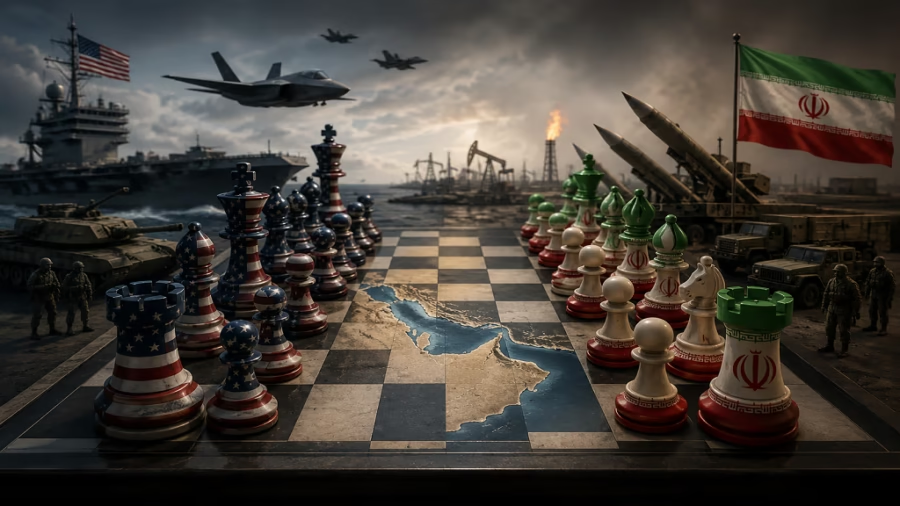
Iran has been fiercely opposed to the US-led Operation Project Freedom that has taken place within the Strait of Hormuz, considering the initiative a ceasefire breach and also a menace to Iran’s sovereignty.
- The Iranian military forces claimed that the Strait’s safety was “in the hands” of Tehran, adding that all vessels navigating through should consult with the Iranians before moving into the strait, warning that there would be a “kinetic response” if the US tried to meddle, even threatening an attack on US ships.
- Abbas Araghchi, the foreign minister, termed the Freedom Project a “dead-end project,” stating that military options are not capable of resolving political differences and cautioning the US and other countries against entering the conflict.
- The Iranian government forwarded proposals to the Americans through Pakistan regarding the cessation of hostilities, American withdrawal, release of funds, and removal of sanctions.
- “Pause on Project Freedom” was seen as a sign of Iranian supremacy over the waterway and the withdrawal of the US military by the Islamic Revolutionary Guard Corps (IRGC).
- The Iranian government and parliament have denounced the temporary pause as a “strategic triumph” for Iran, belittling any successes on the part of the United States.
- Iran came forward with maritime and medical assistance to the trapped ships in the Strait of Hormuz after the declaration was made by Iran about its suspension of activities.
- No further aggression observed from Iran till May 7, as the nation has been focusing on ceasefire talks facilitated by Pakistan.
Global Impact of Pausing the Operation-
After the pause declared by President Trump on Operation Project Freedom, the world experienced the impacts that temporarily averted any fears of escalation in the Strait of Hormuz.
- However, areas such as shipping, energy markets, and the global economy continue to feel the effects of the blockade.
- The price of crude has risen previously to above $110 per barrel due to disruptions caused by the blockage of the 20%-25% of the world’s oil that transits through the Hormuz Strait, but a relief rally ensued when the project was put on hold as of May 5.
- Prices for jet fuel have more than doubled, raising ticket prices and reducing capacity.
- Approximately 800 ships with 23,000 sailors representing 87 countries are stuck in the Persian Gulf region, where tanker movements have fallen by more than 90%. Firms like Maersk Corp had ceased operations, slowing supplies of oil, liquefied natural gas, and cargo.
- Re-routing the convoys will take time and incur huge expenses, jeopardising food security through delayed fertiliser and grain shipments.
- Financial markets became highly volatile; the positive prospect of de-escalation through a pause led to gains for stocks, but the potential for inflation shock and recession in import-dependent countries such as India and East Asia remains due to uncertainty.
- Iran’s promise to assist at sea indicates its bargaining power, while the U.S. blockade creates pressure without achieving closure.