
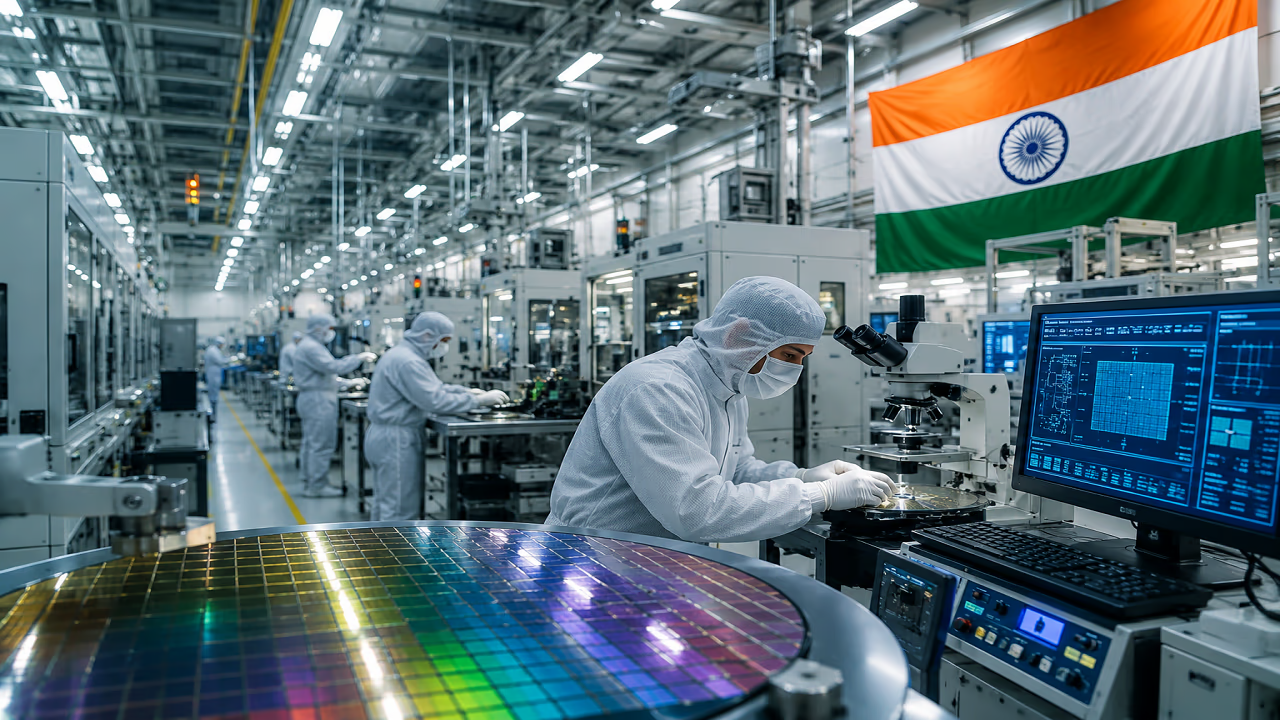
India‘s Union Cabinet, headed by PM Narendra Modi, has approved two of India‘s biggest-ever semiconductor projects worth Rs. 3936 crore in Gujarat, pushing forward the India Semiconductor Mission (ISM). The 2 facilities, a GaN-based Mini/Micro-LED fab and an OSAT unit, are to create 2,200+ high-skilled jobs in India.
ALSO READ- Operation Project Freedom
Cabinet’s Bold Semiconductor Push-
The approvals are an indication of the expansion of Silicon Valley‘s extension in Gujarat, Dholera and Surat will have state-of-the-art units. A total of 12 ISM projects cover an area of 1.64 lakh crore, of which seven have come up. Several academic institutions and chip-designing startups get support, now 2 fabs ship commercially, two more to be launched.
This step challenges China‘s supremacy, focusing on self-sufficiency in displays and power electronics. PM Modi strives for India to be a global semiconductor hub by 2030.
Crystal Matrix’s GaN Fab in Dholera-
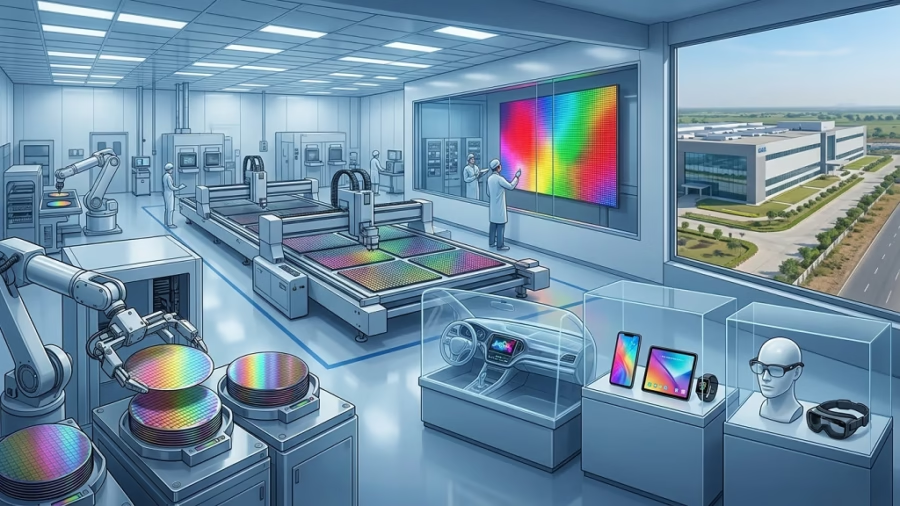
Crystal Matrix Limited(CML) is spearheading India‘s first compound semiconductor plant in Dholera Special Investment Region. It manufactures Mini/Micro-LED panels of 72,000 + sqm with Gallium Nitride(GaN) tech, gl and offers 24,000 RGB epitaxy wafers annually.
Applications span:
- Huge Televisions and digital signs.
- Smartphone, Tablet, Automotive: Displays.
- XR glasses and smartwatches are pushing the growth of AR/VR.
GaN has better efficiency than silicon, so it makes flatter, brighter display screens with a 50% reduction in power use. Leading to India taking the next step with modern technology and beyond the limits of OLED.
Suchi Semicon’s OSAT Powerhouse in Surat-
Suchi Semicon Private Limited (SSPL) constructs a new OSAT (1,033mt/y) plant in Surat, India. The company assembles/tests discrete semiconductors for power electronics and analogue ICs, for automotive, industrial automation and consumer devices markets.
Key outputs:
- High-voltage chip for EVs, inverter.
- Sensors for factories and smart homes.
- Sound components reduce reliance on imports.
Backend (such as OSAT) complements the chip designer by completing the package lifecycle once the design process is over. This is important for India, given we import 95% of the chips we use, worth a staggering $20 B+ each year.
| Project | Location | Capacity | Tech Focus | Job Creation |
| CML GaN Fab | Dholera | 72K sqm LED + 24K wafers | Mini/Micro-LED, GaN Epitaxy | 1,200+ |
| SSPL OSAT | Surat | 1,033M chips/year | Assembly/Test, Power ICs | 1,000+ |
| Combined | Gujarat | ₹3,936Cr investment | Full Ecosystem | 2,200+ Skilled Roles |
These units leverage Gujarat’s power surplus and ports for exports.
Why Semiconductors Cost a Fortune in 2026-
High semiconductor prices, because of layered crises: geopolitics (US-China trade conflicts, quake-taking risks for Taiwan) affect 70% of worldwide production from TSMC; 40% jump in input raw materials (neon gas, Ukraine origin and rare earth element) in the wake of conflicts. In 2025…
Manufacturing hurdles amplify costs:
- Extreme Complexity: 2nm nodes require 100+ steps; first order yields below 80%.
- Intensity of Energy Use: Fabs by the dozen wallow in excess of 100MW and rising, electricity at a hefty 8/unit only makes a bad situation worse.
- Concerns about the availability of talent: India produces 20000 engineers every year, while the world needs one million.
- Inflation Cascade: Wafer up 25%, Packaging up 15% in the 2026 oil rollercoaster.
1 single iPhone chip costs $50+ to make; EVs require 1000 of those. India ISM subsidy (50% capex) is looking to cut landed cots 30%.
ALSO READ- Hantavirus Killed 3 on Atlantic Cruise Ship
India’s Semiconductor Mission Deep Dive-
ISM launched in 2021, with 76,000 crore to attract $10B FDI. In addition to Odisha and Assam, Gujarat hosts fabs. Fabs include Tata‘s Assam mega-fab as well as a Micron Packaging Plant.
Ecosystem stats:
- 8 projects approved.
- Commercial ops: 2 active and 2 approaching.
- Academic boost. Tools go out to 315 institutes.
- 123 startups: 104 innovative IP.
- Govt incentives 50% for fabs, 25% for others attract interest from Foxconn, PSMC.
Gujarat’s Semiconductor Ecosystem Surge-
Plug-and-play infra (5GW power in Dholera SIR, Surat skilled labour) Gujarat=Taiwan. Rs 10000cr land/subsidies. Jobs from PhDs to technicians. To be trained via SVNIT Surat.
Ripple effects:
- Europe, the US, and in the midst of ‘China+1’ export centres.
- EV indigenisation: 30% local chips by 2028.
- Display self-sufficiency: Save $5B on imports.
- PM Modi called it “Atmanirbhar in chips”.
The Indian electronics dream, by developing two Dholera and the map has Gujarat‘s semiconductor centres, Surat, connected with the Gujarat map.
Global Context and Strategic Wins-
India (3rd in chip design) is behind in fabrication. These projects fill a gap and aim for a 10% OSAT share. Partners such as the US will commit to a technology transfer (iCET pact).
Comparisons:
| Country | Fab Strength | 2026 Output | India Edge |
| Taiwan | 60% advanced | $150B | Diversification ally |
| China | Mass volume | $200B | Geopolitics hedge |
| India | Emerging | $10B target | Cost + policy |
Future Roadmap for Semiconductor Atmanirbhar Bharat-
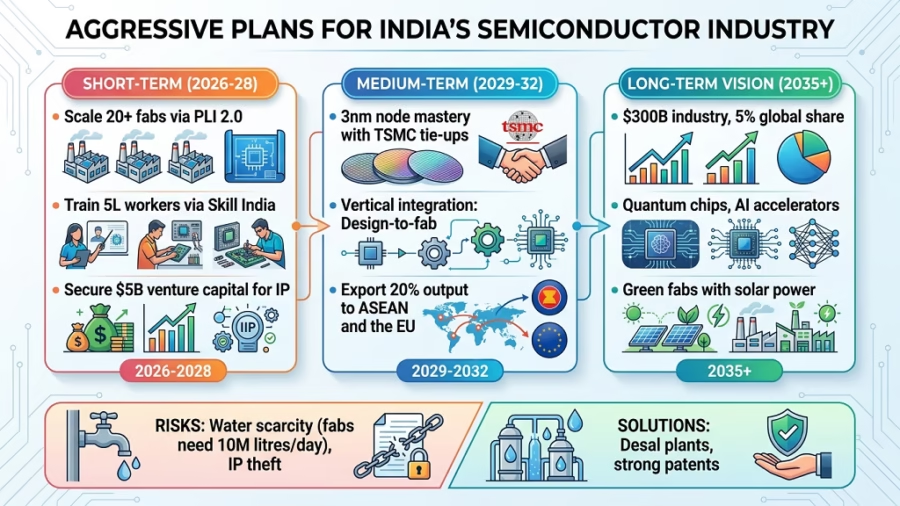
To sustain momentum, India needs aggressive plans:
Short-Term (2026-28):
- Scale 20+ fabs via PLI 2.0.
- Train 5L workers via Skill India.
- Secure $5B venture capital for IP.
Medium-Term (2029-32):
- 3nm node mastery with TSMC tie-ups.
- Vertical integration: Design-to-fab.
- Export 20% output to ASEAN and the EU.
Long-Term Vision (2035+):
- $300B industry, 5% global share.
- Quantum chips, AI accelerators.
- Green fabs with solar power.
Risks: Water scarcity (fabs need 10M litres/day), IP theft. Solutions: Desal plants, strong patents.
Stakeholder Buzz and Economic Impact-
Industry: “Game-changer,” says SEMI India. Stocks: Tata Elxsi +5%. Gujarat GDP to rise 2%. Poll: 78% back ISM for jobs.
Conclusion-
Gujarat‘s two semiconductor triumphs drive India to chip self-reliance, conquering expensive chips with indigenous strength. From GaN displays to power semiconductors, ISM accelerates resilience for EVs, AI, military. Ambitions ramping up fabs, upgrading youth set the stage for a $1T electronic empire. Gujarat charts the course; Bharat reaches for international limelight.