
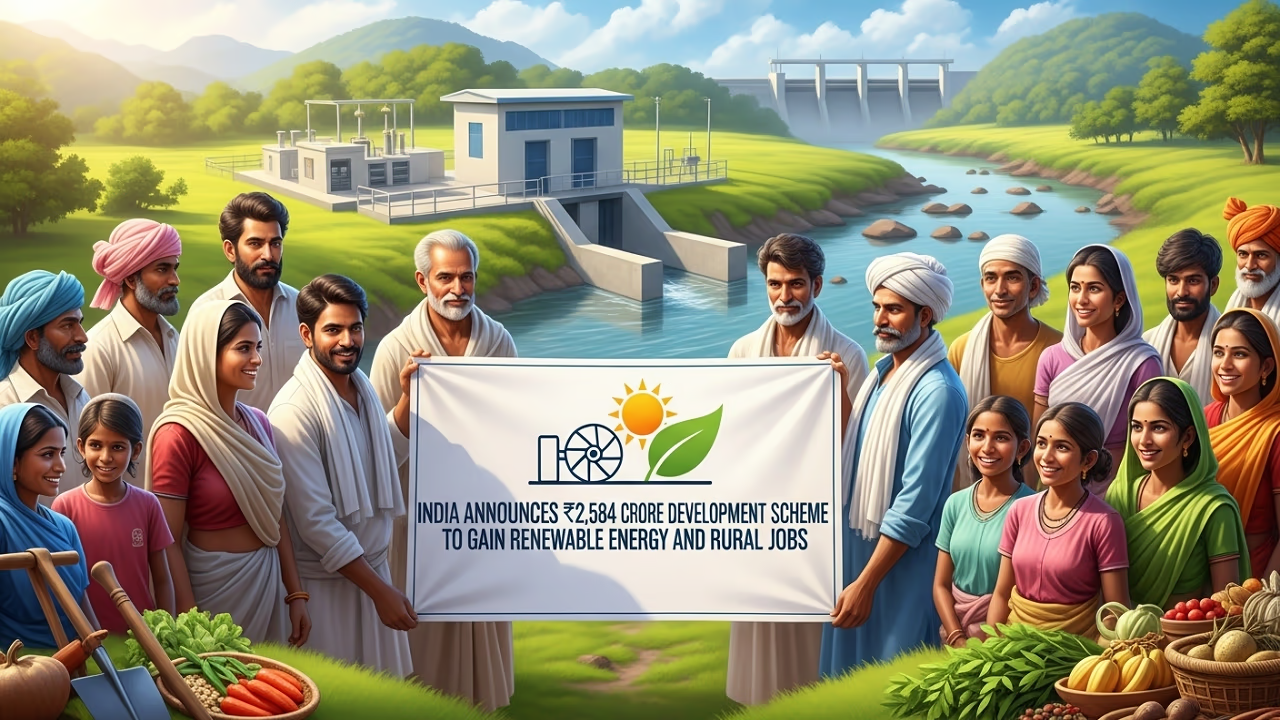
A step toward green energy and greater self-sufficiency, the Union Cabinet has approved the grant of 2,584.60 crore for a new Small Hydro Power Development Scheme; this scheme will span over a period of 5 years (FY 2026 -27 to 2030 -31) and will seek to generate an additional 1,500 MW of small hydro power (SHP) capacity. The scheme will give priorities to hilly regions and the North-Eastern states. Small hydro power projects are the game-changer for assured, round-the-clock power supply in an era of intermittent solar and wind power, with India striving for net-zero by 2070.
ALSO READ- Fusion of Democracy and Innovation in IEVP 2026
Key Takeaways from Small Hydro Power Development Scheme-
- India has availed 5,171 MW capacity of small hydro power out of 21,133.61 MW at 7,133 sites.
- Rs 2,584.60 crore scheme to open up ~1,500 MW new capacity in hilly and North Eastern states, PUNE 290MW.
- Expectation of 15,000 crore of private investment and creation of 51 lakh person-days of employment during the construction period.
- Supports Atmanirbhar Bharat through indigenous machineries and DPR support for 200+ projects.
- Low ecological footprint: Best suited for off-grid areas with low land requirements and no emissions.
Why Small Hydro Power Matters Now-
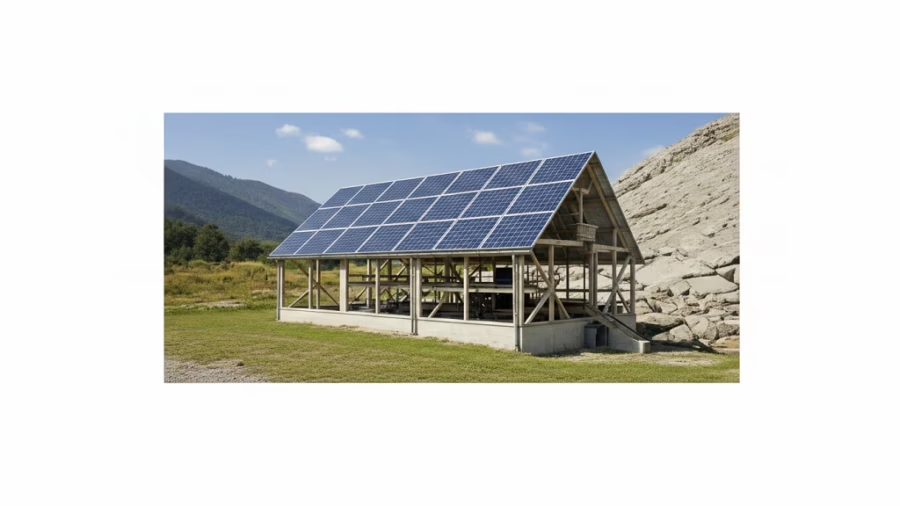
Hydro power, i.e. the power derived from the flow of rivers, is the main renewable source of energy from the point of view of technological maturity and operational experience globally. While solar or wind are intermittent, hydro is firm and can be stored to augment grid stability. The energy demand is increasing by over 7% every year, hilly remote parts and the north eastern states continue to remain otherwise unconnected. The Small Hydro Power Development Scheme provides support for 1-25 MW projects (larger projects are supported by the Ministry of Power) in MNRE.
This scheme addresses the in-room. While small hydro‘s distributed way of working reduces transmission loss, it also energises cluster settlements directly and balances out regional growth. Extra power here will empower border districts and hills, quoted MNRE Secretary Amit Gupta exclusively.
Did You Know? Run-of-the-river small hydro projects take water in for turbines, then turn it loose again, with zero large dams, negligible ecological impact.
Core Pillars of the Small Hydro Power Development Scheme-
The scheme intelligently tackles issues like financing constraints, project delays, and regional disequilibrium through differentiated incentives.
Financial Support Breakdown:
- North Eastern States & Border Districts:3.6 crore/MWin project cost or 30% (lower of two) project limits capped at 30 crore/project.
- Other Hilly/Remote Areas: 2.4 crore/MW or 20% of cost (less), up to 20 crore/project.
- Make provisions of Rs. 30 crore for 200 DPRs and secure a strong pipeline.
Economic and Job Boost:
- Bringing 15,000 crore investments with a condition to use indigenous turbines and technology for Atmanirbhar Bharat.
- Construction work worth 51 lakh person-days; local O&M employment in rural tribal pockets, and others.
- Spurs MSMEs in manufacturing, logistics, imagine welders in Himachal or engineers in Arunachal.
- Others give the viability fix credit: “Until now, you could not start projects because of the huge initial investment,’ says Himachal Pradesh-based hydro firm CEO Priya Sharma. “Now anything is possible, and all needs are on a level playing field.”
Regional Powerhouses: India’s Small Hydro Map-
India has a 21133.61 MW SHP potential spread across varied terrains all over the country, of which only 24.5% has been tapped till now. The Northern and North- Eastern parts are the front-runners, but every region has its own shine.
Northern Region: Mountain Power Epicentre (7,978 MW Potential):
- Himachal Pradesh: 3,460 MW (top dog with perennial rivers).
- Uttarakhand: 1664 MW; J&K: 1312 MW; Ladakh: 395 MW
Long-term persistent flow is suitable for a run-of-river system; the initial scheme, therefore, would enhance an underdeveloped site that has an average moderate percentage of in-stream flow utilisation.
North-Eastern Region: Untapped Frontier (3,262 MW):
- Arunachal Pradesh: 2,065 MW (lion‘s share).
- Meghalaya: 230 MW; Sikkim: 267 MW; other states, such as Assam: 202 MW, Nagaland: 182 MW.
Great for autonomous remote areas in tribal hills, schemes’ increased aid attracts investors.
Southern Region: Infrastructure Leader (5,490 MW):
- Karnataka: 3,726 MW (68% regional).
- Kerala 277 MW, Tamil Nadu 123 MW;
Granular optimisation in grids for high utilisation; optimising canals for short-term wins now.
Western Region: Canal Innovators (2,963 MW):
- Maharashtra: 786 MW; Gujarat, Rajasthan follow.
Canal-fall and dam-toe projects leverage irrigation—low-cost, high-impact.
Eastern Region: Rural Reviver (1,440 MW):
- Bihar: 527 MW; West Bengal: 392 MW.
- Boosts farms, villages; scheme aids low-utilisation push.
Did You Know? Canal-top small hydro power taps existing drops in irrigation channels—water powers turbines, returns seamlessly.
Benefits of Driving Sustainable Growth-
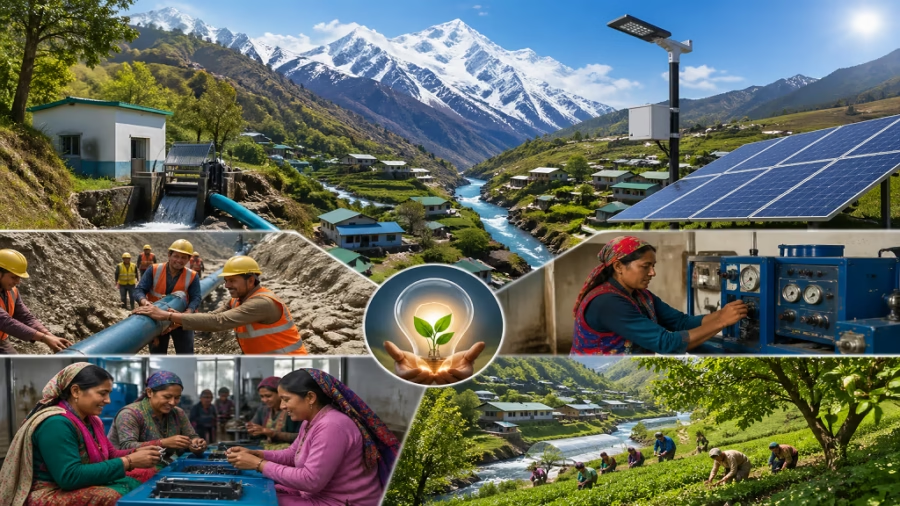
Small hydro power is not only green, but it’s also a rural rocket.
- Decentralised Reliability: Close to-demand power reduces losses and levels voltage on hills.
- Zero-Fuel Clean Energy: No emissions, 50+ year lifespan, tiny footprint (esp. compared to large dams)
- Job Engine: Direct (construction/operations & maintenance) + indirect (suppliers) are for women, youth.
- Eco-Social Lacklustre: No displacement; will barge in alongside the agro-forestry.
Regarding energy consumption projects, in the presence of identical blueprints to the Mahakali project, in cases where the study has been carried out in the upper area of the Trans Himalayan States of Uttarakhand, there was an 80% reduction in genset use, with total savings of 50 lakh per year for one village.
Challenges and Road Ahead for Small Hydro Power Projects-
Hurdles remain: expensive DPRs, geo-risks in hills, and funding gaps. The scheme offers aid, but experts hope for swift clearances and climate-resilient designs. Private players eye PPPs; Arunachal pushes land.
ALSO READ- PM Internship Scheme 2026: ₹9000 Monthly Stipend
Conclusion: A Brighter, Greener India-
The world‘s largest exploit all these, call it India‘s masterstroke for energy security.1500 MW of capacity, 15000 crore inflow, crores of jobs, all to be made at hill states, north eastern states and India‘s borders to synergise with renewables and Atmanirbhar Bharat. PM Modi passionately murmurs “Sabka Vikas,” as small hydro shines in the shadows, strengthening grids and bolstering stability. Expect this to boom vastly more turbines resonating across the waters of Himachal, Arunachal, basking, cranking India as a sustainable super power, projections here, projects here.
FAQs-
A: 1-25 MW capacity, ministry MNRE; run-of-river, canal-based is to be pursued for low environmental impact.
A: Hilly states- Himachal, parts of Uttarakhand, & North eastern states of Arunachal require more financial support.
A: 51 lakh person-days in the build phase; keen on local manufacturing; is attracted to 15,000-crore investments.
A: FY 2026–27 should be rolled out; DPRs on 200 sites commence at once.