
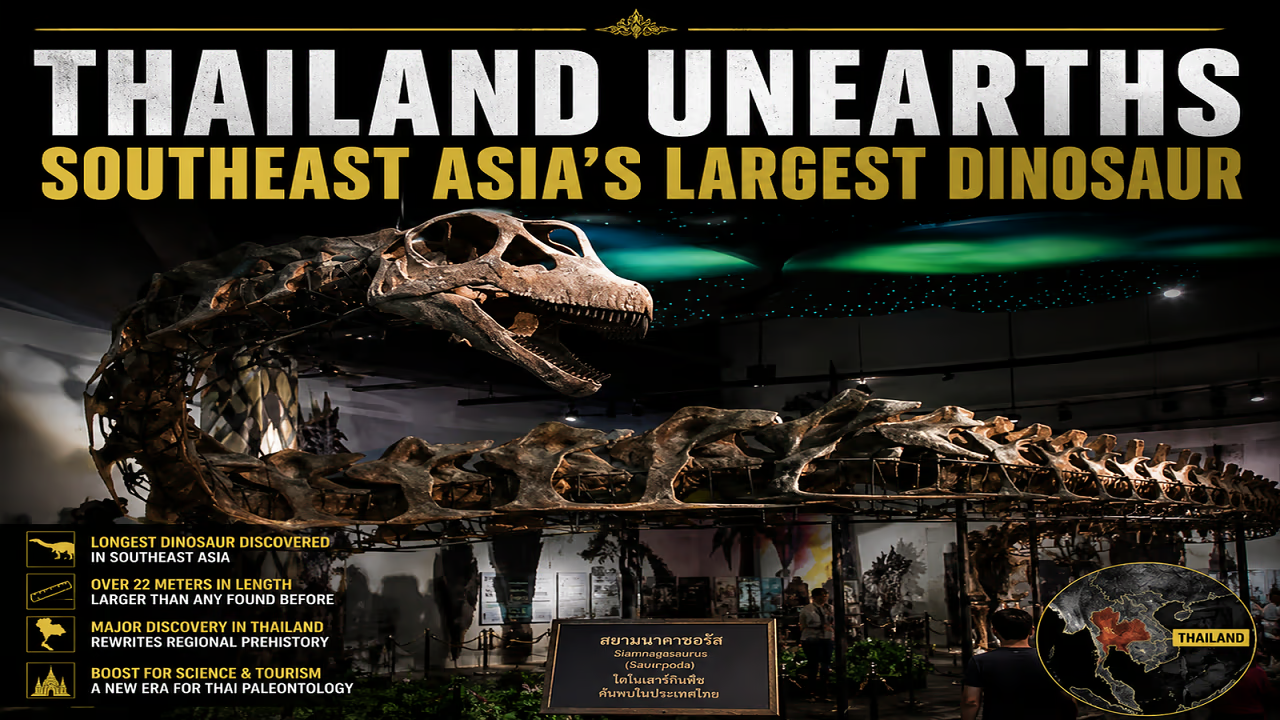
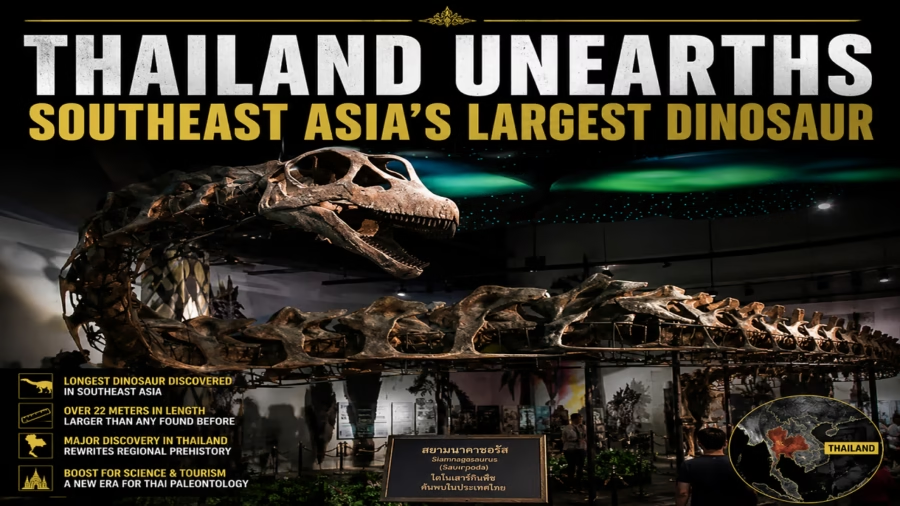
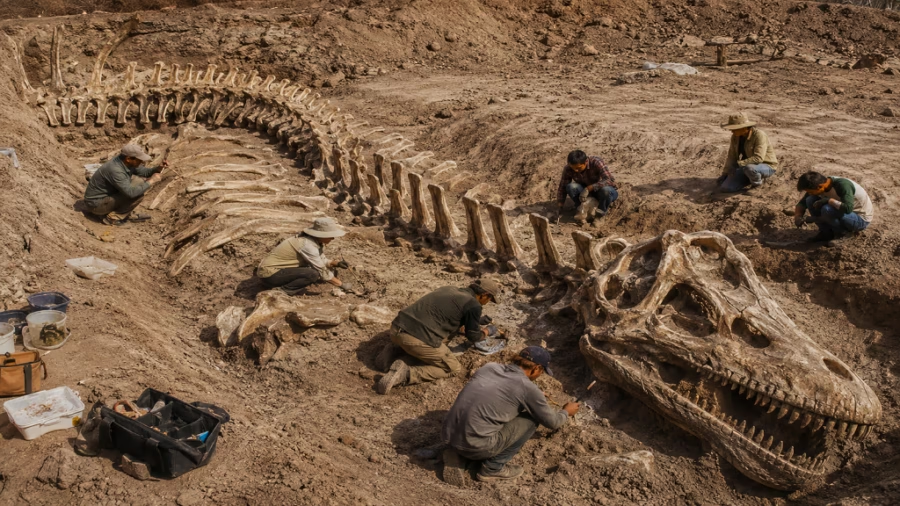
Recently, a 20-meter-long giant whose weight is measured at around the mass of 9 Asian adult elephants. These discoveries amazed scientists after huge vertebrae and bones weren’t something out of the movie Jurassic Park; this is a real discovery of real dinosaurs that existed many years ago in Thailand. This latest discovery of the long-necked dinosaurs is not only for science but also for Southeast Asian history. These dinosaurs are scientifically called Nagatitan Chaiyaphumensis, and their latest discovery marks a decade-long journey of discovering them as a unique species of dinosaurs.
ALSO READ- Trump China Visit: Deal on Taiwan Stability After War, Trade & Hormuz Act
Nagatitan: Mythological-like Creature Uncovered-
Beneath the rugged terrain of Thailand, palaeontologists have discovered something that has completely changed the way the prehistoric past of Southeast Asia is understood. The unearthing of the gigantic beast is named Nagatitan chaiyaphumensis or simply Nagatitan, that markes the milestone in the history of dinosaur discoveries.
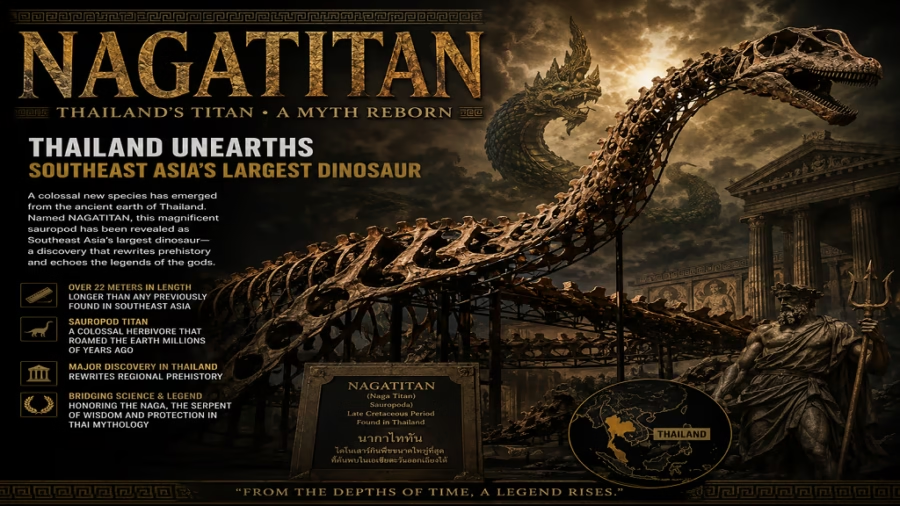
Nagatitan is a combination of two words, “Naga” for the serpent deity that is an important part of Asian mythology and “Titan” representing the immense strength of the dinosaur. In mythology, the Naga is a snake god or goddess who symbolises wisdom, protection, the river, and the ancient powers, seen in Southeast Asian myths and Thai culture. The “chaiyaphumensis” is derived from Chaiyaphum province of Thailand, where it was unveiled. The current discovery makes it the 14th dinosaur that has been identified in Thailand.
Its elongated neck and large body design gave it the name “Nagatitan,” meaning “The Serpent Titan.” The mixture of mythology and science seems to create a cinematic quality, giving it the feel of an unearthed mythological legend. Fossilised bones spanning several excavation sites have shown signs of what could be the biggest dinosaur that has been discovered in the Southeast region.
The Giant Discovery in Southeast Asia-
The discovery of Nagatitan started almost ten years ago on the outskirts of a lake in northeastern Thailand, where fossil bones were discovered. It required years of rigorous analysis for the scientific community to decipher their true nature. Finally, an international team composed of experts from University College London (UCL), Mahasarakham University, Suranaree University of Technology, and the Sirindhorn Museum of Thailand was able to assemble the impressive saga of this gargantuan dinosaur.
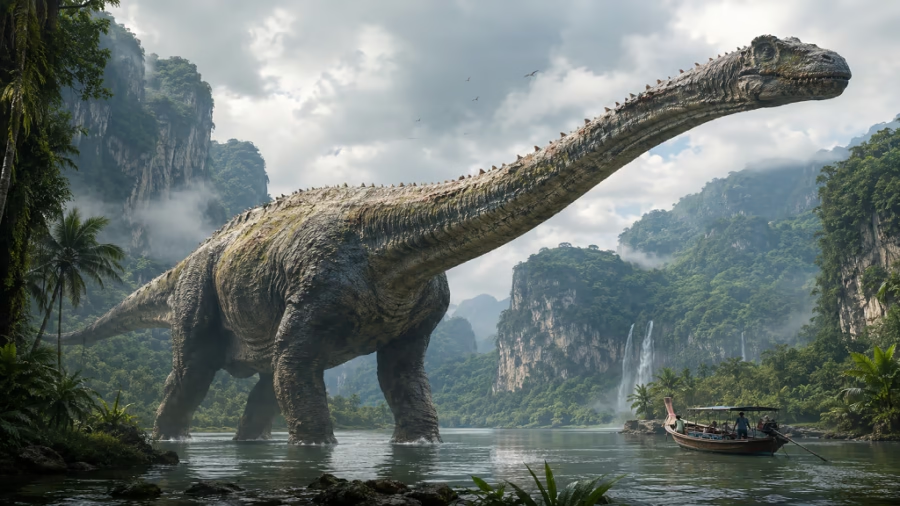
Based on the vertebrae, rib bones, pelvic bones, and limb bones recovered from the excavation site, scientists estimated that Nagatitan would have measured roughly 27 meters (89 feet) in length and weighed close to 27 tonnes, equivalent to nine adult Asian elephants. For reference, a single front leg bone was estimated at 1.78 meters in length, or the height of an average-sized person.
The Legendary Group of Plant-Eating Saurapod-
Nagatitan was a member of the sauropods – a mythical group of huge herbivorous dinosaurs known for their necks and elongated tails. Diplodocus and Brontosaurus are famous examples of this type of dinosaur. It has been estimated that Nagatitan inhabited the Earth some 100 to 120 million years ago during the Early Cretaceous period.
According to the PhD student Thitiwoot (Perth) Sethapanichsakul from UCL Earth Sciences, who was the lead author in this discovery, “Our dinosaur is big by most people’s standards, it probably weighed at least more than Dippy the Diplodocus (Diplodocus carnegii of 10 tons). Yet, our dinosaur still pales in comparison with the gigantic sauropods like Patagotitan (60 tonnes) or Ruyangosaurus (50 tonnes)”.
What Makes Nagatitan “The Last Titan”?
The nickname of the new dinosaur species found in Thailand is associated with certain geological facts and found its origin in Thailand’s youngest rock formation, containing fossils of dinosaurs. Older formations from that period are unlikely to contain any dinosaur fossils, as Thailand turned into a shallow sea back then.
“It might very well be the last or the latest sauropod we will discover in Southeast Asia,” says Thitiwoot (Perth) Sethapanichsakul.
Features of Nagatitan Unlocked in Fossil Reconstructions:
Scientists placed the new dinosaur into the group known as somphospondylans, a subgroup of sauropods believed to have become widespread about 120 million years ago. In more detail, the dinosaur was categorised as belonging to Euhelopodidae, a subgroup that is found only in Asia. Many characteristics differentiated the new dinosaur from others within its group. Specifically, there were many distinct features present within the dinosaur’s vertebrae, pelvic bones, and limb bones. Despite further research by scientists on the excavated fossils, it can be deduced that Nagatitan is:
- A gigantic dinosaur with a long neck
- Most likely an herbivore with a bulky body
- A dinosaur with a long tail for balance
- A dinosaur adapted to living in swamps and forests
- The dinosaur’s tall neck allowed it to eat from high trees.
What is the Importance of this Discovery?
There are several reasons why the discovery of the new species of the giant titanosaur, Nagatitan, is important:
- Geographic Importance:
Nagatitan is the largest known dinosaur in Southeast Asia, weighing around 27 tonnes and being about 27 meters (89 feet) in length. This fossil reveals an essential part of dinosaur geographic distribution, which until now, was better represented on other continents, such as North America, South America, and Africa, but not Southeast Asia.
- Temporal Significance of The Last Titan:
As the largest dinosaur found in Thailand’s youngest fossil-bearing rock formation, it may be the last or most recent example of the giant sauropods in Southeast Asia. There are no fossils of dinosaurs in younger rocks from the late dinosaur epoch because Southeast Asia was covered by shallow seas at that time. This means that it is the last chapter in the history of sauropods in Southeast Asia.
- Scientific Collaboration Excellence:
This discovery shows how effective international cooperation is in modern science. Scientists from different universities in Thailand, UCL, and the Sirindhorn Museum collaborated for more than a decade to make this finding. They studied specimens using 3D scanning and printing technology without moving the specimens, which reduced their carbon footprint.
- Cultural Implications:
The word “Nagatitan” wonderfully blends Thai culture with the practice of naming—“Naga” (legendary snake in Thai folklore) + “Titan” (giants in Greek mythology). It is the fourteenth dinosaur to be identified in Thailand and serves as an inspiration for young Thai scientists.
- Educational Purpose:
A full-size model is currently exhibited in the Thainosaur Museum located in Asiatique, Bangkok. It allows millions of people to have a first-hand experience of this ancient giant.
- The Palaeontology of Thailand:
This finding demonstrates that Thailand plays a prominent role in paleontological studies. As Dr. Sita Manitkoon stated, “Though Thailand is a small nation compared to others in Asia, there is quite a high diversity in dinosaurs found, perhaps the third highest in Asia”.