
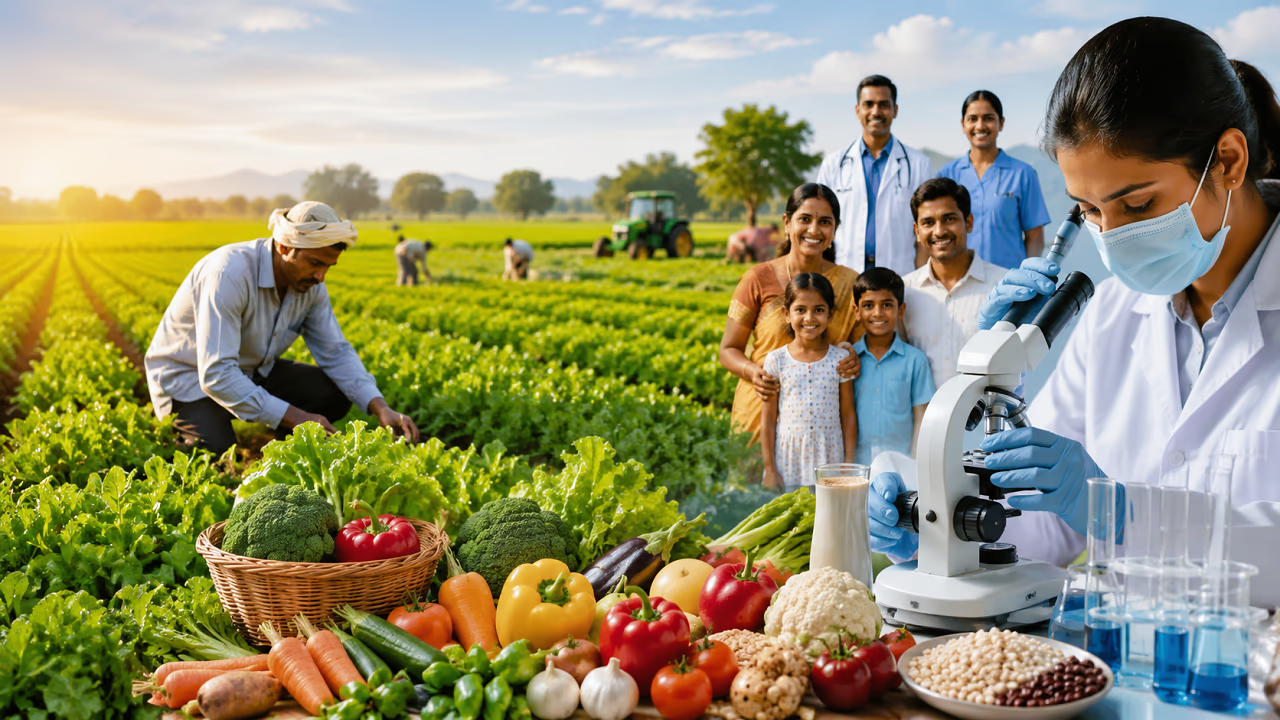
The SEHAT Mission was launched jointly by Union Ministers JP Nadda and Shivraj Singh Chouhan on 11th May, 2016, linking agriculture with health through ICAR-ICMR collaboration. Named as ‘Science Excellence for Health through Agricultural Transformation’, it is based on the ‘Healthy Food, Healthy Farms, Healthy India’ concept to address malnutrition and lifestyle diseases.
ALSO READ- Kuljeet Marhas Becomes the First Woman Honoured as a Fellow of the Meteoritical Society
SEHAT Mission: A Proactive Health Shift-
Union Health Minister JP Nadda described SEHAT as the transition of healthcare in India from systems that treated after symptoms appeared, to those that prevent and identify disease in the earliest stages. Integrating ICAR agricultural research with ICMR medical research, the program provides cost-effective, evidence-based tools against India‘s major non-communicable diseases — diabetes, hypertension and cancer — affecting over 200 million adults.
Nadda spoke of a“whole of government” approach, uniting science, policy, and implementation. There was no extra funding. ICAR-ICMR are jointly sharing the cost so that rollout is quick without bureaucratic delays.
Chouhan’s Vision: Grow What Heals-
Agriculture Minister Shiva Singh Chouhantookhe Indian ethos of “Hitbhuk, Mitbhuk, Ritibhuk” in foodgrain surplus: moving to biofortification for nutrients; now dashing for 120MT+ wheat in 2025-26.
Chouhan focused on farmer safety and nutrition, with emphasis on pesticide hazards and unsafe practices. SEHAT promotes food as medicine, enabling farms to be integrated farms for family health.
Main launch attendees: MoS Bhagirath Choudhary, ICMR DG Dr Rajiv Bahl, ICAR DG Dr ML Jat.
Core Pillars of SEHAT Mission-
SEHAT connects from farm to table through a scientific chain. Tackling two different problems of undernutrition (35% of kids are stunted) and overnutrition (a 25% rise in obesity).
Biofortified Crops Drive-
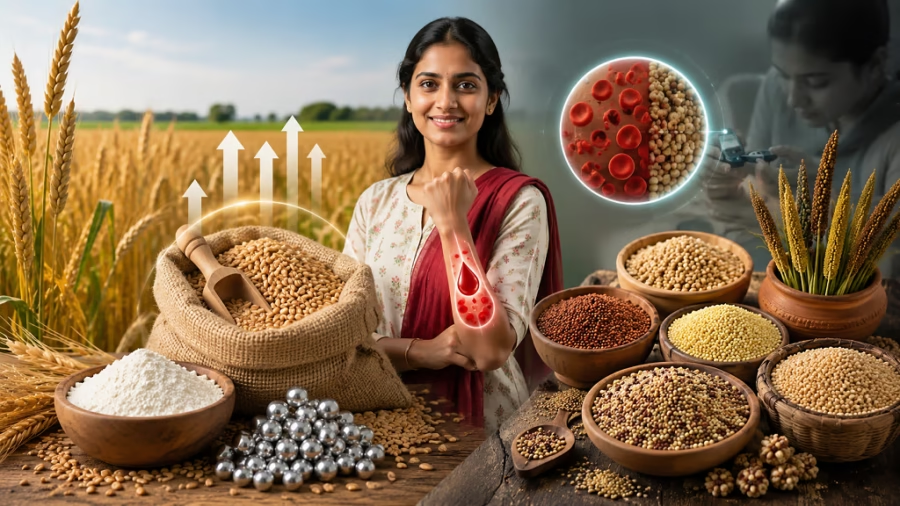
ICAR had 203 varieties released in 10 years of zinc/iron fortified wheat, millets, jowar, ragi, bajra, and kodo. ICMR validation through clinical trials can be well accepted by the people.
- Zinc added to wheat reduces anaemia by 20%.
- Millets are high in iron, address 50% of the micronutrient gap.
- Regular grains should also be totally avoided in order to control the level of sugar in the blood.
Integrated Farming Systems-
Beyond income, blends crops, fruits, veggies, livestock, fisheries, and beekeeping for balanced rural diets.
Benefits:
- Help to reduce NCDs through different plates.
- Significantly increase producer income by 30-40%.
- Models that are sustainable will reduce chemical use.
Farmer Health and Safety-
Interventions for pesticide exposure, ergonomics—awareness, safe practices, protective gear.
One Health-
Integrating human, animal and environmental health, SEHAT will further monitor for zoonotic risks and promote reduction in dairy-related disease spill overs into communities. This convergence of disciplines will enable surveillance for pesticide-related sickness and greater coordination of safer husbandry practices, thus safeguarding both farmers and the public.
| Focus Area | Targets | Expected Outcomes |
| Nutrition | Biofortified varieties | 15% malnutrition drop |
| NCD Prevention | Food-based solutions | Diabetes control for 100M |
| Farmer Safety | Risk reduction | 25% fewer agri-accidents |
| One Health | Farm-to-health link | Policy integration |
Why Agri-Health Convergence Matters Now-
India faces the paradox- Food Security Act feeds 800M people, yet 194 M remain malnourished-(Global Hunger Index 2025). NCDs are expected to cost $1.3 T to the GDP by 2030. SEHAT responds to this using indigenous R&D, avoiding dependence on imports.
A revival of traditional knowledge, for example, the Sanskrit verses about eating with the seasons, meets modern science. Chouhan, “what a country produces determines what its people eat.”
Expected Impacts and Rollout-
- Short-term: Food diversity for people, approvals of 50+ crops. Medium-term: Reduce occupational hazards 20% and build a nutrition database. Long-term: Sustainable systems, disease trend research.
- ICMR DG Bahl: Agri-health silos limited progress; Integration to achieve outcomes. ICAR DG Jat: Trials to boost bioforts nationally.
No barrier to fixed budgets. Can be scaled up using the existing schemes (for nationally scaled-up services, PCUNCH2.0, PM KUSUM).
SEHAT‘s diagram of the framework shows the farm-to-fork linkages, emphasising biofortified millets as a focus. toward the reemergence of India‘s health.
Traditional Wisdom Meets Modern Science-
Chouhan recited shlokas highlighting the healing side. Sehat reclaims millets (UN 2023 grain), XR-safe diets for lifestyle ills. Tackles obesity and deficiencies thanks to balanced plates.
Broader wins:
- 28.4 Rural self-reliance (for families on farms, family eats first).
- Women/child health: Iron deficiency foods prevent anaemia.
- Climate resilient: dry-tolerant Millets.
Govt Ecosystem Support-
Matches with ViksitBharat 2047 PM Modi health-agri synergy. Support GRAM G(rural Jobs from July 2026), wheat bumper(120MT+). West Bengal is seeking PM Fasal Bima after the BJP came into power.
Discussing with stakeholders: Scientists congratulated; 80% poll support for the mission.
Challenges and Mitigation Strategies-
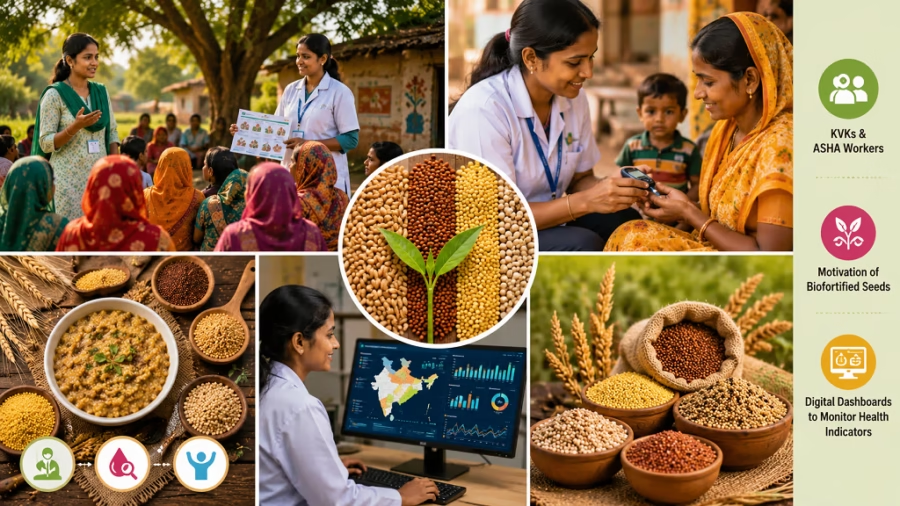
Hurdles include farmer adoption, scaling trials, and inter-ministry sync.
Proactive fixes:
- KVKs and ASHA workers create awareness.
- Motivation of biofort seed.
- Digital dashboards to monitor health indicators.
Global and National Context-
India joins global One Health push (WHO-FAO). Unlike China’s state farms, SEHAT empowers 14Cr farmers. Builds on Millet Mission success (production up 50%).
Comparisons:
| Initiative | Country | Focus | India Edge |
| SEHAT | India | Agri-Health | Indigenous, no new funds |
| One Health | EU | Zoonotics | Broader NCD scope |
| Millet Revival | Africa | Food Sec | Clinical validation |
Conclusion-
SEHAT Mission IS India‘s Agriculture–Health Revolution, farming the way to a healthy India. Under PM Modi‘s leadership, farms will emerge as health fortresses through the creation of food farmacies, nurturing the nutrients for health while protecting farmers and preventing diseases. Moving from the field to the urban plate, there will be ripple effects from Prayagraj to Delhi, science, tradition and policy converging for health.