
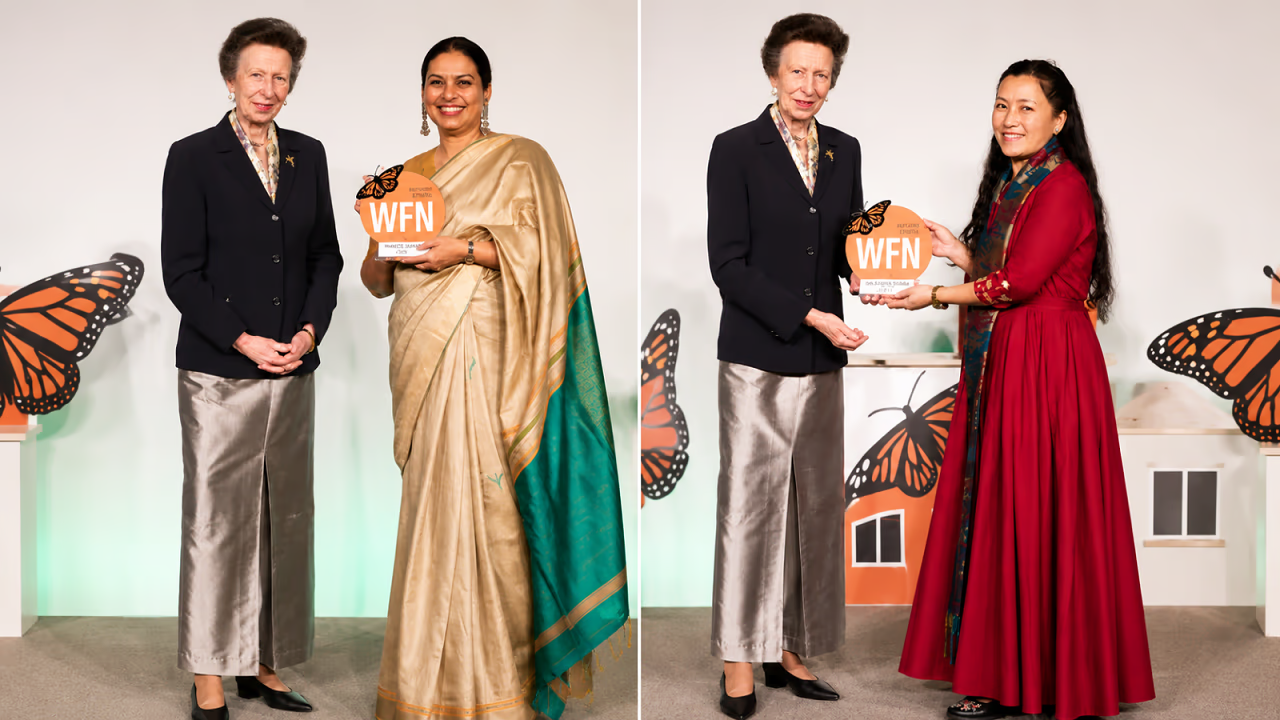

The two Indian conservationists, Parveen Shaikh and Barkha Sabba, have made the nation proud with an incredible achievement on the global platform with their intense efforts in preserving the rare species that are not popular but have ecological importance. The British Princess Anne, who is the patron of the Whitley Fund for Nature, presented the Whitley Awards at the Royal Geographical Society in London. The success is commendable as the Whitley Awards are the most prestigious accolades in the world, awarded to grassroots conservationists with funding to expand the conservation work with a prize of £50,000. Each year, the awards celebrate people who have dedicated their lives to wildlife conservation while also making local communities key players in conservation efforts. Read the article further to briefly know about the prestigious awards and the contributions made by Parveen and Dr Barkha that made them the most suitable nominees for the award.
ALSO READ- From Connectivity to Prosperity: Ashtalakshmi Story
What are the Whitely Awards?
Whitley Awards, or Green Oscars, were established by the British conservationist Edward Whitley and are awarded annually by the Whitley Fund for Nature (WFN), a UK-based conservation organisation that was established in 1993. These awards are given to exceptional conservationists working in biologically rich areas in the developing world.
Unlike other environmental awards that only reward scientific breakthroughs, the Whitley Awards honour grassroots conservation, which combines both scientific studies and community involvement, sustainability, education, and the conservation of ecosystems. With each award comes the opportunity for global recognition and financial resources to develop further the awarded conservation programs. For many years, the WFN has been funding the conservation efforts of people protecting endangered species, forests, wetlands, rivers, marine habitats, and indigenous cultures around the world.
Why is it called the Green Oscars Award?
Whitley Awards are popularly called Green Oscars as a term to define the highest international honours in nature and wildlife conservation. Oscars are generally used as the highest recognition in the film industry. However, “Green” symbolises the environment, forests, wildlife, biodiversity, and sustainable conservation, while “Oscars” reflects one of the most prestigious recognitions in the field of the environment. Not an official name, the name was given for the media highlights and global recognition associated with the Whitley Awards.
India’s Double Wins at Green Oscars-
On 29 April 2026, Green Oscars honoured two Indian women, Praveen and Dr Barkha, among the six winners around the globe. Both conservationists have been silently contributing in tough conditions to conserve those animals that do not get any recognition from the public, but are important for the ecological equilibrium. India is one of the 17 megadiverse nations of the world, with more than 8% of the world’s biodiversity found within a mere 2.4% of the Earth’s land surface. The awarding of the Whitley Award to two Indian conservationists shows that the nation has established itself as a major player in the field of conservation and sustainable environmental management.
Let’s take a look at the efforts that made the Indian women recognised at the global level in London:
Contributions made by Praveen Shaikh:

Parveen Shaikh is a passionate conservationist working hard to save the Indian Skimmer, one of the rarest birds of the South Asian region. The distinguishing feature of the Indian Skimmer is the peculiar shape of its bill, with the lower mandible longer than the upper one. It enables the bird to skim across the water’s surface when catching fish. The factors responsible for the sharp decline in the number of species include habitat loss, river pollution, sand mining, dams and people.
- For many years, Parveen Shaikh has been engaged in the conservation of the bird species in the Chambal and Ganga river systems. Instead of collaborating only with wildlife conservation officials, Parveen managed to build strong relations with the local fishing community, villagers, students and volunteers.
- Among her conservation measures are:
- Nesting colonies protection
- Breeding success monitoring
- Awareness-raising campaign
- Training local people how to protect nesting colonies
- Minimising human disturbances during breeding seasons
- Because of Parveen’s efforts, the Indian Skimmer has better chances of survival and also motivated the local people to become custodians of their natural resources.
Contributions made by Barkha Sabba:

The other winner, Dr Barkha Subba, won the Green Oscars for her remarkable contribution in preserving the Himalayan Salamander, which is a rare amphibian species found in the Eastern Himalayas of India. Unlike other amphibians, the Himalayan Salamander lives in wetlands, forests, and freshwater ecosystems in the cool mountainous areas. These areas are prone to threats such as climate change, habitat degradation, urbanisation, and pollution.
- Dr Subba works mostly in the Darjeeling and other Himalayan regions, where she focuses on preserving the wetlands together with the involvement of local communities, schools, and government institutions in conservation.
- These activities include:
- Monitoring of salamander populations
- Restoration of wetlands
- Conservation of habitats
- Environmental education
- Community involvement in biodiversity conservation
- Her rigorous efforts in amphibian conservation contribute to preserving freshwater ecosystems used by millions of people.
Why is protecting these Species Important?
The Indian Skimmer and the Himalayan Salamander do not get as much publicity as large mammals; these species are helpful as indicator species, important for giving insights into the status of the ecosystem.
- The Indian Skimmer indicates the state of river ecosystems because any drop in the number of individuals usually indicates some environmental issue, including pollution, loss of habitat, and decreased availability of fish.
- Likewise, amphibians such as the Himalayan Salamander are very responsive to environmental changes, and their extinction can be used as an early warning signal of poor freshwater ecosystems and climate change.
- Thus, the efforts made by Praveen Shaikh and Dr Bakha Sabba are valuable for India’s pride but also in protecting the biosystem.

Conclusion-
Whitley Awards or Green Oscars 2026 have recognised the outstanding contributions of two Indian conservationists, Parveen Shaikh and Dr Barkha Sabba, who have ensured a better future for some of India’s most vulnerable wildlife by conserving the threatened Indian Skimmer and the rare Himalayan Salamander. Being awarded such a distinction for their efforts will mean not only a milestone in their personal lives but also a matter of pride for India as a whole, indicating its dedication towards biodiversity conservation and acting as an example for many future generations to come.