On Tuesday, May 19, the Rupee declined to ₹96.47 against the US dollar during intraday trading, making it one of the worst-performing currencies in Asia. Reasons assumed, as per reports, the rupee is down over 7% this year due to a continuous rise in crude oil prices, higher US treasury yields, and weak risk appetite in Asia. This drop in price indicates increasing external pressures such as high costs of imports, low capital inflows, and an uncertain international interest rate environment. This situation has caused worry across all financial markets because it affects inflation rates, oil prices, imports, foreign tourism, and the overall economy. While exports might gain from it, the continuous depreciation of the rupee shows that there are many other issues for the Indian economy to tackle in the coming months.
ALSO READ- India’s Dam Safety Push: Drip, Dharam & New Law Act
What is ‘Rupee Depreciation’ or ‘Fall in Rupee’?
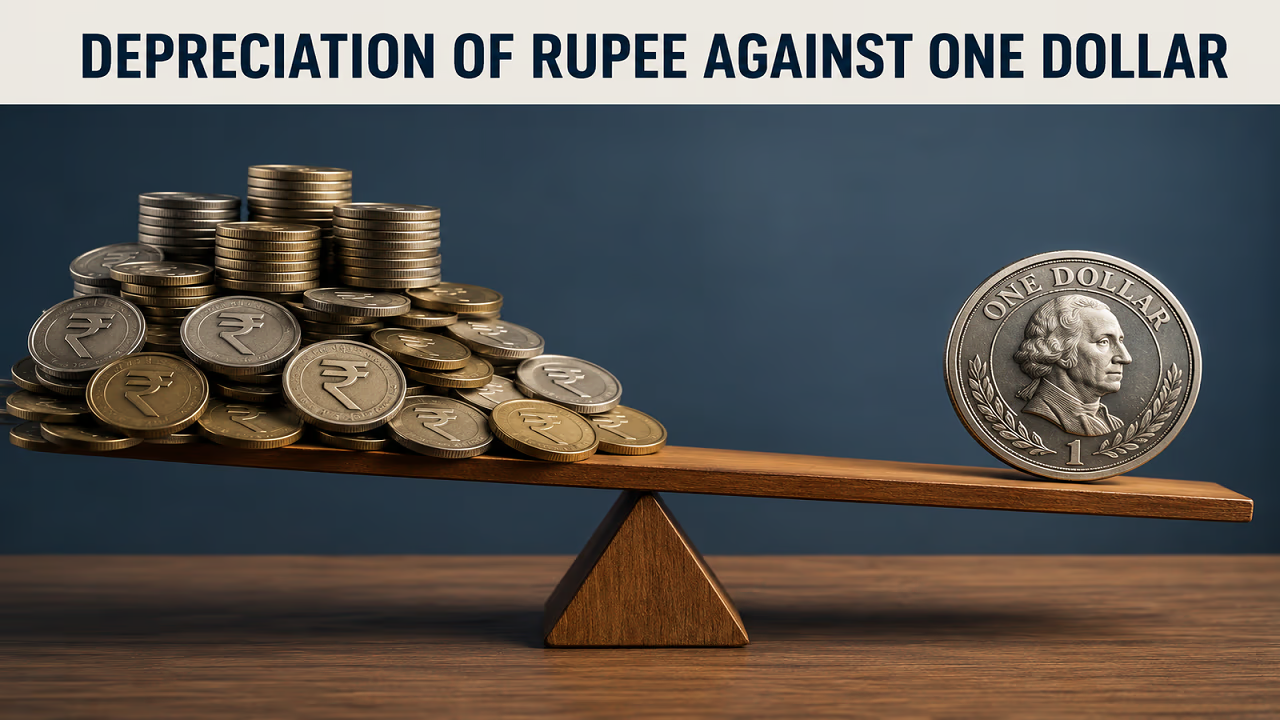
‘Depreciation of the Rupee’ or ‘Fall in the Value of the Rupee’ means a reduction in the value of the rupee in comparison to the currencies of other nations. This means that more rupees are needed to be exchanged to purchase another currency. For example, the current conversion rate of $1 is Rs. 96.54, whereas 1 pound is equal to Rs. 126.
The depreciation of a currency depends on market demand and supply, geopolitical tensions, capital flow and foreign policies. This means exports become cheaper and imports are costlier, resulting in more cash flow.
Reasons for the Rupee’s Depreciation-
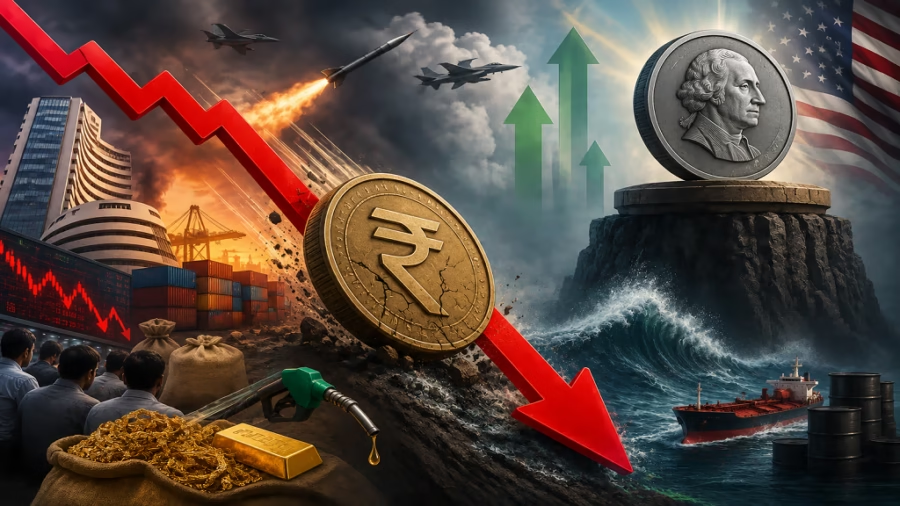
Specific reasons are responsible for the fall of the rupee; these factors have been facilitated due to the rising US-Iran tensions, which have put pressure on the value of the Indian rupee:
- Rising Crude Oil Prices: Prices of crude oil stayed persistently high due to tensions in the Middle East region, leading to increased expenses related to importing oil and the need for higher dollar purchases. The global oil prices had risen on account of conflicts in West Asia and security threats in the Strait of Hormuz. This had increased the need for US dollars, causing rupees to lose value. The price of Brent Crude was hovering around $110 a barrel.
- Widening Trade and Current Account Deficit: Global bond markets priced in higher interest rates on US Treasuries due to risk aversion and inflation expectations, which strengthened the dollar and made dollar-denominated assets more attractive than rupee assets. Increased rates in the US usually cause capital outflow from emerging economies, widening the account deficit.
- Outflow of Foreign Investors: In the recent period, foreign investors have withdrawn millions of dollars from the Indian economy. This causes demand for the dollar to rise and pressures the Rupee. It is estimated that the equity outflow in 2026 exceeded $23 billion. The sentiment in Asian currency markets deteriorated, while the rupee performed worse than other currencies due to reduced foreign inflows and intervention by state-owned banks that were selling dollars.
12% Decline has been Observed Against Pakistan Currency-
There have been significant depreciations of the Indian Rupee vis-à-vis the Pakistani Rupee in the past year. As per recent data on currency exchange rates, while 1 Indian Rupee could buy approximately 3.2913 PKR (Pakistani Rupees) in May 2025, its value dropped to roughly 2.90 PKR by May 2026. This amounts to almost 12% depreciation of the Indian Rupee. This depreciation of the Indian Rupee has become a matter of significant discussion because India is perceived to be a much more powerful and larger economy than Pakistan.
The depreciation of the rupee is also followed by the account of the ceasefire by US President Donald Trump, after the Operation Sindoor (May 2025), an 88-hour military strike against Pakistan. This signifies that the fall of the rupee does not solely depend on global tensions but is also impacted by its domestic policies that have not managed to frame strategies that help to foster economic growth.
Implications for the Economy-
- Inflation: A weak rupee makes imports more expensive in terms of rupees, increasing the headline inflation rate and making inflation forecasting more difficult for policymakers. With wholesale inflation at multi-year highs, the implications of depreciation are likely to extend consumer price pressure.
- Trade and current account: Increased crude prices increase the value of merchandise imports and result in an increased current account deficit, unless there is sufficient export growth or inflows elsewhere to cover the deficit. The widening current account deficit increases the dependence on capital inflows and reserves to plug the gap.
- Company margins and households: Energy-intensive companies and importers will face a margin squeeze unless they can pass increased costs on to consumers; households may bear the brunt through higher fuel and transportation costs. Increased price pressure will dampen consumption growth.
- Monetary Policy Dilemma: The Reserve Bank of India will be caught between whether to raise interest rates due to a weak rupee and high inflation, or maintain the status quo amid growth headwinds. Higher interest rates globally, in favour of the US dollar, will only add to the RBI’s dilemma.
What is the Impact on Citizens?
Reduction in rupee value will line up some issues for the common people of India who are average earners and have to manage household expenditure:
- High Fuel Rates, Expensive Bills: Fuel is an important part of household expenses. Due to a spike in crude oil barrels, the cost of vehicle fuel, cooking cylinder gas, electricity generation and many other activities that are dependent on crude oil will be affected and cause inflation in the nation.
- Imports will become costlier: With the decline in the value of the rupee, the imports will become costlier. Items like luxury items, brands, gold, oil and travelling expenses will increase, which will surely lay burden on your pockets.
- Costly Foreign Education: The cost of foreign education, visa, and accommodation increases for students and travellers as the cost of each dollar becomes higher due to the rupee. Start budgeting sooner, use foreign exchange in stages, or even look for scholarships or alternatives in other countries.
- Increase in the price of necessities: Higher costs of transportation and input like edible oil, metals, fertilisers, and packing may lead to an increase in retail prices of foods and household items, decreasing real income, especially among the poor. Watch out for household items and switch to alternative ones if possible.
- Impact on employment, savings, and investments: Export-based industries such as IT, pharmaceuticals, and manufacturing will have better rupee conversion, which may help employment. At the same time, companies with dollar borrowings will have to service high dollar interest rates, which may negatively impact corporate finance and investments.
Signs that markets would be looking out for-
- RBI changes in the use of reserves or any public declaration on intervention.
- FPI restrictions announcements or anything related to bond trading or masala bonds.
- Fiscal policies or fuel policy decisions to reduce imports.
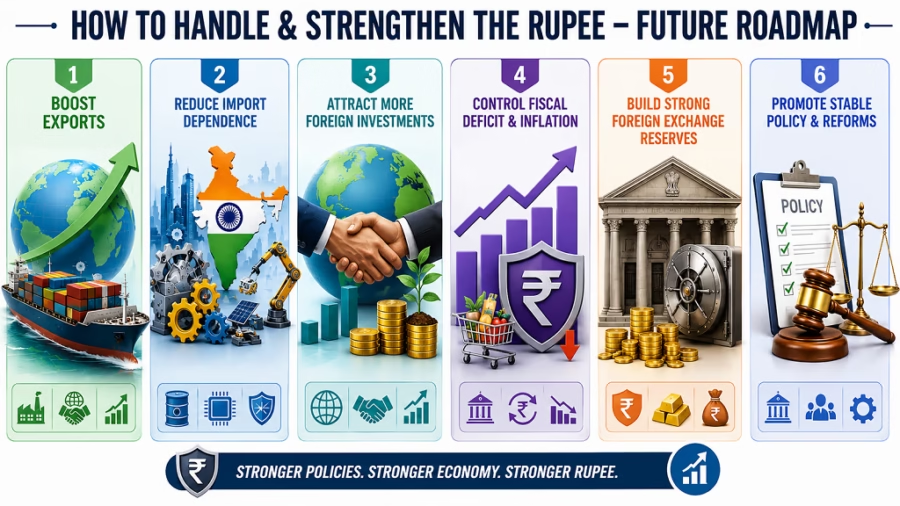
What Possible Steps Can Be Undertaken to Strengthen the Rupee?
- Use of reserve and foreign exchange intervention: The RBI can sell foreign exchange reserves to satisfy demand for dollars and control volatility, although large or sustained interventions can drain reserves and are normally tactical rather than long-term measures.
- Capital flow management measures: Authorities could introduce more restrictive regulations concerning particular forms of dollar transactions or adopt capital flow management measures as a way of discouraging speculative outflows, which is a measure that has been adopted by developing countries before under exceptional circumstances.
- Fiscal and administrative measures to reduce oil demand: Public appeals to save oil, fiscal measures such as subsidies, or actions to lower oil imports through strategic procurement, supplier diversification, or renewable energy initiatives can help manage oil-induced foreign exchange pressure in the long run, although such measures carry political and economic costs.
- Monetary policy measures: The RBI could take liquidity management measures, swap arrangements, or other short-term actions as a means of easing FX pressures; its monetary policy actions will depend on inflationary risks at home versus growth and external considerations.
Other steps the government and RBI can take:
- Strategic Forex Investment, as the RBI can sell dollars from reserves or coordinate with state-owned banks to stabilise the dollar mobility in the intraday move.
- Encourage exports and trade diversification by introducing domestic products and innovations to other nations, and promote their sale in India to reduce dependence on imports.
- NRI or sovereign schemes will be offered to encourage dollar imports in Indian accounts.
- Domestic Finance Resilience will be strengthened to avoid corporate forex disclosure, deepen the local currency bond market, and encourage long-term foreign direct investment.
- In his recent speech, PM Narendra Modi, on seeing uncertainties in the market and rising global circumstances, urged Indians:
- Stop buying gold for one year
- Avoid unimportant foreign trips
- Limit the spending due to inflation
- Encourage work-from-home culture
- Consume less edible oil
- Buy Indian domestic goods.