
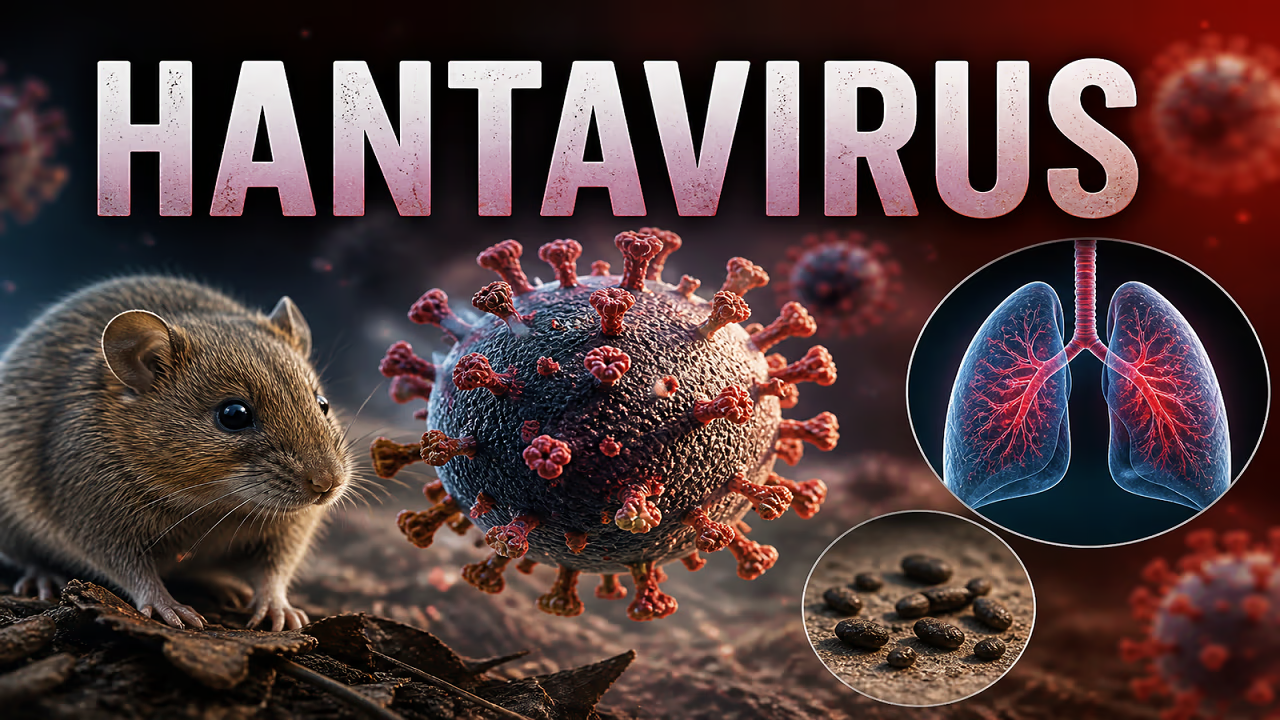
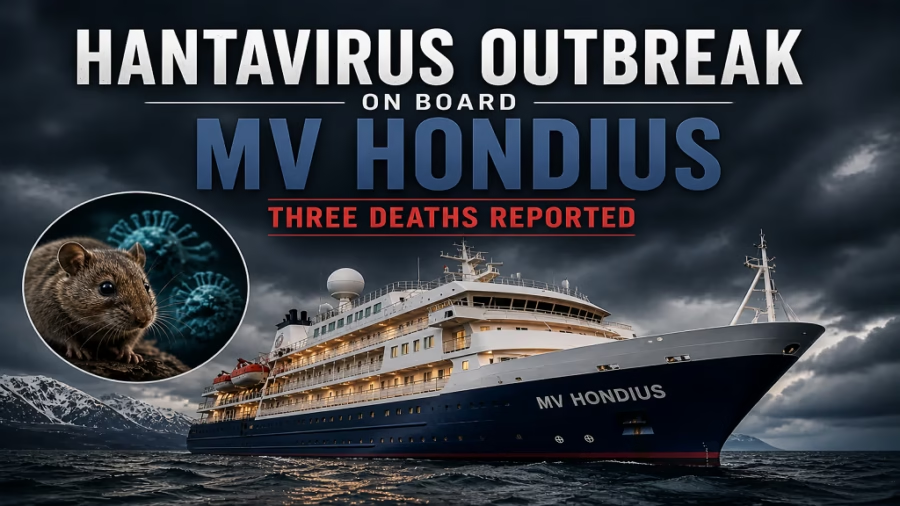
On Sunday, an outbreak of hantavirus disease was reported on a cruise ship that has caused the deaths of three people and one under extensive supervision, according to the World Health Organisation. The MV Hondius was the vessel that was carrying 150 passengers while travelling from Argentina to Cape Verde, and it took the lives of two elderly Dutch and one German. According to Frontiers in Microbiology, hantaviruses are a type of virus that circulates in the natural world where rodent animals such as rodents, insectivores, and bats. Hantaviruses can be described as emerging pathogens because infections by the virus in human beings cause very dangerous diseases. The MV Hondius cruise, travelling from Ushuaia, Argentina, to Cape Verde, is unusual as the virus rarely occurs in a maritime setting, as it is spread by rodents. As claimed by sources, a Dutch couple and a German died from the virus.
ALSO READ- India Introduces World’s First OptoSAR Satellite Drishti through SpaceX
Know About the Hantavirus Outbreak that Infected 3 People on the Atlantic Cruise?
As per Sunday reports on the disease outbreak on the cruise, the hantavirus is a viral infection with a suspicion of possible threats that belong to the orthohantavirus group. These microbes are spread through small mammals like mice, rats, and voles. It is estimated that there are over 30-40 strains of the virus, out of which half can infect humans. Among all kinds of hantaviruses, the ones that cause the most severe effects are New World hantaviruses, and they are present in America. Infection proceeds in two phases. In the first phase, the infection acts like influenza, leading to fever, shivering, body pains, and headaches. In the second stage, there will be the appearance of respiratory problems and, in some cases, difficulty breathing, leading to either pulmonary or cardiac failure. Unfortunately, there is no known vaccination against the virus, nor can one receive any particular medicine as treatment. The virus gained greater public attention last year after the death of Betsy Arakawa, Gene Hackman’s wife.
What makes the MV Hondius cruise hantavirus infection case unusual is the fact that such an infection is rare, especially when dealing with several individuals in a closed space like that of a ship. Out of the six suspected cases of hantavirus infection, it has been discovered that three of the individuals, of whom two were an elderly couple of 70 & 69 from the Netherlands and the other was a German of middle age, have already succumbed to the infection, while one of the victims is under intensive care treatment, implying that there may be some fatalities from the infection.
Identify the Symptoms of Hantavirus-
The early signs of hantavirus infection are often similar to those of the flu virus. By timely recognising these symptoms, such as:
- Fever
- Muscle pains
- Headache
- Weakness
- Dizziness
- Occasionally nausea
- Abdominal pain
Hantavirus infection may advance into a serious illness known as hantavirus pulmonary syndrome (HPS), where fluid fills the lungs, causing breathing difficulties and possibly rapid respiratory failure in some cases. Since the pace of development of the disease is fast and resembles other tropical diseases, there is a high chance of getting wrongly diagnosed with the disease if one does not test for the virus. Individuals who suspect themselves to be at risk of exposure to the urine or faecal matter of rats and mice and exhibit symptoms like those mentioned above need to see a physician immediately.
Causes for Hantavirus Spread-
Here are a few reasons why the Hantavirus spreads:
- Hantavirus is usually contracted after breathing in aerosolised particles resulting from the drying of urine, faeces, or saliva of rodents. This can occur during cleanup work in dusty places like sheds or attics.
- Hantavirus infection can also occur via bites from infected rodents or touching objects that have been contaminated with the virus, and then touching the face or mucous membranes.
- Unlike flu and SARS-CoV-2, Hantavirus infection is not considered a very contagious disease between humans.
Preventive Measures to Be Taken Against Hantavirus-
There are no antiviral drugs that are effective against hantavirus infections. Treatment generally consists of symptomatic management, such as oxygen therapy and constant supervision at the hospital level.
- Identifying the hantavirus symptoms early and seeking hospital care are the key factors that play a vital role in immediately coping with the hantavirus spread.
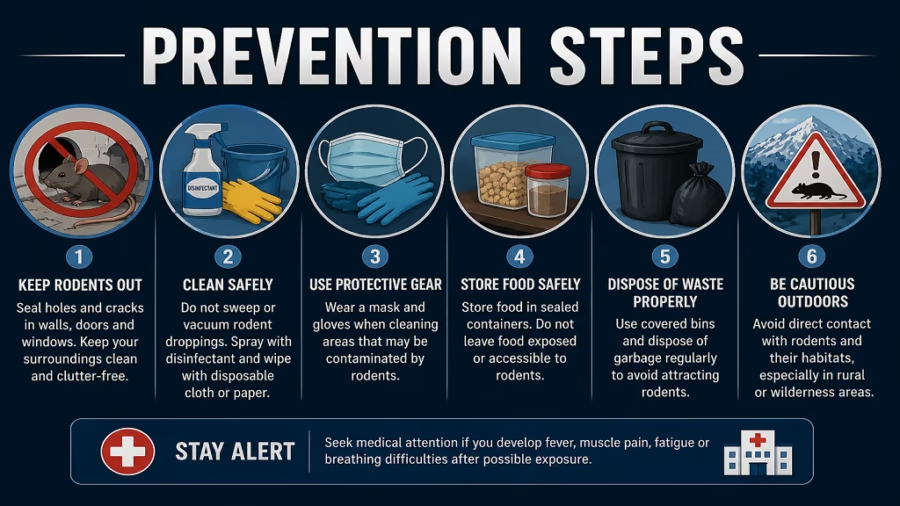
- Avoid any infestation of rodents by concealing the building’s openings, killing or hiring professional pest controllers, and storing food in rodent-proof receptacles.
- One should wear gloves and masks during the cleaning of areas contaminated with rodents in order to avoid stirring up dust in places where there were rodents.
- During the cleaning process, it is recommended to spray the area with a disinfectant before washing it.
Is the Hantavirus a Growing Threat or a Rare Concern?
The latest Atlantic cruise has increased the fear of the disease breaking out. As compared to other viral infections like COVID-19 or Flu, the hantavirus disease is not very contagious as the virus mainly spreads through contact with rodents and their faeces. Even though Hantavirus infections are not common and very dangerous, HPS (Hantavirus Pulmonary Syndrome) can cause serious lung disease that can cause inconvenience while breathing. The three deaths on the MV Hondius have been reported, which can occur among patients who do not seek treatment early enough. However, the source of the hantavirus outbreak hasn’t been recognised yet.
Infections caused by hantaviruses are quite uncommon worldwide, even in nations such as India. They are usually confined to rural areas or forests due to the increased incidence of contact between humans and rodents. It should be noted that, unlike the flu or COVID-19, hantavirus infections do not spread from one individual to another in most instances.