
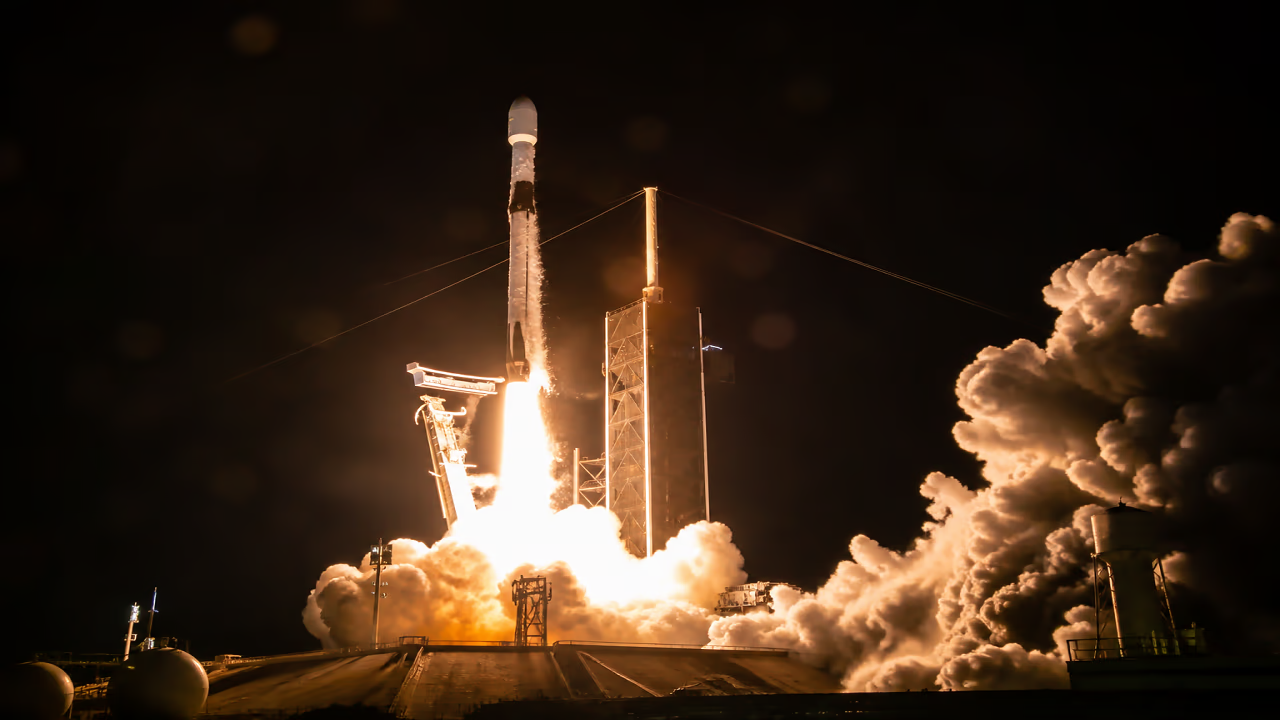
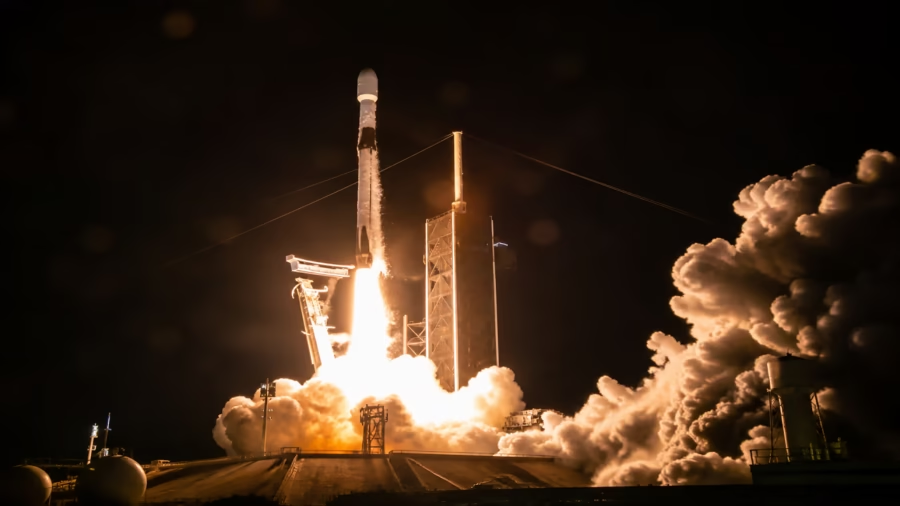
World’s First OptoSAR and India‘s largest private Earth observation satellite, Drishti, has been floated by Bengaluru‘s GalaxEYE Space, the world‘s first fusion of Electro-Optical (EO) & Synthetic Aperture Radar (SAR) technology. Launched aboard SpaceX Falcon-9 on May 3, 2026, it weighs 190kg and enhances all-weather imaging for defence, disasters, and farming.
ALSO READ- MoES Installs C-ART Observatory in Visakhapatnam
Drishti’s Tech Revolution Unveiled-
Drishti fuses EO for high-resolution optical with SAR for all-day, all-weather cyclopic radar, producing “SyncFused OptoSAR” payloads. This hybrid provides 1.5m resolution imagery in the darkness of night, through storms, on a 7- to 10-day revisit cycle.
Conventional optical satellites can‘t work through clouds or at night; SAR is great, but equally abstract data. Drishti integrates the two into intuitive, ready-to-use information crucial for India‘s border security and tracking the monsoons. Says CEO Suyash Singh, “A milestone reaffirming India‘s space capability.”
Key specs:
- Size: 3.5-meter deployable antenna, expected to fit in the size of a refrigerator.
- Orbit: Near Earth, allows for frequent passes around the world.
- AI Edge: Nvidia Jetson Orin, in orbit, reduces analysis time from hours to minutes.
Applications Transforming Key Sectors-
Drishti‘s versatility is seen from defence to day-to-day life; it would cater to the needs of India and its peculiarities, like regular floods and wide borders.
Defence and Surveillance Boost:
- Real-time border observing by fog/smoke.
- Invisibly monitors troop movements or intrusions.
- Provides support to the Indian Army, Navy, Air Force and Defence Space Agency.
Disaster Management Lifeline:

SAR can penetrate through clouds for rescue mapping in times of cyclones or landslides. Flood-affected areas, e.g. Prayagraj, are benefiting from speedy damage assessment.
| Sector | Drishti Advantage | Real-World Impact |
|---|---|---|
| Agriculture | Crop health via all-weather scans | Yield prediction, insurance claims |
| Infrastructure | Site planning in monsoons | Faster highways, smart cities |
| Insurance | Post-event loss verification | Quicker payouts, fraud reduction |
| Environment | Deforestation/illegal mining detection | Policy enforcement |
Govt interest increases —defence, agriculture ministries in talks.
Drishti‘s orbit visualisation demonstrates the global revisit ability, bringing a whole new perspective to India‘s 7,500km coastline.
GalaxEye’s Journey to Orbit-

Based in Bengaluru, GalaxEye, which has done 500+ drone/Cessna test flights and ISRO‘s PSLV POEM, made its commercial debut on board SpaceX, heralding the private Indian leapfrog.
Future roadmap:
- A constellation of 8-12 satellites in 4 years for sharper, daily imaging.
- Partnerships in more than 20 countries for data distribution.
- Finer resolutions aiming for sub-meter by 2028.
Co-founder Singh stresses on-orbit AI: “Data torrent hits at Earth stations; ours, keenly processed for prompt revelations”.
India’s Private Space Boom Context-
Drishti comes in the midst of the space frenzy of 2026 after Chandrayaan-4 and fresh startups such as Skyroot, Agiknul, and others. Commercial uses now account for roughly 20 per cent of launches, driven by reforms of IN-SPACe.
Comparisons:
| Satellite | Maker | Key Feature | Launch Year |
| Drishti | GalaxEye | OptoSAR Fusion | 2026 |
| EOS-08 | ISRO | SAR-only | 2025 |
| RISAT-1 | ISRO | Indigenous SAR | 2012 |
| SkySat | Planet Labs | Optical swarm | 2013+ |
GalaxEye eyes $500M valuation post-launch.
Global Implications and Challenges-
World-First status means competition for Maxar and Airbus. Export prospects help ‘Viksit Bharat’ by 2047.
Hurdles ahead:
- Regulatory approval for the sharing of defence data.
- Spectrum for SAR ops.
- Chinese products. Yaogan series in competition.
- Yet, the Nvidia partnership and SpaceX ride cut costs 40% vs. dedicated launches.
Expert Reactions and Market Buzz-
Game-changer for dual-mode imaging,” says ISRO veteran. Defence analysts put MoD contracts, which can sum up to 500Cr.
Stock rally: Investors optimistic about GalaxEye; space ETF gains 3%. Gallup poll: 62% expect disaster use to be the number-one application.
Future Constellation and Roadmap-
Next: a 0.5m res ‘drishti-2’ available by 2027. The fleet of all full fleet permits hourly revisits over India.
Strategic wins:
- Lower import dependence on images from abroad (90%).
- Establishment of more than 1,000 jobs in the 0-10 KM area of the Bengaluru-Prayagraj corridor.
- Fuels 10,000bCr space economy by 2030.
Conclusion-
GalaxEye‘s Drishti thrusts India into the OptoSAR leadership, a balance of technical innovation and business applicability, translating into a safer and smarter country. From Prayagraj‘s deluge to Laddakh‘s borders, the eye unlocks game-changing insights. Growth of private space will accelerate transformative leaps, with the brightest Indian stars shining in 2026.