
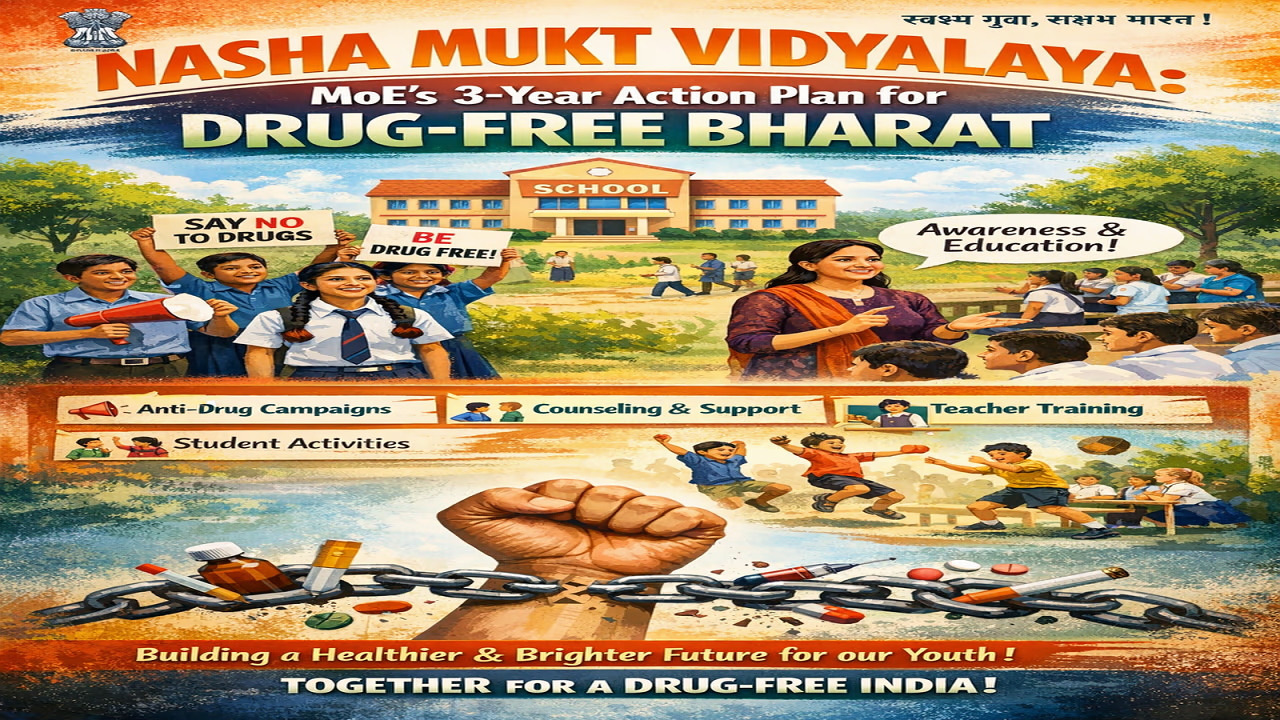
Under the Nasha Mukt Bharat Abhiyan (NMBA), the Ministry of Education has announced a thoughtful initiative to drive Indian schools towards drug-free institutions to protect our youth from the dangerous effects of drugs and alcohol. The 9th Apex Meeting of the Narco Coordination Centre (NCORD), headed by the Union Home Minister, Shri Amit Shah, aims to establish a school hub to prevent young people from drug abuse by introducing a comprehensive 3-Year Action Plan, Nasha Mukt Vidyalaya. Drugs have become a serious concern for public health issues, especially for minors and youth in India. The joint advisory of different government departments has directed Chief Secretaries of all states and Union Territories to implement the drug-free Bharat mission in all schools. Dive deeper into the insights of the Nasha Mukt Vidyalaya, how this initiative will be carried out, what major steps will be taken, and how impactful it will be in reducing the influence of erratic drugs on youth.
ALSO READ- Artemis II: Redefining Our Future in Space
Overview of the Nasha Mukt Vidyalaya-
Nasha Mukt Vidyalaya is a school-focused programme launched under the broader initiative India’s Nasha Mukt Bharat Abhiyan (NMBA), directed by the joint advisory from the Home Secretary, Ministry of Home Affairs (MHA) and Secretary, Department of School Education & Literacy, Ministry of Education.
- The “Nasha Mukt Vidyalaya” initiative was launched between 24th March and 26 March 2026 by the MHA, announced in the 9th Apex Meeting of NCORD.
- The initiatives represent a timely review of the status of drug-free school implementations at both the national and district levels, with a motive to achieve the goal by 2029.
- According to this, the campuses will promote a drug-free India with awareness programmes, student clubs, and promote pledges or oaths against substances.
- Declaring a compulsory 500-metre radius around schools as a “no-drugs area”. This means no liquor, tobacco and smoke shops or sales near schools and educational institutions.
- Also, the guidelines tell the schools to report the violations to the nearby police stations and train teachers through Navchetna modules that include lessons about life skills by the Ministry of Social Justice & Empowerment.
- These initiatives must be followed and covered 75 to 100% as Drug-Free institutions as directed to combat substance abuse, community ties and early intervention.
A Brief Background on Nasha Mukti Bharat Abhiyan-
On 15 August 2020, the Ministry of Social Justice and Empowerment (MoSJE) launched Nasha Mukti Bharat Abhiyan, which is a large nationwide programme encouraging schools, colleges and educational institutions to become drug-free premises for youths.
- Nasha Mukti Bharat Abhiyan is focused on three pillars: Curbing drug supply via the Narcotic Control Bureau, spreading awareness through the MoSJE and treatments by health centres.
- The initiative was implemented in 270+ districts as reported in the National Survey on Substance Use (2019) and collaborated with the local or District De-Addiction Centre and local health centres.
- Conducting seminars and workshops to create awareness about the harmful use of drugs, alcohol and tobacco.
- Bringing together schools, Parents-Teachers Association (PTA), and youth clubs to fight against drugs and promote the Nasha Mukt Bharat mission.
- It also introduced Navchetna modules for Classes 6 to 11 students in 300 districts with school coverage of 30,000.
Objectives of Nasha Mukti Vidyalaya-
The objective of the Nasha Mukti Vidyalaya is to develop a drug-free campus environment for students and staff.
- The primary objective of launching this initiative is to eradicate substance, drug, and alcohol accessibility and their influence on young minds. This will protect them from socio-economic harm.
- The NMBA targets 100% coverage in school awareness drives, clubs, workshops and linkage with rehab centres for beneficiaries.
- The programme also wants to achieve behavioural transformation by early detection, reducing dropouts from drug abuse and promoting life skills.
- According to a survey, more than 5 crore people need to curb alcohol addiction, thus preferring prevention over cure.
- By 2029, the government seeks to eradicate drug addiction by offering safe learning environments and combining the campaign with education, healthcare and law enforcement.
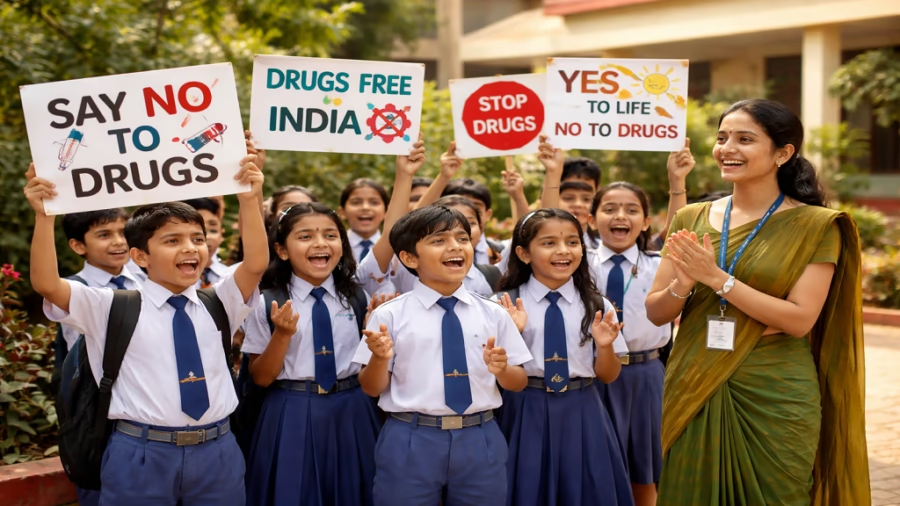
Strategic Pillar to Make Nasha Mukt Vidyalaya-
- Developing infrastructure and drug-free zones: The three-year action plan campaign includes a flagship measure of 500-metre substance-free premises around schools and a ban on cigarette selling within 100-metre areas.
- Building capacity: Active engagement of students, teachers, principals and nodal officers, emphasising identification of abuse, signals and counselling sessions. Through Nasha Mukt Vidyalaya 2026 initiatives and IEC campaigns, such as posters, signboards of drug-free areas and creative campaigns.
- Creating a strong institutional mechanism: The initiative aims to develop safe and substance-free educational institutions where youths are aware of the negative image of drug consumption. The mechanisms mandate a monthly review of State/District Nodal Officers, district committee meetings and bimonthly state panels, establishing a robust monitoring system across different departments, including law enforcement agencies.
- Integrating communities with awareness campaigns: The Nasha Mukti Vidyalaya promotes comprehensive outreach by organising flash mobs, yoga sessions, art displays, oaths or pledges, and campus involvement. The programme also targets 25% of village schools by integrating with the NMBA app for real-time data on reaches and rehab beneficiaries.
Implementation Structure of Nasha Mukti Vidyalaya-
The Nasha Mukti Vidyalaya will be implemented in the following framework or level:
- School Level: Under this drug-free zones and other activities like club formation by school principals, taking pledges against drugs, reporting to police on violations, and declaring drug-free schools based on reports submitted.
- District Level: At the district level, a committee chaired by district collectors will supervise the campaign in all schools or colleges through physical and digital monitoring. Identification of beneficiaries under this scheme and linking the institutions to district rehabs. The committee will be funded with Rs. 10 lakhs through SAP-PFMS to organise activities such as walkathons and film screenings.
- State Level: At the state level, the authorities can create panels to guide districts related to this initiative, train providers such as teachers and parents through curriculum and activities, and monitor cigarette bans within a 100-metre area. It is converged with the women/child welfare and media departments to assist them in recognising and combating drug abuse.
- National Level: MoSJE dashboard tracks metrics (50% weightage) by regular reporting from different schools and awarding the schools that are top performers. NCORD ensures inter-ministerial sync for smooth supervision and implementation at all levels.
Activities and Practises Under this Initiative-
- The NMBA protocol provides more than 30 activities, which include nukkad nataks, rallies, graffiti, debates and influencer campaigns to spread awareness against drug influence.
- The educational tie-ups include seminars, documentaries, and support groups, while the community efforts use SHGs and hotspot analysis.
- The examples include e-pledges at hotspots, NSS collaborations and regional media initiatives.
- The government implements targeted programs in high-risk areas, which include border regions.
- Master trainers in Punjab and Haryana trained 18 trainers who handle the entire training process from Chandigarh to Jharkhand.
- The master and youth volunteers provide 15% of their work, which is used for evaluations.
ALSO READ- Major Trends in Global Terrorism Index (GTI) and Emerging Risks in 2026
Challenges to Nasha Mukti Vidyalaya-
The challenges in the enforcement of the Nasha Mukt Vidyalaya arise because of the practical challenges in the enforcement of the drug-free zone concept:
- Urban Density Issues: It is difficult to identify the 500-meter areas in densely populated areas where shops and dwellings are close together, which might not cover the areas completely.
- Rural Access Gaps: In the absence of rehab centres, it is difficult to identify students at risk and provide the required counselling.
- Monitoring Issues: The ATRs received by states might not reflect actual ground-level activity, as it is self-reported. There may be chances of bias and corruption.
- Coordination Issues: Coordinating the education, health, and law enforcement departments sometimes leads to chaos as data may differ and not be properly supervised by the authorities.
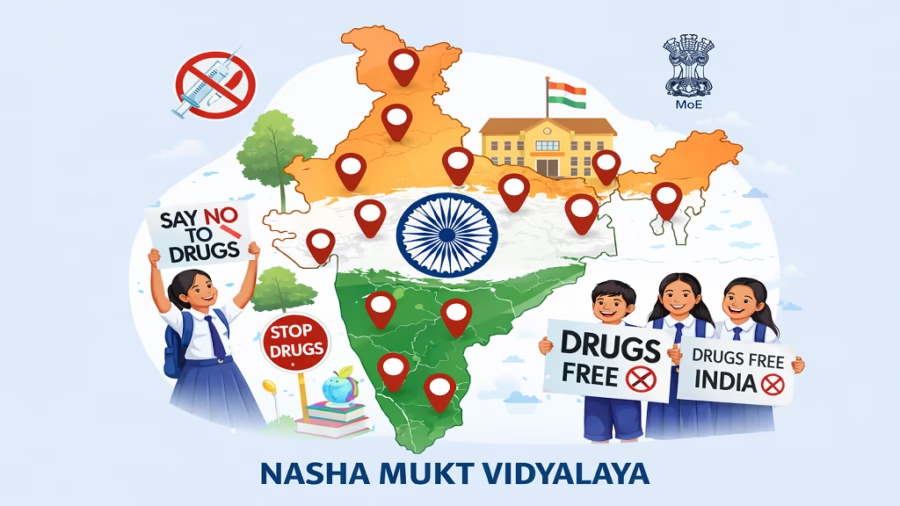
Future Roadmap to Nasha Mukt Bharat-
Nasha Mukt Vidyalaya’s Impact and Future Roadmap ensures that lasting impacts are made in schools while paving the way for a drug-free India in 2029:
- Youth Protection: This initiative takes advantage of India’s 1.5+ million schools to safeguard over 250 million students from early substance use. This creates a safe environment using awareness and zoning concepts that could potentially save millions of addiction problems across India.
- Behavioural Shifts: By making 75% of schools declare themselves drug-free, this initiative instils life skills and peer support, resulting in a 20-30% reduction in dropout rates caused by addiction. Interventions using clubs and modules ensure long-term healthy habits among young people.
- Beneficiary Surge: NMBA’s reach increases its investments from 6 lakhs to crores. Schools identify and refer 50% of at-risk youth to rehab centres, thus increasing prevention activities while multiplying de-addiction success across communities.
- Economic Gains: Addiction results in over Rs. 1 lakh crore losses for India every year. This plan reduces this cost by eliminating youth dependency. Healthy students lead to better academic performance and workforce contribution.
- 2029 Zero-Access Goal: This roadmap guarantees 100% coverage in schools with technology-based dashboards for monitoring and rewarding the best-performing districts. It also establishes a roadmap beyond the 3-year action plan to ensure the total eradication of drug availability in the areas surrounding the schools.
- Convergence of different departments: It brings together education, health, and enforcement for exemplary projects such as alumni associations and yoga programs. Beyond 2029, it develops into a policy that continues to include the best practices for youth health.