
ISRO monitors all potential threats which could affect satellite operations, radio signal transmission, and power grid functions after intense solar flares in early 2026 created worldwide alarm.
India Confronts Increased Space Weather Hazard-
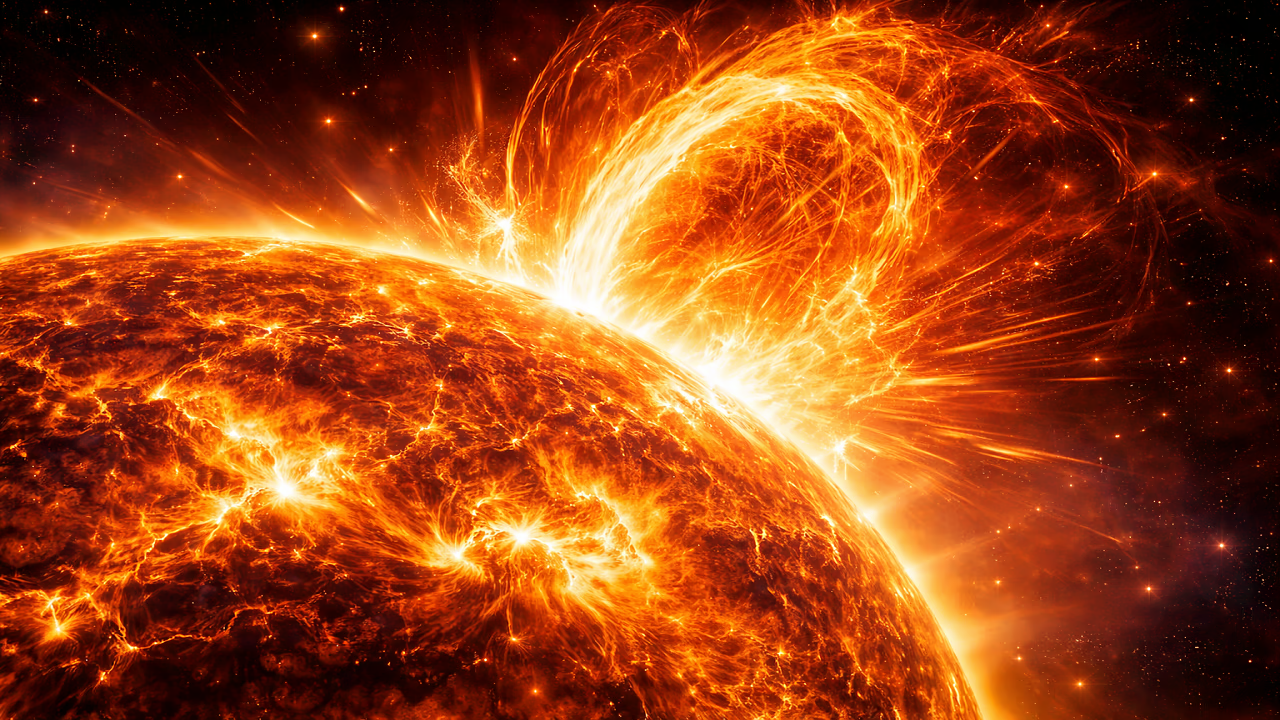
The Sun has now started acting explosively, releasing some of the strongest solar flares recorded in 2026, thus forcing the warning signals from space agencies the world over. ISRO of India has confirmed that its space agency is tracking the current period because of concerns over possible radio blackouts and obstacles to satellite signals. The Sun has released many high-energy solar flares during the last few days, which consist of an X8-class eruption that ranks as one of the 20 most powerful flares since 1996. Scientists warn that such activity, if aimed toward Earth, may heavily disturb new technology.
What Is Causing the Sun’s Extreme Activity?
The disturbance originates from Active Region AR4366, which contains a large sunspot cluster that displays complicated magnetic properties. The area experienced quick growth and reached unstable conditions, which resulted in the following events:
Three X-class solar flares
- At least 18 M-class flares happened within a period of 24 hours
- The powerful flare so far: X8.3, recorded on February 1, 2026
- Solar physicists state that AR4366 contains a magnetic structure which functions as a beta-gamma-delta system that can store large energy reserves for immediate release in brief energy bursts.
Why X-Class Solar Flares Matter-
Solar flares are classified by strength using five categories:
- A, B, C – Minor
- M – Moderate
- X – Extreme
The energy of each level increases by ten times its previous level. The X8.3 flare produces extremely powerful energy, which creates immediate severe damage to Earth’s upper atmosphere after its eruption.
Immediate Impact Observed on Earth-
The technological impacts show significant damage despite their lack of direct human impact on ground operations. The recent solar flares already produced three major effects across the South Pacific, which include:
R3-level radio blackouts that affected multiple areas throughout the South Pacific region
- The interruption of shortwave radio signals
- The radiation levels for satellites in space have increased
- The polar regions create a more dangerous situation for aircraft flights through their proximity to these areas, which scientists consider to be the North and South Poles of the Earth
- The solar events that reached their peak power during the flare activities created communication problems, which affected Eastern Australia and New Zealand.
ISRO Puts Indian Satellites Under Surveillance-
The Indian Space Research Organisation ISRO has confirmed that more than 50 active Indian satellites are currently undergoing real-time observation. The satellites include those which provide essential support for:
- Communication
- GPS and regional systems for navigation purposes
- Earth observation
- Weather Updates
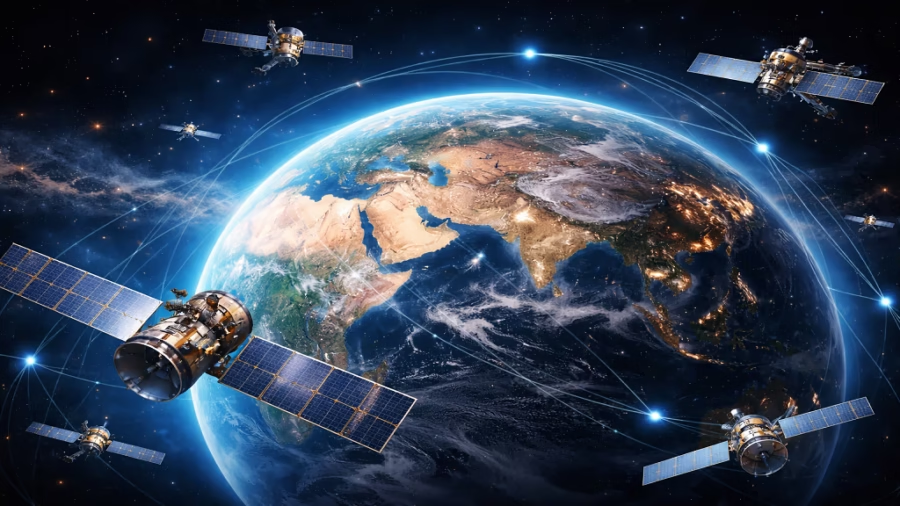
Anil Kumar, Director of ISTRAC, confirmed that the organisation has built emergency response protocols. The radio blackouts have a maximum probability of occurrence. All ISRO satellites are being monitored very closely, and any communication loss will be attended to immediately.
Could a Coronal Mass Eviction Hit Earth?
The most hazardous solar activities happen when flares are accompanied by coronal mass ejections(CMEs), which produce huge plasma clouds that contain magnetic fields and are expelled into outer space.
Currently:
- The majority of CMEs that link to the active flares do not have any Earth-bound paths.
- A weak CME may arrive between February 7 and February 9.
- Researchers currently cannot dismiss the possibility of a more powerful CME that will impact Earth.
- The scientists believe that AR4366 exists near the Sun- Earth line, which increases the likelihood of a direct eruption impact when another solar event occurs.
Auroras and Geomagnetic Storms Likely-
Even without catastrophic impacts, solar storms of this magnitude can trigger:
- Geomagnetic disturbances
- Enhanced aurora activity at high latitudes
- Temporary fluctuations in Earth’s magnetic field
Forecast models suggest G1-level (minor) geomagnetic storms may occur, with auroras potentially visible farther south than usual.
ALSO READ- 68th Grammy Awards: Know the Winners and Much More
Aditya-L1: India’s Frontline Solar Sentinel-
Aditya-L1 is India’s first dedicated solar observatory, operating during this solar event. The spacecraft, which orbits 1.5 million kilometres from Earth at the Sun-Earth L1 point, delivers four functions to users.
- The system provides early detection for solar flare events.
- The system enables real-time solar radiation tracking.
- The system allows scientists to conduct measurements of both magnetic fields and high-energy particle emissions.
The data from Aditya-L1 enables ISRO to create satellite protection alerts which safeguard essential equipment and satellites.
India’s Big Bet on Solar Science-
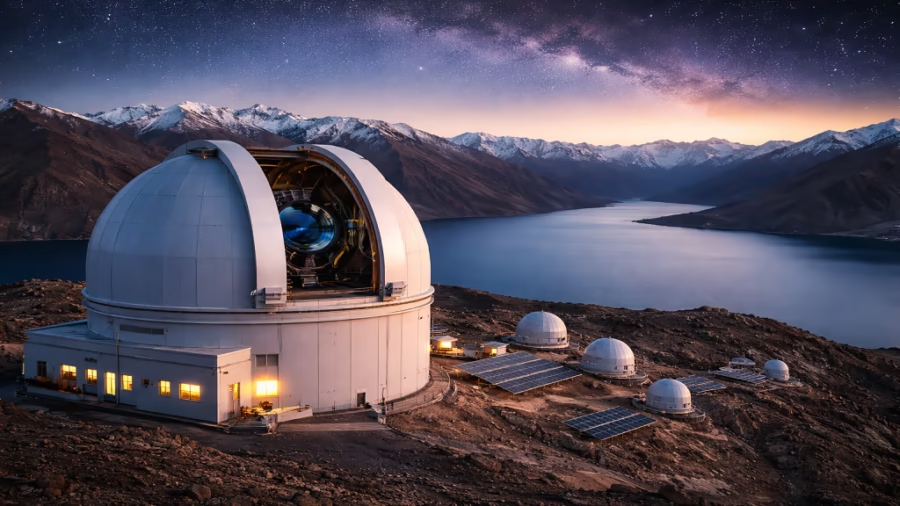
India has revealed its intent to build the National Large Solar Telescope (NLST), which requires a budget of ₹1,000 crore to complete its construction within five years of project initiation.
The system includes:
- 2-metre optical and infrared telescope
- The site is situated close to Pangong Lake in the Ladakh region
- The system enables constant, detailed monitoring of solar magnetic activity throughout its operational period
- The Aditya-L1 system will receive additional capabilities from this project, which will enhance India’s ability to forecast space weather in the future.
Why Solar Storms Are a National Security Issue-
Solar activity is no longer just an academic concern. Modern societies depend heavily on technologies vulnerable to space weather, including:
- Power grids
- GPS navigation
- Satellite-based communication
- Aviation systems
Experts stress that understanding and predicting solar storms is essential for national resilience.
What Occurs Next?
Solar forecasters predict that a rise in solar flares will happen within the next few days because active area AR4366 continues its rotation through the solar system. The region has experienced some decline in flare intensity, yet it remains in a state of high volatility. Scientists describe the Sun’s present state as one of temporary rest because its activity cycle has not yet settled.
Conclusion-
The Sun’s recent eruptions demonstrate that space weather conditions directly impact Earth-based life forms. The situation in India requires continuous monitoring because major disruptions have not yet occurred. Scientists currently studying AR4366 have confirmed that our “friendly neighbourhood star” remains capable of unexpected behaviour.