
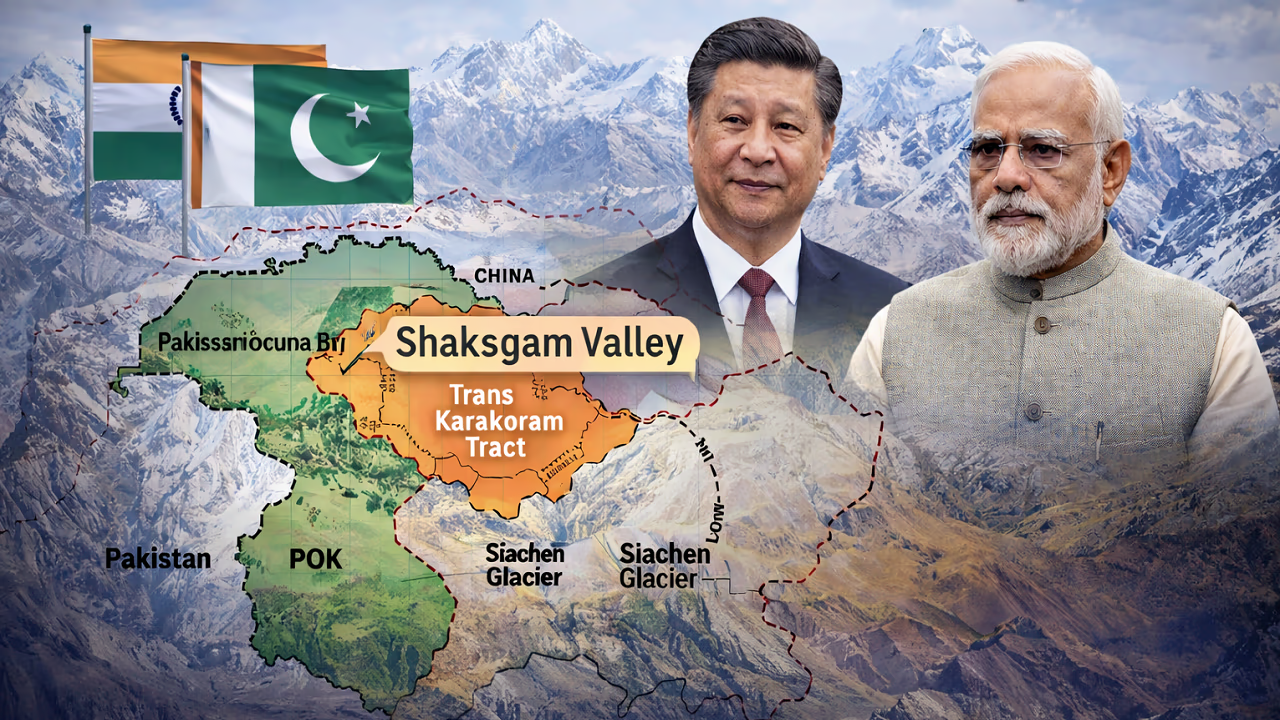
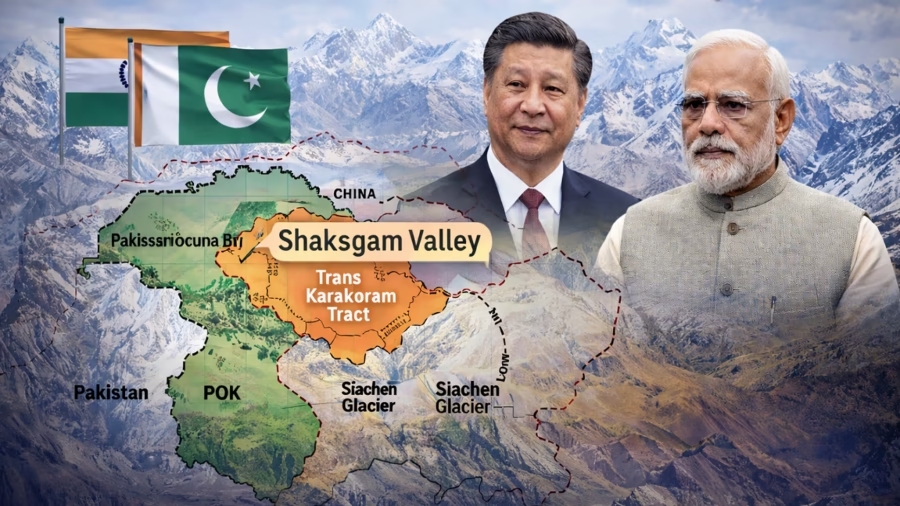
Shaksgam Valley is the latest geographic arena in the geopolitical tussle regarding China’s fresh statement denying Indian claims. The valley lies in an extremely sensitive portion of Pakistan-Occupied Kashmir, and it serves as a complex of relationships among India, China, and Pakistan, historical treaties, and strategic military considerations at a given point in time.
A statement by China has now reopened the subject of sovereignty, border agreements, and regional defence, and this casts the Shaksgam Valley into even greater importance for its current relevance, defence analysis, and preparation for the UPSC.
ALSO READ- Viksit Bharat Young Leaders Dialogue 2026 Begins in Delhi
Why Shaksgam Valley Is in the News-
The matter had once again come to the fore after China stated the Shaksgam Valley to be its own territory, despite an unconstitutional claim by India.
Key Reasons:
- China rejected India’s claim to sovereignty.
- China reiterated its position based on the 1963 boundary agreement with Pakistan.
- This clearly indicates China’s intention to justify its presence in the disputed territories.
India considers the area an integral part of Jammu & Kashmir:
- India affirms that these were all the territories of the former princely state that legally acceded to India in 1947.
- India considers any third-party agreements on the region illegal and invalid.
The valley is currently under Pakistani control following a 1963 agreement with China:
- Though lacking sovereign validity over the territory, Pakistan exercised administrative control.
- The agreement further solidified the long-term strategic cooperation between China and Pakistan.
Implications for India’s territorial integrity and Himalayan regional stability:
- Heightening the worries regarding claims in future by external powers on the territory.
- Further complicates the already complex security in a very fragile high-altitude border.
What is the Shaksgam Valley?
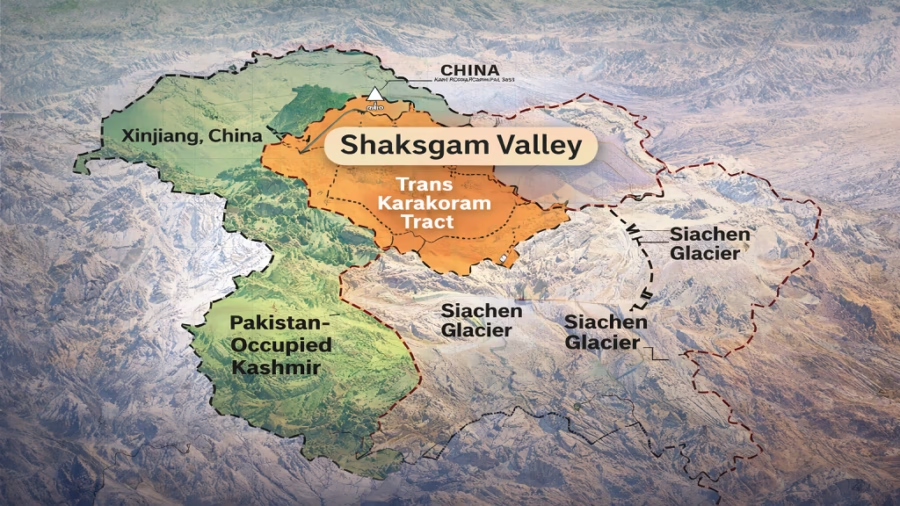
Shaksgam Valley, otherwise called the Trans Karakoram Tract, represents a high-altitude, thinly populated area situated in the north of the Kashmir region.
The facts about the Shaksgam Valley:
- Part of the Hunza-Gilgit region of POK
- India claims it as part of Jammu & Kashmir
- Under Pakistan’s control
- Ceded to China under a provisional agreement
The strategic significance of the valley considerably outweighs the harsh terrain.
Geographic Location and Boundaries-
The valley of the Shaksgam is said to occupy a very strategically critical location within the Karakoram range.
It has borders with:
- Xinjiang to the north
- From the south and west is Northern areas of Pakistan-Occupied Kashmir
- The Siachen Glacier region to the east
- Proximity to Siachen and the Karakoram Pass increases the military and strategic compatibility of this place.
The 1963 China–Pakistan Boundary Agreement-
Ever since that significant year of 1963, when Pakistan and China signed a boundary agreement, the fate of the Shaksgam Valley has taken a turn.
The major points of the agreement are:
- By this agreement, Pakistan transferred the Shaksgam Valley to China.
- The agreement was provisional.
- It explicitly referred to the Kashmir issue as still under dispute.
Article 6 of the Agreement:
The statement stated that when the Kashmir issue is finally settled, then the sovereign authority concerned, India, would enter into new negotiations with China on the boundary.
This clause is the basis on which India has rejected that agreement.
India’s Mount on the Shaksgam Valley-
India has maintained that:
- The whole Jammu & Kashmir region, involving the Shaksgam Valley, is an integral part of India.
- Pakistan had no right or authority to cede Indian territory to China.
- The 1963 agreement is illegal and invalid.
- India takes the position that China’s claims violate sovereignty and international norms.
Strategic Importance of the Shaksgam Valley-
Shaksgam Valley has much more than just mountains in remote and rugged areas.
Strategically, it contributes by virtue of:-
- Proximity to the Siachen Glacier, perhaps the most important military zone
- Intersecting the Karakoram Highway that links China and Pakistan
- Strategic depth for China-Pakistan military cooperation
- Possible logistical and surveillance advantages
- Fostering the strategic axis China-Pakistan, with all the resulting concerns from India.
ALSO READ- Super Bowl 2026: All You Need to Know
Karakoram Highway and Connectivity-
The Karakoram Highway is considered one of the highest motorable roads in the world and traces its origins to the agreement of 1963.
Why it matters:
- Links the Xinjiang region of China to Pakistan.
- Enables trade, military logistics, and strategic mobility.
- Aptly positioned in an array of wider China–Pakistan connectivity projects.
- It has far-reaching implications for infrastructure and, thus, the regional power matrix.
Implications for India–China Relations-
Complicates ongoing border negotiations:
- Strengthens mutual trust during talks at diplomatic and military levels.
- Facilitating disengagement and de-escalation in areas of dispute is getting even harder.
Adds strain to already sensitive India–China relations:
- Strengthens perceptions that the strategic assertiveness of China is in South Asia.
- The limitations of such an area would not allow cooperation in trade, multilateral forums, and regional stability.
Undermines confidence-building measures:
- It compromises the efficacy of existing agreements and protocols.
- Increased risks of miscalculation and escalation are created along disputed frontiers.
Backdrop of unresolved tensions along the Line of Actual Control (LAC):
- Wades up into the deep waters of strategic uncertainty along the western front and eastern sectors of the LAC.
- Keeps India permanently on heightened military preparedness in multiple frontier regions.
Conclusion-
The Shaksgam Valley dispute underlines the nature of geopolitics in South Asia. China’s renewed assertion has kept alive all India’s concerns regarding sovereignty, regional security, and the legality of historical treaties. In negotiating with both China and Pakistan, however, the Shaksgam Valley reminds India that unresolved territorial issues shape much of déjà vu in diplomacy, defence planning, and regional stability.
A must to appreciate for policymakers, analysts, or UPSC aspirants is this dispute to understand India’s strategic challenges in the Himalayas.