
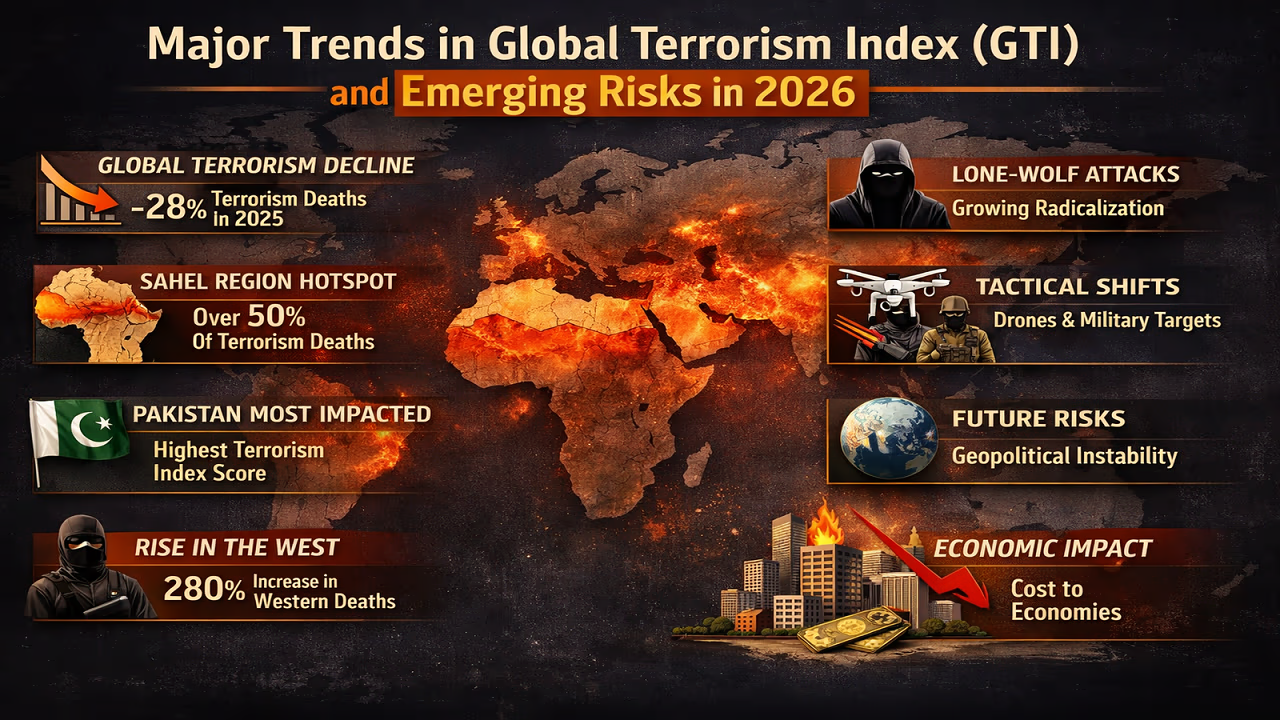
The report on the Global Terrorism Attack 2026 has been published by Sydney’s Institute for Economics & Peace (IEP), where a brief overview of the global terrorism trend is given, covering 163 countries (97% of the population). According to the latest report released, the death rate due to terrorism in the world has declined as a positive indicator of 7% drop in the past two decades. Pakistan tops the list with a hike in resurgence and terrorist groups dominating the terrestrial activities more than nations like Iraq and Afghanistan. However, there has been a significant rise in violent attacks due to youth radicalisation in Western nations like Europe and the US. Scroll down to have a glimpse of the insights of the GTI 2026 reports and a brief analysis, which highlights the major trends in the Global Terrorism Index and emerging risks in 2026.
ALSO READ- India introduced the Jal Jeevan Mission 2.0 on World Water Day
GTI 2026 Main Highlights as per Latest IEP Reports-
Uncover the latest highlights describing the current GTI trends, flagging the alarming scenario in 2026:
- In 2026, the GTI declined to 22% to 2944, as earlier it was 28% in 2025, an indication of reduced global terrorist attacks, which have decreased over the past two decades.
- Around 5,580+ deaths were recorded this year due to terrorism. In these statistics, 81 countries have improved while 19 are still in danger.
- Pakistan has secured the top position with a rank of 1st (8.57) in the GTI 2026 list.
- However, the Sahel region of Sub-Saharan Africa continues to have a higher impact of terrorism and incidents with the shift of major terror groups like IS (Islamic State) in these areas, and 50% of global deaths recorded by extremist attacks, reflecting vulnerability to mankind.
- Burkina Faso, Mali, Nigeria, Congo, and Niger, as per the latest ranks, are terror-prone regions after Pakistan and Africa.
- India has a score of 6.43 with a rank of 13th as a moderately terror-affected area, accompanied by terror attacks from neighbouring nations for anti-faith reasons.
Definition of GTI and Scoring Factor-
The Global Terrorism Index (GTI) is a report on global terrorism of 163 countries, which is yearly published by the Institute for Economics and Peace, a non-profit think tank based in Sydney that strives to restore peace and economic balance in the world. Steve Killelea, an I.T. entrepreneur and founder of the Institute for Economics and Peace, came up with the idea to develop a database to help world leaders and legislators formulate policies to fight against terrorism and save mankind.
It traces the global patterns and trends since 2000, emphasising the systematic arrangement of ranks by recognising the factors:
- The number of terror attacks occurred
- Deaths caused by these attacks
- Injured or victims
- Damage to property
Researchers and analysts such as the National Consortium for the Study of Terrorism and Responses to Terrorism (START) at the University of Maryland collect and combine the data to ordinally rank the countries on a score of 0 to 10, describing the impact of terrorism. This data is called the Global Terrorism Databases, which have registered 190,000 cases of terrorism from different nations, covering 97% of the world population. A major impact of terrorism is reflected by a high GTI score, whereas a lower score shows less terror-prone areas and is safer to survive, and zero indicates no terror attack, such as Albania, Cuba, Singapore, Panama, etc.
The key metric for obtaining the total score is:
| Terrorist Incidents | 1 weightage |
| Fatalities/Deaths | 3 weightage |
| Injuries | 0.5 weightage |
| Property damage | 0 to 3 weightage (>$1 billion damage) |
From the Middle East to Sub-Saharan: Terror Drift-
The terrorism drifts from the Middle East to the Sub-Saharan regions of Africa, and the terror activities are increasing, as the deadliest groups like IS. The major Islamic terror groups spreading Islamophobia have shifted their influence to the Sahel region and other African regions, including Burkina Faso, Nigeria, Niger, and the Democratic Republic of Congo. The major terror groups are shifting their focus from Afghanistan and Iraq. As per reports, the deadliest global terror groups are:
- The Islamic State of Iraq and Syria (ISIS) or Daesh
- Jamaat Nusrat Al Islam Wal Muslimeen, or JNIM (a Salafi Jihadi association).
- Al Shabaab(Sunni Islamist paramilitary, Somalia)
- Taliban or Tehrik-e-Taliban (Pakistan)
A total of 3865+, the fatalities of 70% were solely recorded by these dangerous terror associates, and the casualties from the African sub-Saharan nations account for 50%, which is 5582. This drop from 10,000+ in GTI 2015 shows that there has been a major shift in the death rate over the past two decades, but activity like anti-religion, infrastructural damage and injuries has significantly risen.
Terror Activities in the West-
The latest Bondi Beach shooting incident in Australia by the jhihadi and the New Orleans truck attack are instances that dictate the terror story in Western nations, rising by 280% to 57 deaths. The horrific shooting attack at Bondi Beach in Australia was carried out by two jihadist terrorists who attacked the Jewish people, and it is now recorded as the worst terrorist attack in Australia since 1996. The major terrorist attacks in the Western world were politically motivated by political terrorism, antisemitic and anti-faith sentiments. For instance, the assassination of American conservative political influencer Charlie Kirk, as well as the murder of two employees of Israel’s embassy in Washington DC, are incidents that define the rise of terrorism in Western countries.
What is the Importance of GTI 2026?
The Global Terrorism Index is more than just a ranking of the nations for measuring terrorism. It is a comprehensive policy tool that helps governments and organisations to keep a check on growing terrorism and figure out possibilities to combat it. Moreover, the data are useful in:
- Identify high-risk regions that are more prone to terrorist influence
- Allocate resources effectively to help in rooting out terrorists
- GTI is effective for developing anti-terrorism strategies to counter the terror groups with the help of global leaders and analysts by identifying which extremist groups and areas are under threat or captured by them.
- Understand emerging terror threats to take quick action before the situation slips out of hand in future and has unexpected outcomes.

Youth Radicalisation: A Major Threat to Humanity-
In Europe and America, youth radicalisation has become a growing concern as the minds of minors and youth by 42% are being brainwashed to spread terrorism in the West.
- Since 2021, the radicalisation has multiplied 3 times, which depicts that more young generations are involved in the hatred movement in the name of religion.
- While Iran has evolved as a training ground for breeding terrorist militias, including some parts of the Sub-Saharan region and the Middle East.
- Lone wolf attacks are becoming very common in the West, by 93% as they pretend to be normal but suddenly attacking with a joint terrorist group motive or personal vengeance. For instance, a Norwegian man named Anders Breivik killed more than 70 people who were involved in a political rampage.
ALSO READ- Oscars 2026 Winners: Dramas & Viral Moments
Terrorism’s Economic Impact-
Terrorism has an intense economic impact that extends beyond the immediate destruction caused by attacks:
- Infrastructural Loss: The most evident impacts are infrastructural damage, businesses, and assets, which need huge investment for rebuilding.
- Shift of Funds: The governments are compelled to divert huge proportions of their budgets for security, intelligence, and defence, which would have otherwise been spent on development activities like education, healthcare, and welfare.
- Decrease in economic Activities: Another area of economic activity, like businesses, schools, or tourism, affected by terrorism is the environment of fear, uncertainty, and experience a drastic decline in its rate of growth due to a terror attack.
- Decline in FDI: Foreign Direct Investments may also be impacted, as investors would not want to invest in areas they do not feel are secure, which would also impact the economy’s growth rate.
- Shutting Down Businesses: The local businesses in areas prone to terror attacks may also be affected negatively, especially when they are forced to shut their shutters.
- Loss of a Country’s Reputation: Another way in which terrorism can affect a nation is through damage to its reputation, especially for countries like Pakistan, which, because of the influence of the Taliban and the Balochistan Liberation Army, seek to show how a nation is mishandling terrorism.
- The cost of terrorism, therefore, is not just the loss suffered during the terror attack but also the loss that might occur in the future in terms of growth rate, development, and stability of a country, making it a major global issue.
FAQs-
A. The Global Terrorism Index (GTI) is a report on global terrorism of 163 countries, which is yearly published by the Institute for Economics and Peace, a non-profit think tank based in Sydney, to help world leaders and legislators formulate policies to fight against terrorism and save humanity.
A. Pakistan, with the rank of 8.47+, is leading the GTI 2026. Earlier, it had ranked 2nd on the list of the previous year, but due to increased Taliban and BLA activities, the rank has shifted above, indicating the most terror-prone area.
A. Based on the terrorism score, the GTI 2026 has listed countries like Albania, Laos, Singapore, El Salvador, Eritrea, Cuba, Panama and Kuwait as safer with a 0 GTI score.
A. India ranks 13th on the GTI list of 2026, indicating the country is somewhat influenced by terror attacks and incidents.
A. The higher rank on the GTI list depicts countries most vulnerable to terrorism (close to a score of 10), and low-ranked countries with a score of 0 or below 4 are safer and have low terrorist activity.