
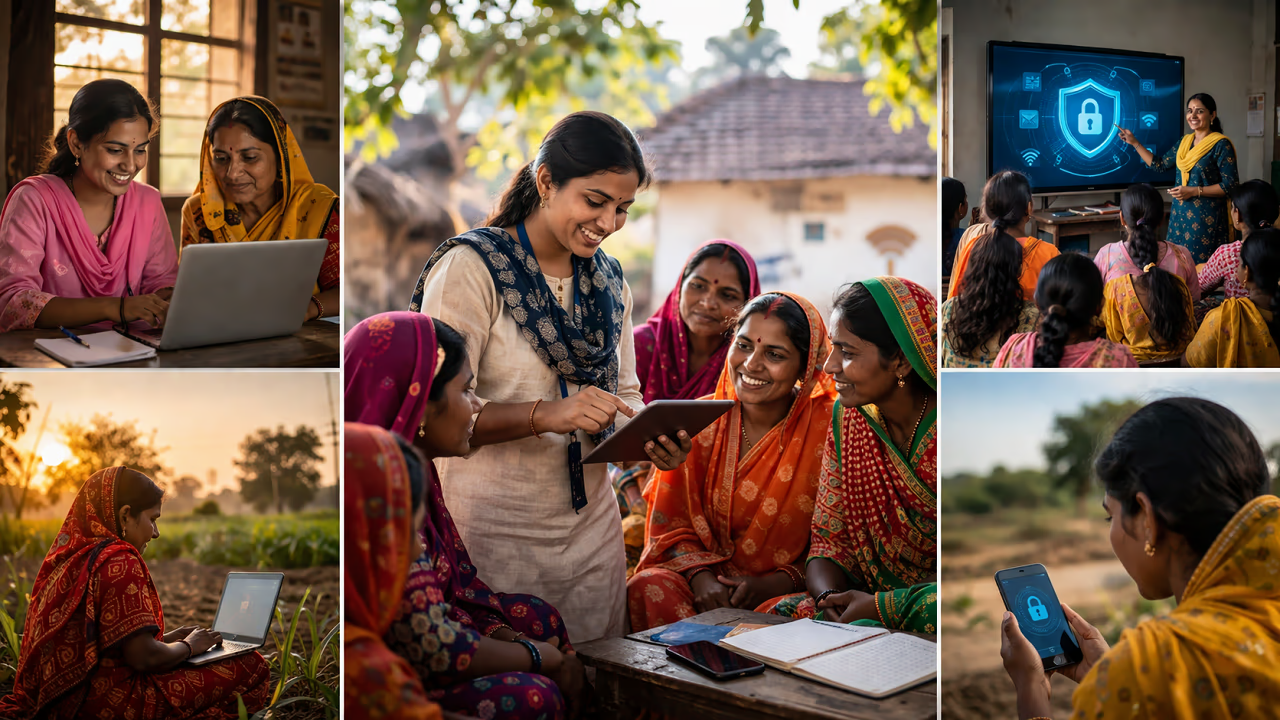
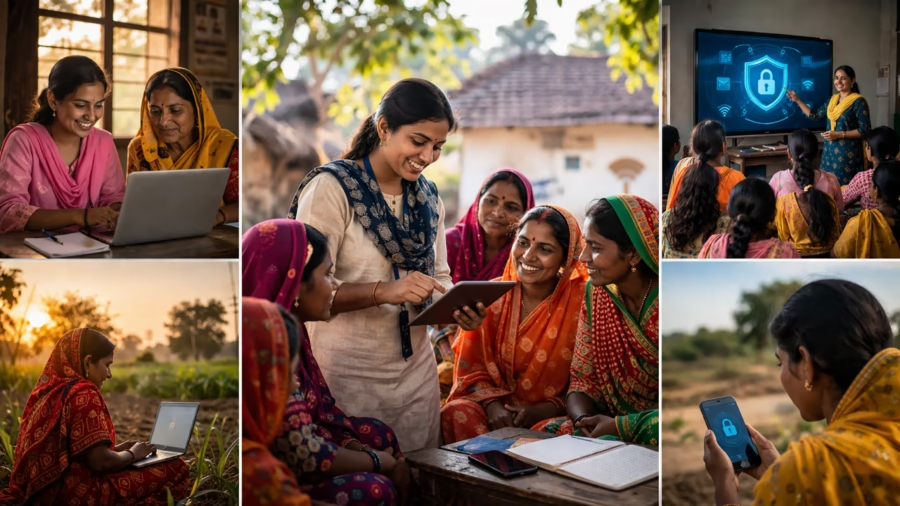
To plug the digital gap in India, the Ministry of Electronics and Information Technology (MeitY) has brought together the C-DAC Hyderabad and Reliance Foundation to kick off e-SafeHER, an innovative cybersecurity awareness training program. Touted as the first-of-its-kind program, it was announced on April 13 and aims to reach 1 million tech-empowered women guardians, called Cyber Sakhis, in rural India over three years. It’s more than just between the lines of online hazards; it’s about empowering rural women with the keys to a safer digital life as cyber threats skyrocket.
As India speeds towards a Cyber Secure Bharat, e-SafeHER is tapping into MeitY‘s Information Security Education and Awareness (ISEA) Programme. C-DAC is supplying the technical backbone, with specialised content; Reliance Foundation is delivering it through women‘s Self Help Groups (SHGs). For women in rural areas who are increasingly having to engage with apps for UPI payments, farming subsidies, and online marketplaces, all of which require some capacity to secure their processing, this will be a game-changer. Imagine a Madhya Pradesh SHG leader pre-empting a phishing scam that ultimately depletes her group‘s savings. That‘s a real-world outcome.
ALSO READ- One Health Approach: Uniting Humans, Animals & Planet for Complete Safety
Why e-SafeHER Matters in Rural India’s Digital Boom-
Never before have rural areas in India been so connected. With over 400 million rural users owning smartphones as per the latest data from TRAI, digital transactions grew 25% annually. But neither are rural women at risk from cyber-crimes: 70% of online shoppers targeted are women, and fraud like fake Loan Apps led to losses of over 5000 crore, according to a 2025 NCRB study.
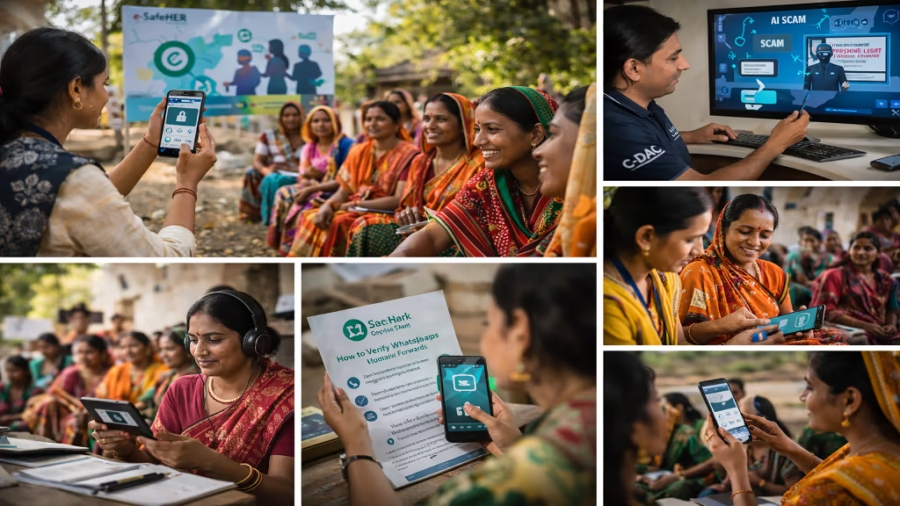
E-SafeHER turns things around by empowering communities with a gender-sensitive, community-led approach. Cyber safety learning takes place through regular SHG meetings covering topics such as using the internet safely, ensuring password security and recognising Deep Fakes. Not dull workshop style- engaging, easy to understand and available in Hindi, Odia, etc.
Achieving the right balance at launch, MeitY Secretary Shri S Krishnan, said: “In our quest for capacity, collaboration and resilience, e-SafeHER combines MeitY‘s ISEA syllabus with Reliance Foundation‘s outreach to enable women even in the remotest corners to feel safe, visible and courageous on the net”. This isn‘t top-down; it‘s communal resilience.
The Power Duo: C-DAC and Reliance Foundation Unite-
C-DAC Hyderabad, MeitY’s premier R&D arm, anchors the tech side. They’re crafting localised cybersecurity training content—think audio-visual reels on “How to Verify WhatsApp forwards” or gamified quizzes on two-factor authentication. Content evolves with threats, from AI scams to ransomware, all under ISEA’s national framework.
Reliance Foundation brings the muscle: Jio’s rural networks and 10 lakh+ SHG touchpoints across 20 states. “Rural women are digitising fastest,” said Ms Isha Ambani, Director, Reliance Foundation. “Through e-SafeHER, we’re not just connecting them—we’re arming them against cyber pitfalls. One million Cyber Sakhis by 2029 means confident digital lives and stronger livelihoods.”
This MeitY-Reliance partnership for cybersecurity is symbiotic: C-DAC’s expertise meets Foundation’s last-mile delivery, ensuring digital inclusion for rural women without new infrastructure.
Key Features of the e-SafeHER Programme:
- Peer-Led Training: Each SHG woman is trained as a Cyber Sakhi and then trains 50 other peers in a fun, 30-minute session.
- Multilingual Modules:12 Languages of India, with voice-overs for poor-literacy areas.
- Blended Learning: App-based quizzes + offline audiobooks for patchy internet connection.
- Behavioural Tracking: Use of pre/post surveys to measure changes, for example, 40% increase in confidence in safe transactions.
Large-scale integration slides into the NRLM and keeps the digital literacy programs alive.
Phased Rollout: From Pilots to Nationwide Impact-
e-SafeHER kicks off smartly, avoiding big-bang pitfalls.
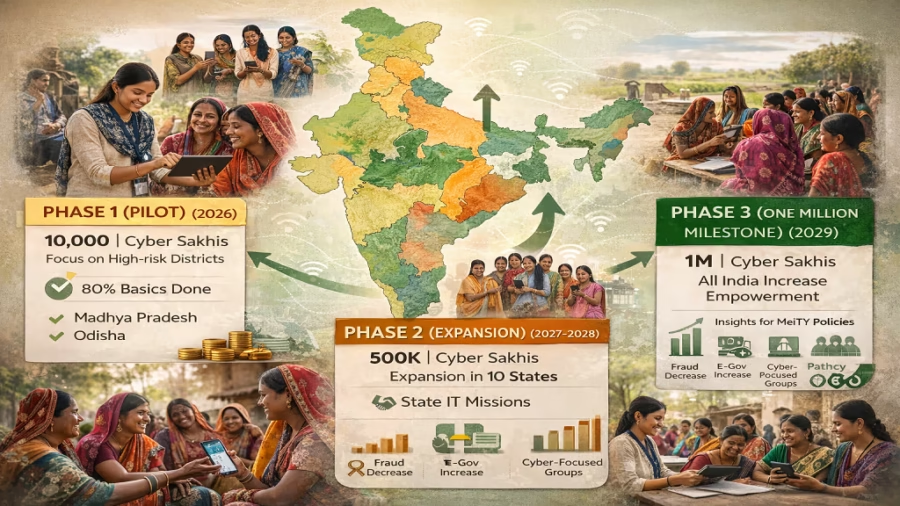
Phase 1: Pilot in Heartlands (2026):
Begins in Madhya Pradesh and Odisha with training 10,000 Cyber Sakhis. Focus: High-risk districts (>60% SHG penetration). Metrics? Early adopters should have 80% of the basics done, like app permission checks.
Phase 2: Expansion (2027-2028):
Strife in 10 states, racing with 500,000 women. Partnering with state IT missions bolsters reach like Telangana‘s T-Hub for content localisation.
Phase 3: One Million Milestone (2029):
Nationwide, with adjustments based on data. Insights inform MeitY policies, which could lead to the creation of a nationwide, integrated Cyber Sakhi network.
This phased cyber security awareness for rural India focuses on emerging outcomes – a lower number of fraud and complaints, an increased rate of e-governance and cyber security groups administered by women.
Real Stories: Women Who’ll Lead the Charge-
Meet Lakshmi, Mayurbhanj district, Odisha. Lakshmi is an SHG treasurer. Last year, she lost 20, 000 to a fake government scheme. She now says: With the help of e-SafeHER, I would train our SHG members, so that they don‘t fall into the trap of such misleading activities (simulated from pilot previews). In Betul, MPSunita Devi wants to learn UPI: “Digital payment got a lot of customers for me, but I also got scared of online fraud. Now through CyberSakhi training, I am updating myself.”
These are real. What Reliance‘s Jio Women‘s Literacy initiatives did in the past – trained 2 lakh women, e-SafeHER escalates it to a new cyber maturity.
Challenges and the Road to Cyber-Resilient Bharat-
Poor rural internet (fixed with offline mode), cultural dislike for tech (fixed with female trainers), and new risks (mule accounts).
However, there have been many successes. In urban pilots, ISEA programs like- reduced phishing click-throughs 35%. The reach of Reliance Foundation‘s rural digital literacy alone is 5 million; e-SafeHER would continue the promise, as a women-led cybersecurity in India.
Conclusion: A Safer Digital Future for Rural Women-
This is not hype, but a lifeline. In 2029, one million Cyber Sakhis will protect families, fuel economies, and bring Cyber Secure Bharat alive. MeitY, C-DAC and Reliance Foundation are evidence that the public-private partnership example works. While rural India goes digital, the cybersecurity training for women is a clincher that ensures no one gets left exposed. The digital revolution is for everyone’s safety.