
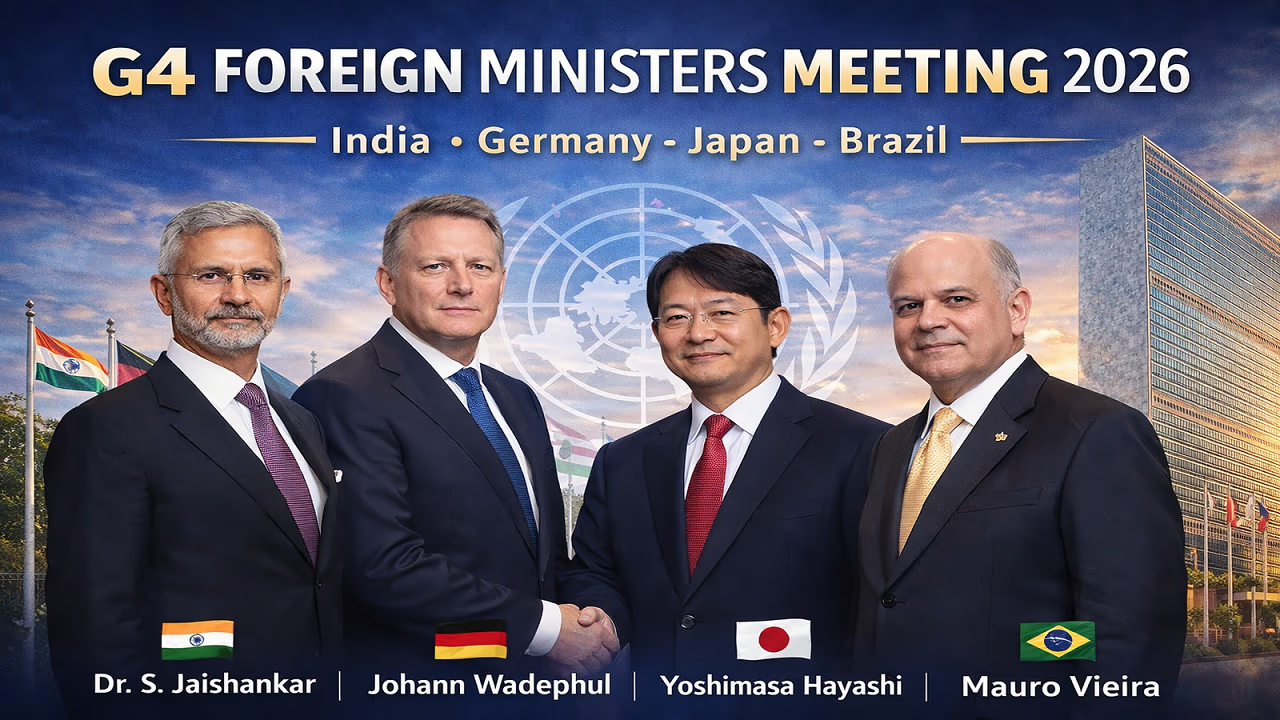
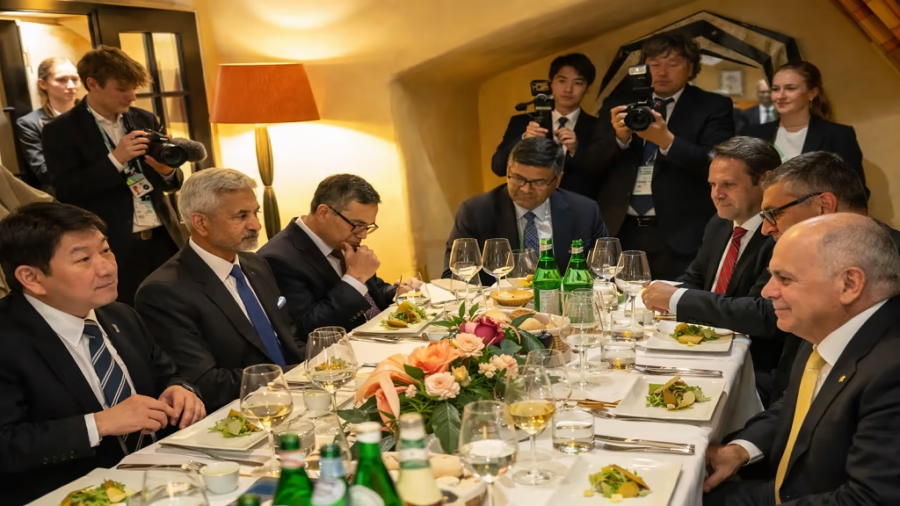
India, Germany, Japan, and Brazil have once again formed a G4 group at the sidelines of the Munich Security Council (MSC) 2026. The G4 took on the long-laid “multilateralism reforms” of the United Nations Security Council (UNSC) to ensure proper functionality and focus on crucial matters. The G4 Nations meeting has also gained international attention as the four nations are once again attempting to push for a more representative and modern global governance system. But what is the G4 group, and why is its recent gathering important in the current context? This article provides a brief about the G4 countries’ latest discussions on some important matters, pushing for a new reform.
ALSO READ- Best Career Paths for Freelancers
What is G4 Nations?
G4 is the group of four nations, such as India, Japan, Brazil and Germany, which is a political cooperative alliance that bids for the permanent seats in the United Nations Security Council (UNSC) and reinforces the legitimacy of the council. The association was formed in 2005 to reform the UNSC structure to make it more representative and inclusive. The alliance give these nations veto power, supporting each other’s bids in the permanent seats, which are currently held by five permanent members, i.e., the U.S.A., the United Kingdom, China, Russia and France.
These four countries hold that the existing UNSC structure reflects the balance of power in 1945, not the current geopolitical and economic reality. Over the years, the G4 has been working in a coordinated manner to make a case for a more inclusive and representative global governance architecture.
Objectives:
- G4 nations guarantee a permanent seat membership in the UNSC using their political or economic power as they are among the 10 members that are elected for 2-year terms.
- The countries serve as a voice of support for developing countries, helping in decision-making in the global arena, which is in line with the current geopolitical order.
- Discussing elaborate reforms for the UNSC to alter the global order, and improving the efficiency of the UNSC in maintaining international peace and security.
ALSO READ- 68th Grammy Awards: Know the Winners and Much More
Latest Highlights from the G4 Meeting-
- The External Affairs Minister(EAM) of India, Subrahmanyam Jaishankar, attended the G4 meeting on the sidelines of MSC 2026, with other foreign ministers of Brazil (Mauro Vieira), Japan (Toshimitsu Motegi) and Germany(Johann Wadephul) on 14th February 2026.
- On the 60th anniversary of the United Nations, emphasises on the multilateralism reforms in the UNSC, which includes expanding its permanent and non-permanent members and also the new ones, unveiling the political realities.
- G4 emphasised the need for UNSC expansion on grounds of legitimacy in the face of global instability, committing to Intergovernmental Negotiations and broader consultations.
- They expressed their continued support to Common African Position to ensure permanent African representation to rectify the historic imbalances.
- The G4 meeting also focused on reform discussions to move forward without any delay.
Why G4’s New Reforms are Required in the UNSC?
- UNSC reform is crucial to address the current geopolitical disturbances, such as wars in Ukraine and Gaza, climate crises, and changes in power politics.
- The 1945 UNSC structure fails to emphasise the 2026 current situation, where 15 members can not alone present 8 billion in the face of power politics from the G20.
- P5, which includes the United States, the United Kingdom, Russia, China & France, pressures prevent action on nations like Ukraine and Gaza; the old reforms limit abuse for effective crisis response.
- Africa, India (1.4B people), and Latin America denied permanent seats—undermines UN legitimacy in a multipolar world, signifying Global South Exclusion.
- G4 lead on economy/climate solutions but lack representation; reform promotes equality.
- Wars, pandemics, and climate crises require an agile UNSC; Munich 2026 G4 meeting emphasises “reformed multilateralism” for success.
Blockages for UNSC Reforms-
- G4 proposes 6 new permanent seats; competitors such as Coffee Club/Uniting for Consensus are opposed to any expansion, advocating only for non-permanent members or regional vetoes.
- US-China rivalries, Russia-West splits prevent consensus; P5 prioritise own interests over expansion (US against new veto powers).
- Low Council productivity (44 resolutions in 2025) creates a sense of urgency, but liquidity crises and peacekeeping missions shift attention in the 2026 UN agenda.
- Requires 2/3 General Assembly majority (129/193 states) and ratification by 2/3 members; the IGN framework has no text-based negotiations, stalled since 2008.
- Italy/Pakistan-led oppositions fear watering down of influence; Trump’s 2026 position indicates the US’s lack of interest in reform.
Major Implications After G4 Meeting at the Sidelines of MSC 2026-
- Strengthen G4 Alliance: After the Munich conference on Feb 14, the foreign ministers of the G4 countries committed to stronger cooperation on UNSC reform issues, including virtual meetings to coordinate strategies before critical UN deadlines.
- Progress the IGN Process: Advocate for text-based negotiations at the 80th UN General Assembly (Sept 2026), capitalising on the momentum from Munich to overcome procedural hurdles and put forward a specific resolution at Summit of the Future follow-ups.
- P5 Monitoring of Dynamics: US (post-Trump agenda), UK/France support, with resistance from China/Russia; possible next G4 ministerial meeting in July 2026, pre-UNGA to review progress and shift strategies on veto restraint.
- Stakeholder Engagement: Engage in fervent consultations with P5 countries, G77 group, African Union, and Uniting for Consensus opponents; seek to win their support for the G4 vision (6 new seats with no initial veto) through diplomatic efforts in Q2 2026.
- Public and Regional Advocacy: Launch coordinated media campaigns highlighting UNSC’s obsolescence; engage Global South allies via bilaterals (e.g., India-Africa forums) to build the required 2/3 GA majority (129 votes).
Conclusion-
The G4 meeting is more than just another diplomatic event – it is a reminder that the world is changing and that the world’s institutions must change with it. The four countries, India, Germany, Japan, and Brazil, share a common vision that the United Nations Security Council must be representative of today’s world and not yesterday’s world of power politics. Although the process of reform is long and complicated, the fact that the G4 has brought the issue of fair representation and global governance to the fore again is a positive development.