

Why in the News?
Recently, in Kerala, a five-year-old girl tragically passed away after swimming in the contaminated water of a pond. The girl died due to a rare infection caused by a brain-eating amoeba.
The child passed away at the Kozhikode Medical College’s Institute of Maternal and Child Health.
ALSO READ- IndiaSkills Competition 2024
What is Brain Eating Amoeba?
The scientific name of the brain-eating amoeba is ‘Naegleria fowleri’. It is a species of the genus Naegleria. Only one species of Naegleria, Naegleria fowleri, infects people.
| Domain | Eukaryota |
| Phylum | Percolozoa |
| Class | Heterolobosea |
| Order | Schizopyrenida |
| Family | Vahlkampfiidae |
| Genus | Naegleria |
| Species | N. fowleri |
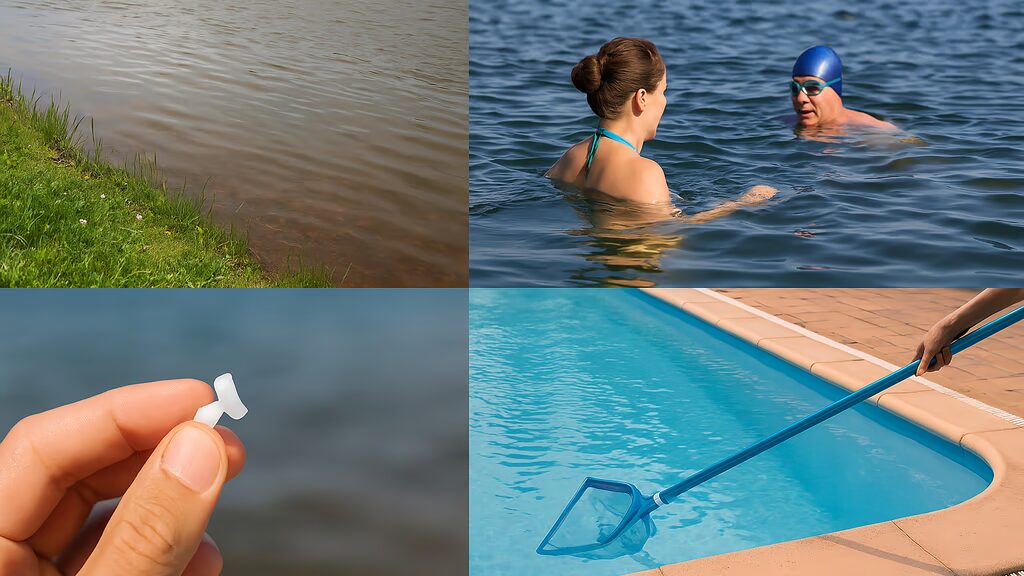
It is a single-celled organism found in warm freshwater environments like lakes, hot springs and poorly maintained swimming pools. It is so small that it can only be seen with a microscope. Warm summer water is ideal for the microorganism. It multiplies faster in warm environments. Of the many species of the Naegleria genus, only the Wockhardt strain of Naegleria fowleri causes disease in humans.
How It Affects the Body-
The amoeba enters the body through the nose and travels to the brain, causing a severe and usually fatal brain infection called primary amebic meningoencephalitis, which affects the brain by causing inflammation and destruction of brain tissue. The infection does not spread from person to person.
Symptoms of Brain-Eating Amoeba Infection-
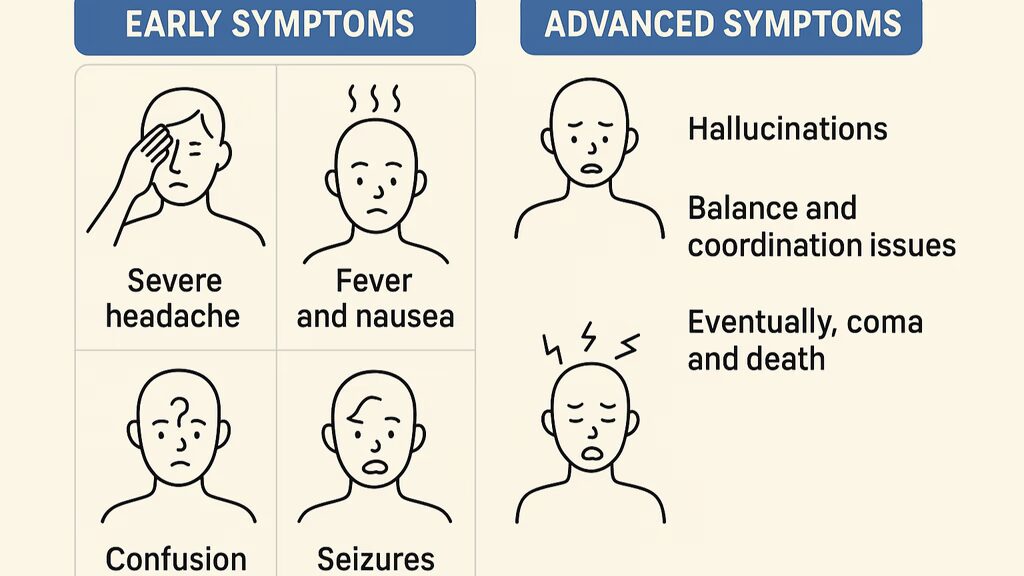
Symptoms manifest between 1 and 9 days after exposure, and they progress rapidly from:
Initial Symptoms:
- Severe headache
- Fever and nausea
- Stiff neck
- Vomiting
Advanced Symptoms:
- Confusion
- Seizures
- Hallucinations
- Balance and coordination issues
- Eventually, coma and death
Most cases lead to death within 1 to 2 weeks of symptom onset due to the rapid destruction of brain tissue.
Treatment Options-
At this point, there is no certain cure for PAM. A combination of medicines tries to control an infection, which includes:
- Amphotericin B (antifungal)
- Azithromycin
- Fluconazole
- Rifampin
- Miltefosine
- Dexamethasone (an anti-inflammatory)
Although a few of them have been survivors, the rates of survival are still depressingly low.
Prevention Measures-
When symptoms show, the disease is almost invariably fatal; so the one efficient prevention method is:
- Avoid warm freshwater bodies without proper sanitation.
- Don’t swim in ponds, lakes, or hot springs that are not treated: preferably during summer. Otherwise, Nasal plugs are made for use when swimming or diving.
- For nasal care, use only sterile or boiled water by all means (e.g., neti pots).
- Pools must be well chlorinated and maintained.
Who Are The Susceptibles?
- More often, children and adolescents get affected during water play and swimming activities.
- Weakened immune systems put an individual at greater risk.
- Anyone who engages in water sports under those still fresh, warm waters.
- People with sinus or nasal problems who allow infected water to enter through the nasal passages.
Reported Cases in India-
- Thus far, including this case, India has reported about twenty known PAM cases.
- Most of those happened in the Southern states, where warm and stagnant water bodies prevail.
- According to experts, the actual numbers may be higher due to the possibility of misdiagnosis and underreporting.
Global Perspective-
- The United States has, on average, 2-8 reported cases per year occurring mostly in the southern states during the summer.
- The fatality rate is greater than 97%.
- In the whole world, only about ten survivors have been documented, despite intensive treatment.
Importance of Awareness-
The Kerala case demonstrates the need for:
- Public Awareness Campaigns about Water Safety.
- Workshops could be organised by schools and local communities regarding safe swimming.
- TV, radio, and social media should be used for public outreach on this subject.
Health Advisories during Peak Summer Months-
- Health Precaution Advisory During the Peak Summer Months.
- Routine bulletins should be released to the public by authorities outlining the risks associated with stagnant, untreated, or treated waters.
- Local governments should establish warning boards near dangerous ponds and lakes.
Proper Chlorination of Pools and Water Bodies-
- Routine water quality checks should be mandatory in public swimming facilities.
- Private pool owners must be educated on maintaining safe chlorine levels.
- Training Healthcare Professionals to Recognise Symptoms Early
- Rare infections like PAM can be incorporated into clinical training modules at medical colleges.
- Quick diagnosis protocols should be established in hospitals for suspected cases.
- Even though prognosis remains generally poor, early detection and rapid treatment may help slightly improve chances for survival.
Conclusion-
The death of a five-year-old child in Kerala from the infection of a brain-eating amoeba brings to mind also the grim reminders of the unseen menace that exists within freshwater environments. It is a rarer, lonelier sanitation, but one of the deadliest also.
Only prevention and the cultivation of awareness would, therefore, remain the only viable thrust. Education of the public about water safety, maintenance of pools in accordance with standards, and toxic-free nasal hygiene can avert catastrophe.
As temperatures rise and ecosystems alter, India is poised to even better face threats with time. With the cooperation of the community health systems and the government, it is very possible to create a safe environment towards improved safe practices of water handling, as well as the awareness of hazardous pathogens.