
The World Inequality Report 2026 is a compelling and fact-filled insight into how income, wealth, gender, and climate inequalities are impacting the modern world. Issued by some of the top economists in the world, this report sheds light on a disturbing truth: not all have shared in the benefits of economic expansion, and wealth disparities are increasing in most parts of the world. Whether it is for an excess of wealth in the hands of the top 1%, gender disparities in salaries, or climate inequality, it can safely be stated that this report highlights a disturbing reality and brings up critical concerns for policymakers and citizens across both local and global forums. Read the article that throws serious insights on extreme disparities in the World Inequality Report 2026 and how it will impact globally and India.
ALSO READ- FDA Approves First AI Tool AIM-NASH to Advance Liver Disease Trials
What Is the World Inequality Report 2026?
The World Inequality Report 2026 is a thorough analysis of income and wealth inequalities in different countries and regions of the world. The report is compiled by top economists and researchers in this field, using absolutely transparent information available in the public domain and providing an accurate insight into how income inequalities have increased over time. The report focuses on inequalities between the richer and poorer classes of people in a country and how a small fraction of people in a country possess a substantial amount of wealth in the global economy despite a growing economy in total. Apart from this, other major influential factors explained in this report include taxation, government policies, gender inequalities, and financial systems in different regions of the world.
Who Prepared and Attended the Report Launch?
- The report was primarily edited by Lucas Chancel, Ricardo Gómez-Carrera, Rowaida Moshrif, and Thomas Piketty, the World Inequality Lab’s Co-Director.
- It includes a preface by notable economists Jayati Ghosh and Nobel winner Joseph E. Stiglitz, who emphasise the need for policy urgency.
- Over 200 scholars from around the world helped to analyse income, wealth, gender, climate, and geography inequities in over 173 nations.
- Officially released on December 10, 2025, in line with the South African G20 presidency’s focus on inequality and multilateralism.
- Rowaida Moshrif, Ricardo Gómez-Carrera, Thomas Piketty, and Joseph Stiglitz provided key ideas, emphasising the importance of progressive changes.
- There was no explicit in-person launch ceremony indicated; instead, the release centred on online distribution via wir2026.wid.world and linked to broader G20 debates.
Major Findings from the Report-
Here are some findings reports states defining the extreme disparities that are lowering the pace of economic growth:
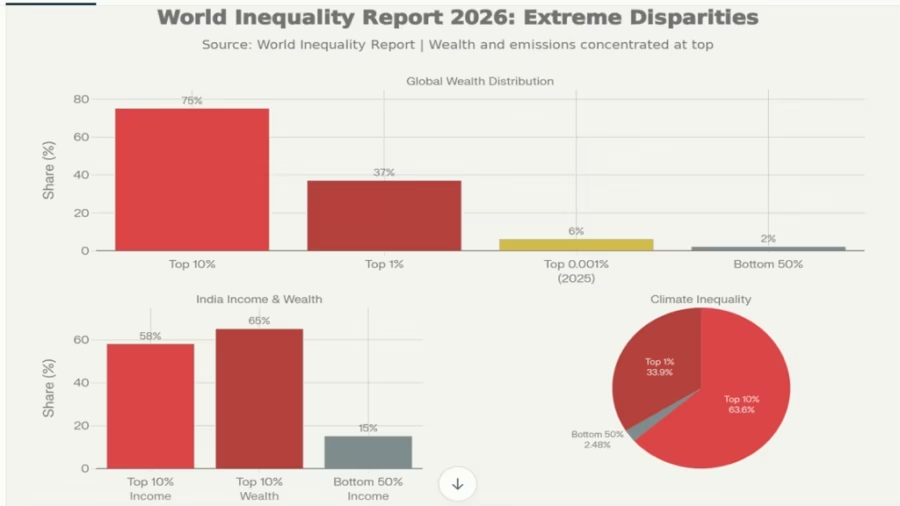
- India Income Inequality: Top 10% captures 58% of the national income vs. 57% in 2022, while the bottom 50% gets only 15%. The average per capita income is €6,200-PPP.
- India Wealth Inequality: Richest 10% owns 65% of total wealth, top 1% owns 40%; average wealth per adult at €28,000 (PPP).
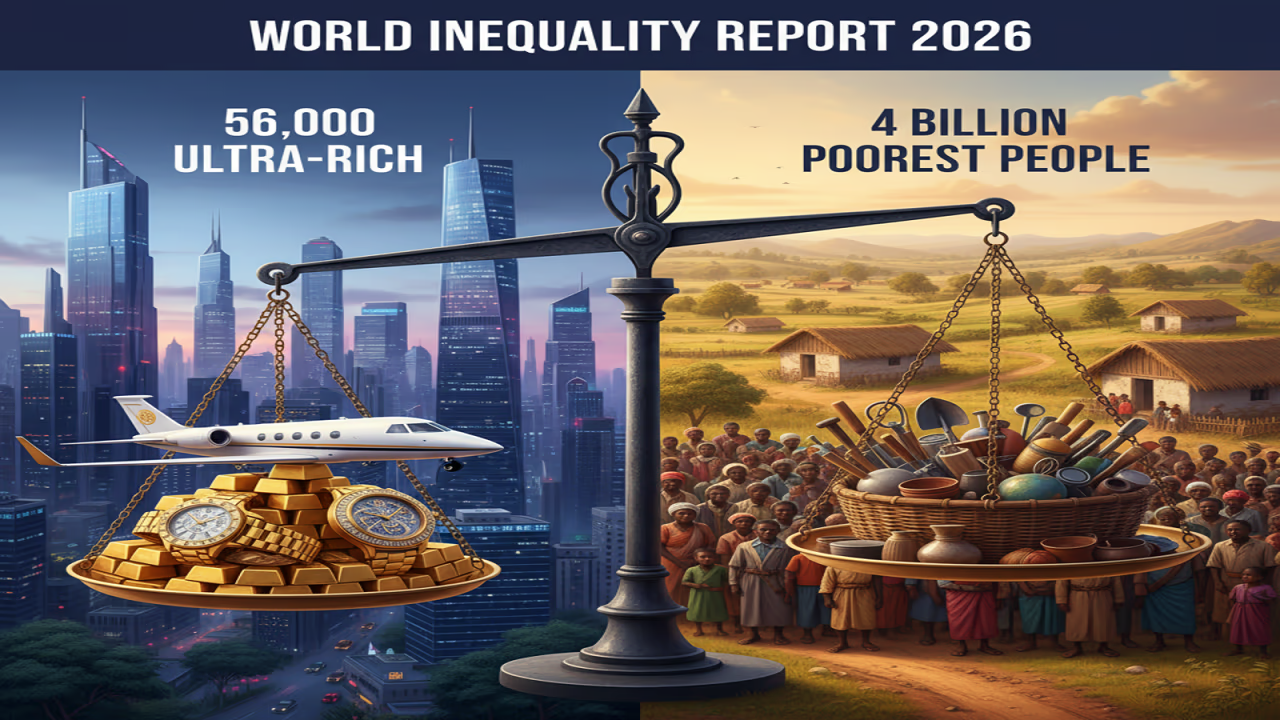
- Global Wealth Focus: The top 10% owns 75% of the world’s wealth, while the bottom 50% owns only 2%; the top 1% commands 37% compared with the bottom half, 18 times. The top 0.001% approximately 60,000 ultra-rich individuals, possess three times more than the poorest 50%, up from a 4% share in 1995 to 6% by 2025.
- Geographic Shifts 1980-2025: China moved into the global middle/upper segments; India fell from the middle 40% to mostly the bottom 50%; Sub-Saharan Africa remained in the lower half.
- Gender Disparities: India’s female labour participations at 15.7%; globally, women earn 61% of men’s paid wages, 32% including unpaid work, which they do 2.5x more, capturing 25% of labour income since 1990.
- Climate Inequality: Poorest 50% accounts for 3% of capital-linked emissions; the top 10% contributes 77%, top 1% accounts for 41%
India’s Inequality Impacts Highlighted from this Report-
- Growing Economic Divide: With the top 10% earning 58% of income and 65% of wealth, the bottom 50% only have 15%, which slows inclusive growth and increases the persistence of poverty.
- Gender Stagnation: The 15.7% female labour force participation rate hinders women’s empowerment, burdens families with unpaid care, and reduces GDP potential.
- Global Position Decline: In contrast to China’s development, India’s middle-class aspirations are undermined by a shift from the middle 40% (1980) to the bottom 50% (2025).
- Social Tensions: Excessive wealth concentration breeds animosity, which raises the possibility of instability and erodes confidence in welfare programs and government.
- Human Capital Loss: Investments in healthcare and education are hampered by tax loophole revenue shortfalls, which prolong cycles of inequality and skill gaps.
- Climate Vulnerability: Due to the dominance of large emitters worldwide, resources are strained by low emissions contribution but high exposure to consequences.
ALSO READ- Transforming Crisis into Opportunity: GEO-7’s Roadmap for Food, Energy & Biodiversities
Reasons for the World Inequality Report一Why It Matters?
Listed are the primary reasons for crafting the World Inequality Report:
- Social Unrest Risk: Top 10% holds 58% of the income in India, making them a source of frustration among Indians, which can lead to social unrest.
- Climate Inequality: Top 10% countries have accounted for 77% of total CO2 emissions, with the bottom 50% countries emitting just 3%. There is a burning need to share the burden towards achieving
- Gender Economic Drag: Women contribute 32 per cent of men’s total work, which affects GDP and hinders the betterment of families because of 15.7 per cent participation in India.
- Policy Changes: Underlines the regressive taxes & loopholes costing revenue for education & healthcare. It also includes informing progressive policies such as a 2% billionaires wealth tax.
- Global Power Shift: India’s slide into the bottom 50% compared with China’s emergence shows the need for social welfare programs if the country is to regain middle-class status.
- Human Capital Crisis: Ultra-rich concentration (Top 0.001% have 3 times the wealth of the bottom half) leads to wider education disparities, hampering innovation and inclusive growth.
Challenges to Overcome-
- A regressive tax system ensures a lower tax rate for ultra-rich people and leaves essential public domains such as education and healthcare starved for money.
- Gendered labour obligations lock women into unpaid caregiving roles, thereby hindering them from joining the paid labour force and achieving economic autonomy.
- Excessive hoarding of wealth by a small minority leads to a huge gap with the masses, resulting in social resentment.
- Changing global alignments put countries such as India in a position where they are left behind in relation to emerging global powers.
- Asymmetrical climate responsibilities allow big emissions to go scot-free, leaving vulnerable countries to face the worst effects.
- A lack of global cooperation prevents loopholes from being shut and an equal redistribution of wealth to benefit developing countries.
Making Future Better- Way Ahead-
- Make progressive taxation more progressive by introducing wealth taxes on the super-rich to support basic public services.
- Less unpaid caregiving work through publicly funded child care, skill-building, and flexible work arrangements can empower women economically.
- Enhance redistributive policies such as cash transfer programs, pension schemes, and social support payments.
- Invest heavily in human capital investment via free education, universal health care, and early child nutrition programs.
- Establish a global multilateralism in equitable taxation, climate ethics, and redesigned redistributions.
Conclusion-
Deep disparities in wealth, income, gender roles, and the effects of climate change impede progress, according to the World Inequality Report 2026. Billions of people struggle while a small elite in India and around the world reaps the majority of the benefits. These disparities accelerate equitable growth and cause instability. Fair taxes on the wealthy, assistance for women and families, free healthcare and education, and international cooperation are the solutions. Bold decisions made today can lead to equality for everyone.