
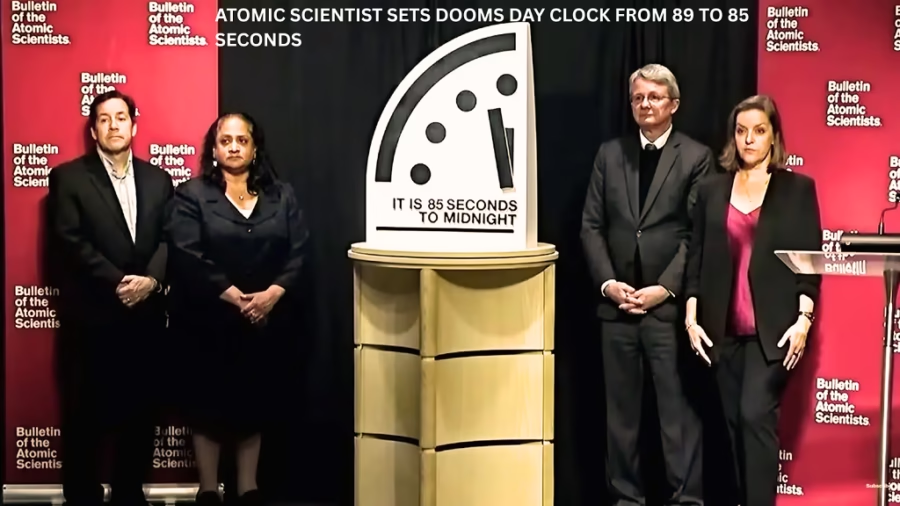
On January 27 2026, the scientists advanced the Doomsday time from 89 seconds (2025) to 85 seconds (Jan 2026), representing humanity’s closest approach to global disaster. They moved 4 seconds forward from last year’s setting of 89 seconds, which is more than just a technicality—it is a warning. Whether it is the rise of nuclear tensions, the climate change factor, or the unchecked development of disruptive technologies, the Doomsday Clock indicates that the world is seeing a growing number of threats that are converging. In this article, we will briefly discuss why the adjustment of the time on the Doomsday clock is a matter of concern.
ALSO READ- India–EU Free Trade Deal: Gain and Impact
The Doomsday Clock Explained-
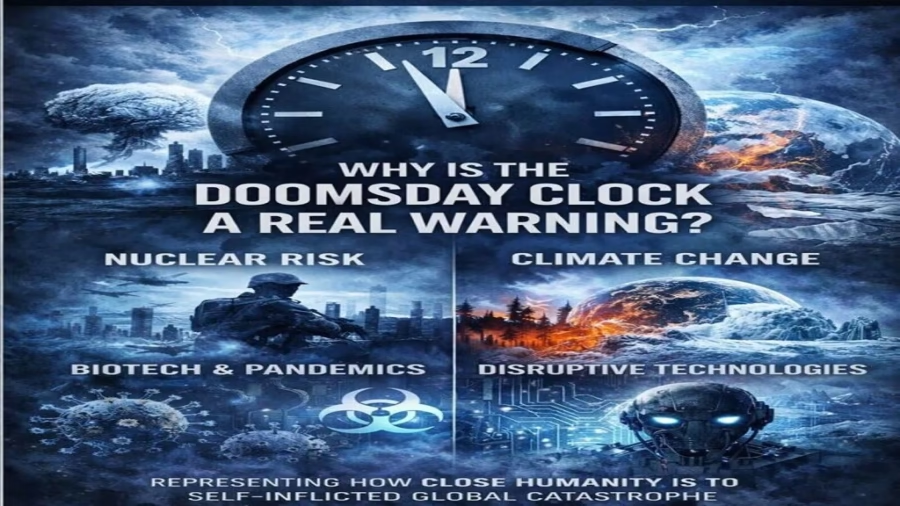
A Doomsday clock is a metaphorical timepiece, founded in 1947 during World War II by renowned atomic scientists like Einstein & Oppenheimer, that displays the threat of extinction in the context of human-made catastrophe. Under this project, a bulletin of the Atomic Scientists was formed as a volunteer. The research maintained by the Bulletin of the Atomic Scientists decides the clock’s time, indicating nuclear threats, climate crisis or impact on society. This is a warning system that is calculated based on these factors:
- Nuclear Weapons & Wars between countries
- Climate change and Global warming
- Biological pandemics or risks
- Technological Factors (Like disruptive use of AI)
By making decisions on these factors, the atomic scientists decide whether to move the clock needle forward or backwards. Originating in the Cold War era among scientists such as Albert Einstein, the clock has been featured on the cover of the Bulletin at seven minutes to midnight and is corrected every year by experts who gauge the threats in the world.
People Who Discuss & Change the Clock Time-
The time for the Doomsday Clock is set by the Bulletin of Atomic Scientists, that include group of atomic experts who take a glance at world issues that may hamper the future of Earth. This bulletin from the Science and Security Board of 17-18 experts makes a decision. These experts belong to the field of nuclear science, climate change, and security. The board conducts two annual meetings to evaluate global dangers before they determine the Doomsday Clock time. Daniel Holz, who is a University of Chicago physics, astronomy, and astrophysics professor as well as the Science and Security Board Chair, makes the decision to turn the clock forward or backwards depending on certain factors and then calls out the time.
Why Doomsday Clock Matters for Humanity?
The Doomsday clock serves as a timekeeping device that indicates the present moment when humans will create their next catastrophic event, that shows human progress toward extinction.
- The Doomsday Clock exists as a powerful symbol that scientists established through their work on the Manhattan Project to demonstrate the current danger of human-made global disasters.
- Its time gets established after experts evaluate three major dangers, which include nuclear weapons, climate change, and worldwide security issues.
- It shows increasing world danger when its hands move toward midnight, while its hands move backwards to show decreasing world danger.
- This clock serves as a symbolic representation, but people throughout the world choose to observe it because it shows actual scientific progress, with current global events such as PM Boris Johnson mentioning the clock in the climate change event.
Why Does the Dooms Clock Move Closer?
Below are the few factors that are responsible for setting the Doomsday Clock from 89 to 85 seconds (midnight) in Jan 2026, which are:
- Nuclear and War Threats:
The nuclear-armed states of Russia, China and the US displayed aggressive behaviour, which created more threats during 2025, while already existing arms control treaties like New START would end without extension under Trump’s administration. The combination of the Ukraine war, Middle Eastern conflicts and India-Pakistan tensions increased the likelihood of nuclear weapon use.
- Use of Disruptive Technologies:
Military forces that use AI technology without proper regulations face the risk of developing biological weapons and creating disinformation campaigns, which will widen the gap between opposing sides in the “information Armageddon” conflict.
- Climate Change Crises:
According to the Atomic scientists, the global temperature and concentration of greenhouse gases result in a negative effect on the global environment. The leaders have failed to frame the global policies to address climate change, which leads to droughts and floods, creating an additional problem.
- Geopolitical Instabilities:
Nationalism and confrontational tactics between nations have led to a situation where the world lacks effective leadership, which increased the intensity of conflicts in Asia. The Western Hemisphere suffered increased conflict after Trump won reelection. The Ukraine invasion by Russia continues to unfold, while nuclear threats have increased in scope.
- Other Speculated Threats:
The current threats from unregulated AI war systems, synthetic pathogens, disinformation campaigns and the ongoing pandemic and climate change prevention efforts let the Doomsday clock shift from 89 to 85 seconds.
What Will Happen When the Clock Strikes Midnight?
The Doomsday Clock reaching midnight does not bring about immediate global halting. Midnight serves as the point when the world reaches its maximum level of human-made catastrophe. Midnight is only a symbol of the time when the world has managed to get itself into a catastrophe through its own actions.
If the Doomsday Clock were to strike midnight at any point in the future, it would indicate that the scientific community believes that the world has entered a very dangerous phase where the effects of human choices have become inevitable and far-reaching. The concept of midnight is designed to alert the world, especially its leaders, to the reality of the situation.
Steps to Take for Reversing Doomsday Clock Time:
- The Doomsday clock needs its time to be reversed, together with all human decisions that require active intervention.
- Threats from nuclear power can be minimised by your actions in improving arms control agreements and developing diplomatic relations while avoiding military conflicts.
- Use of renewable energy resources and environmental conservation will help us fight against carbon emissions.
- Appropriate use of technology involves individuals using equipment for artificial intelligence and biotechnology in a manner that avoids any possible negative effects from occurring.
- Global cooperation needs to be improved to help nations cooperate on shared objectives rather than following individual directions.
- The world needs to be closely monitored through scientific alerts that help individuals realise possible threats.
- The scientific policies we support should focus on maintaining safety for future generations instead of pursuing immediate benefits.
- Leaders need to be held responsible for their choices through our demand that they choose wise options that promote peace.