
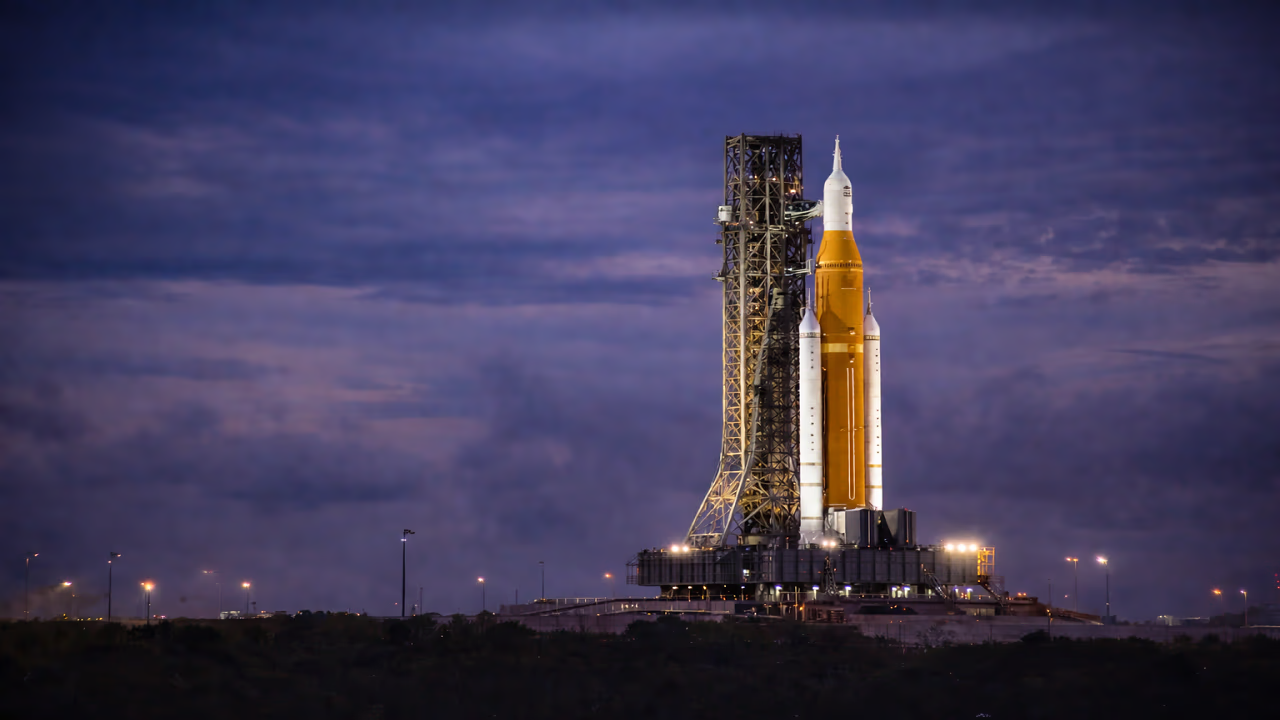
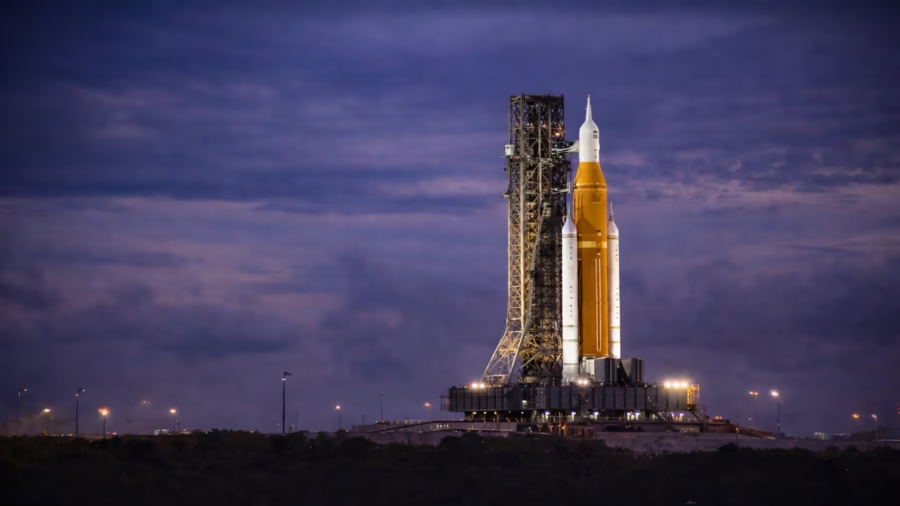
NASA is entering a historic phase of human space exploration as the Artemis II mission mega Moon rocket arrives at the launch pad of the NASA Kennedy Space Centre in Florida. This moment signals the last set of preparations for humanity’s first crewed moon journey in over 50 years.
Standing nearly 98 meters tall, the towering Space Launch System (SLS) is completing a slow and meticulously choreographed 12-hour rollout from the Vehicle Assembly Building to Launch Pad 39B. With this milestone achieved, NASA is actively proceeding with its Artemis program, which aims to return humans to deep space and establish a sustained presence on the Moon.
ALSO READ- Shaksgam Valley Dispute: A High-Altitude Game of Geopolitics
NASA’s Artemis II: Why It Matters-
Artemis II is, however, connecting the gap between testing and lunar landing. While this mission is not landing astronauts on the Moon, it is establishing the operational foundation for future missions, including one that is intended to land fairly close to the lunar south pole.
Why is Artemis II historic?
- It is the first crewed Moon mission since Apollo 17 in 1972.
- It validates deep-space systems for human flight.
- It will test long-duration crew operations beyond low Earth orbit.
- It prepares NASA for Artemis III and ultimately Mars missions.
This mission is establishing that human exploration beyond Earth is slowly becoming a routine task again.
The 12-Hour Journey to the Launch Pad-
NASA’s enormous crawler-transporter carries the SLS rocket upright along a distance of about 4 miles (6.5 km). The rollout is thus being stressed more on safety and precision, with a maximum dynamic speed of 0.82 mph. Rollout Highlights:
- Departure from Vehicle Assembly Building: 07:04 local time
- Arrival at Launch Pad 39B: 18:41 local time
- The engineering team continuously monitors the event.
- Live coverage would be presented to capture the historic move.
- Now standing erect, the rocket will begin final tests ahead of being granted launch clearance.
Final Preparations Before Launch-
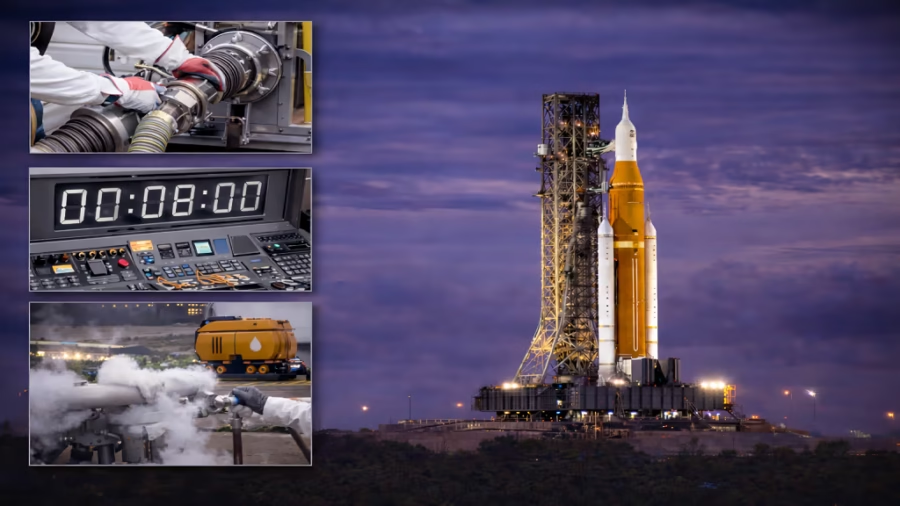
Having the vehicle in position now, NASA engineers are conducting a series of tests and simulations to make sure all systems are go.
Upcoming Pre-Launch Activities-
Integrated system testing:
- Confirming that all spacecraft, rockets, and ground systems operate as a single system.
- Detecting any incompatibilities in the interface or communication between hardware and software components.
- Ensuring the reliability of mission-critical systems under simulated launch conditions.
Countdown Representation:
- Reviews the whole countdown timeline and rehearses in real-time.
- Trains launch teams to revert to anomalies or last-minute technical problems.
- Make sure of the coordination between the final test control, launch control, and flight crews.
Wet Dress Rehearsal involving Full Fueling:
- The entire propellant fueling procedure using supercold cryogenic propellants is tested.
- The procedures involved in the days running up to launch are simulated, but no lifting off ever takes place.
- Procedures for safely handling high volumes of liquid hydrogen and oxygen are validated.
Cryogenic Propellant Loading and Safe Draining Tests:
- Verification is for confirming that the stations for filling and draining of fuel being operated shall not experience leakage or pressure problems.
- This also guarantees that the ground systems will be able to cope with high temperatures safely.
- Verification of emergency procedures for abortion of the fueling procedure in case of any necessity.
NASA had announced that 6 February is the earliest potential launch window, with others subsequently in February, March, and April, based on the technical state of readiness and prevailing weather conditions.
Meet the Artemis II Astronaut Crew-
The Artemis II mission has four astronauts on board, prepared to go further into space than any other human has travelled.
Artemis II Crew Members:
- Reid Wiseman: Mission Commander
- Victor Glover: Pilot
- Christina Koch: Mission Specialist
- Jeremy Hansen: Mission Specialist (Canadian Space Agency)
The crew is training actively in spacecraft operations, navigation, emergency procedures, and deep space science.
What the Artemis II Mission Will Do-
The Space Shuttle Artemis II will be in flight for approximately ten days, allowing the ship’s systems to be validated in deep space.
Mission Objectives:
- Orbits Earth to distances of as far as 40,000 miles.
- Travels to within nearly 250,000 miles of the surface of the Moon.
- Fly out and around the far side of the Moon.
- Conduct lunar observations and geological imaging.
- Life support and propulsion systems will be tested.
During the lunar flyby, astronauts will spend set hours studying the Moon’s surface in preparation for future landing missions.
ALSO READ- Bharat Electricity Summit 2026: India Heading Towards Global Energy Sustainability
Orion Spacecraft and European Contribution-
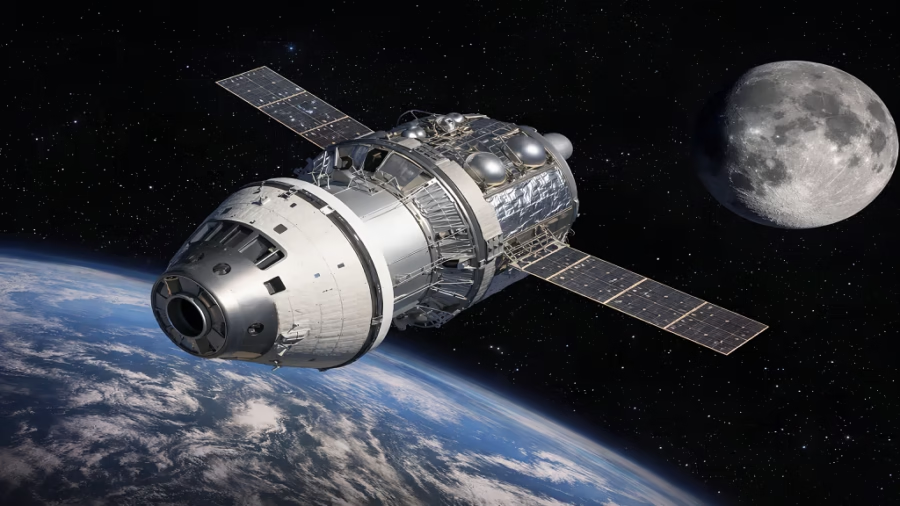
The astronauts are flying aboard the Orion spacecraft, which has been developed for long-duration deep-space missions.
A key component of Orion includes the European Service Module, designed and built by Airbus in Germany for the European Space Agency.
The role of the European Service Module:
- Provides propulsion for Moon travel
- Generates electrical power via solar arrays
- Supplies oxygen, nitrogen and water
- Maintains life-support systems
Without this module, Orion would not be able to enter the lunar orbit.
Setting the Stage for Artemis III and Beyond-
Support for future lunar landings and for long-term goals of exploration directly comes from Artemis II.
What’s Next:
- Artemis III: Planned Moon landing mission
- Targeted Launch: No earlier than 2027
- Aimed toward the Moon’s south pole region
- Establishing sustained human presence
- NASA sees Artemis as the build-up to human missions to Mars over the next few decades.
Why This Mission Inspires the World-
The Artemis II crew stress the mission’s inspirational content.
- Reconnects humanity with lunar explorations
- Encourages people around the world to take an interest in science and engineering
- Showcases international cooperation
- Inspires the next generation of explorers
One astronaut has said that seeing Earth as a single blue sphere from deep space will change one’s life.
Conclusion-
NASA’s Artemis II rocket is poised on the launch pad-the last leg to usher in a new epoch in human lunar exploration. This final mission strives for more than just returning to the Moon; it follows precautionary prepared steps into establishing a sustainable human presence beyond Earth. As final tests continue, the world is watching history unfold-an important journey reshaping the future of space exploration.