
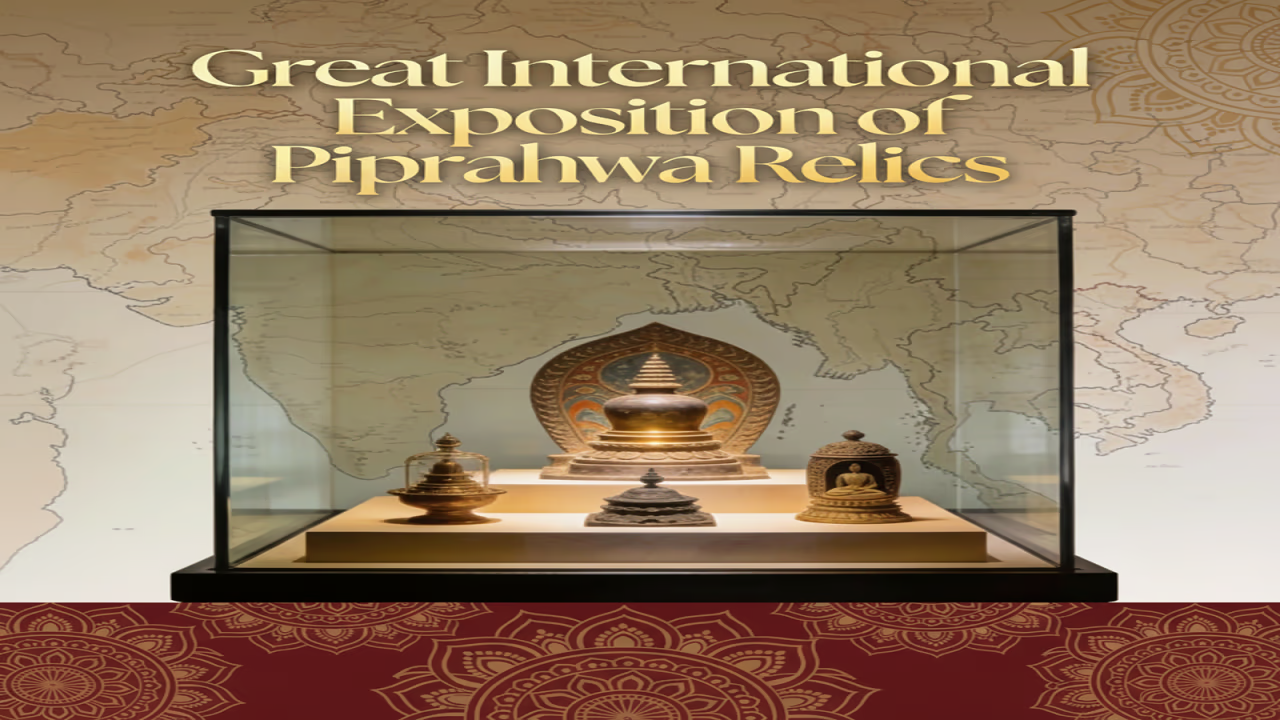
On 3 January 2026, PM Narendra Modi is going to inaugurate the Grand International Exposition of Sacred Piprahwa Relics Related to Bhagwan Buddha, which marks a historical moment in the preservation of Buddhist heritage. This exposition holds the repatriated Piprahwa relics that are among the earliest and most significant relic deposits directly linked to Lord Buddha. This remarkable cultural event, which is organised by the Ministry of Culture, depicts the global presentation of India’s authentic archaeological collection. Read the article further to get the full details of this International exposition and how it is an important milestone in India’s cultural legacy.
ALSO READ- India AI Impact Summit 2026: Fostering Country’s Growth with AI Advances
Key Highlights of the Great International Exposition of Sacred Piprahwa Relics-
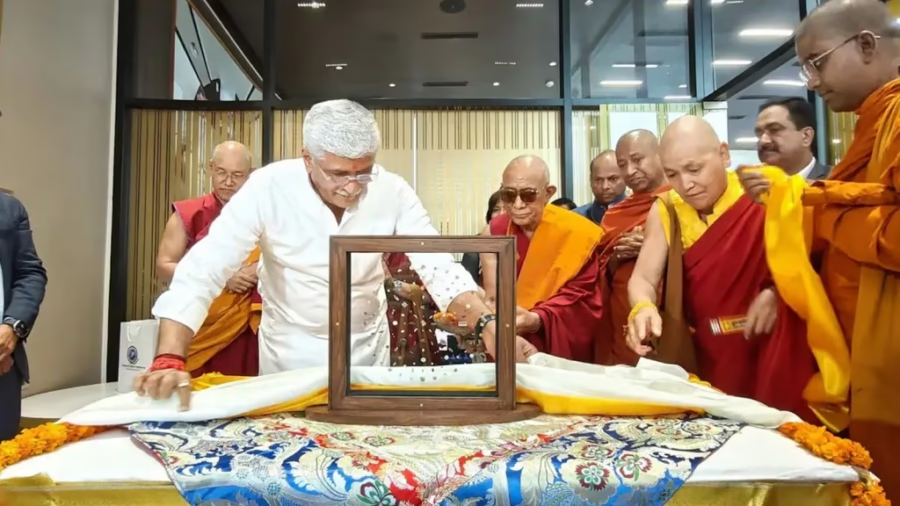
- The Grand International Exposition of Sacred Piprahwa Relics Related to Bhagwan Buddha is titled “The Light & the Lotus: Relics of the Awakened One” to be launched on 3 January 2026 by the Prime Minister of India, Mr. Narendra Modi.
- The inauguration is to be organised at the Rai Pithora Cultural Complex in New Delhi by the Ministry of Culture (Government of India) at 11 a.m.
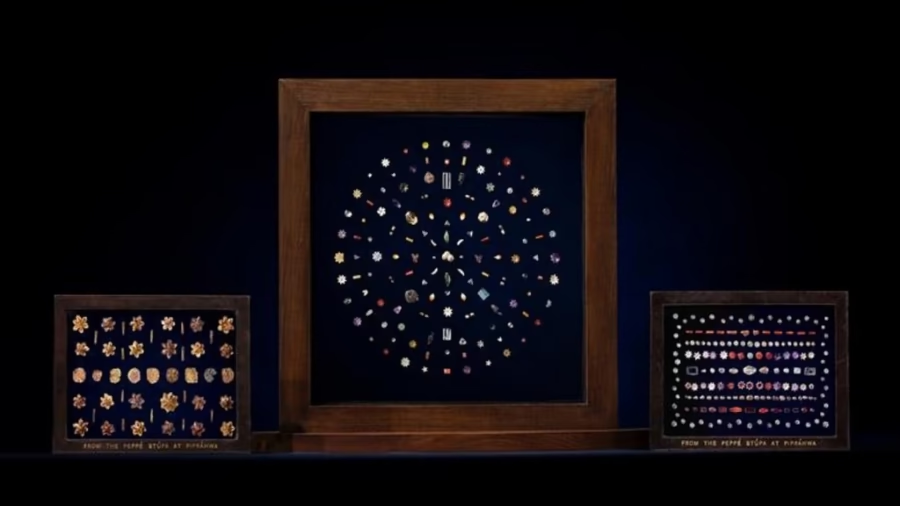
- The exhibition showcases the discovered Piprahawa relics of 1898, which were believed to be directly linked to Bhagwan Buddha’s life.
- This event is a thematic and immersive display of Buddha’s life and Buddhist art through an audio-video presentation.
- It is also centred on a reconstructed, detailed model of the Sanchi Stupa model, integrating repatriated relics with items preserved in institutional collections to convey historical and spiritual meaning.
- It’s the first time in over 100 years that the repatriated Piprahwa are being displayed from major national collections like the National Museum, New Delhi, and the Indian Museum, Kolkata.
Overview of the Exposition-
The homecoming of the historical relics of Piprahwa was brought after 127 years, which are believed to be connected to Bhagwan Buddha before his renunciation. Discovered in 1898, scholars have linked these relics from the Piprahwa site with ancient Kapilavastu. The region is said to be the kingdom of Prince Sidhartha (the early name of Gautam Buddha), and the Shakya clan enshrined these relics. For the first time in over a century, the recently repatriated relics have been reunited with related authentic relics and archaeological materials from the National Museum (New Delhi) and the Indian Museum (Kolkata), making this exposition a historic gathering of sacred artefacts.
Features of the Exposition-
- The exposition displays the sacred Piprahwa relics associated with Bhagwan Buddha in a spiritually respectful and secure setting.
- A reconstructed stupa-inspired central model symbolically presents the relics along with related artefacts from national museum collections.
- The exhibition is organised into thematic sections that explain the discovery of Piprahwa, the life and teachings of Buddha, Buddhist art traditions, and the spread of Buddhism across regions.
- Multimedia elements such as digital reconstructions, audio-visual storytelling, interactive panels, and guided displays make the exhibition engaging for visitors.
- The exposition brings together authentic archaeological objects and Buddhist art pieces from major Indian museums to provide historical and cultural context.
- It creates a meaningful space for scholars, devotees, students, and international visitors to explore Buddhism’s heritage, archaeology, philosophy, and spiritual legacy.
- The event highlights India’s role as a custodian of Buddhist heritage and reinforces the nation’s civilisational connection with the life and teachings of Bhagwan Buddha.
Reason for Organising the Exposition-
The repatriation of the Piprahwa relics marks a significant moment in India’s cultural and diplomatic history. The display of the relics represents intense significance in terms of historical, archaeological and spiritual aspects, cherished by the Buddhist community all over the world. The main reasons to organise the Great International Exposition of Sacred Piprahwa Relics are:
- Display India’s Buddhist Heritage- The exposition has been designed in order to focus on India’s long-standing civilizational tradition with regard to Bhagwan Buddha. The exhibition brings together the collection of antiquities of Piprahwa with other artefacts of archaeological significance to present Buddhist heritage and culture.
- Celebrate Historical Return of Relics- Reuniting the relic collections of Piprahwa, which have not happened for over a century, becomes one of the main reasons for the event. These relic collections had been sent outside the country during the colonial times, and later, they reappeared as part of international auctions, leading to their repatriation by the Government of India. This event provides an opportunity for the relic collections to be exhibited together inside the country for the first time.
- Preservation & Knowledge about Buddhist Culture- The event reveals the commitment of the Government to the preservation of India’s spiritual and cultural heritage and the dissemination of the same among the masses. It also tends to educate the masses on the life of the Buddha, the archaeological importance of the relics, as well as the spiritual significance of the same.
- Promotion of Culture Diplomacy- Organising such an international exhibition of religious relics greatly enhances India’s role as a custodian of Buddhist heritage for millions of people across the globe. This move also strengthens cultural ties with Buddhist communities internationally and increases cultural diplomacy power on the global level.
- Foster Spirituality & Public Engagement- The exposition is intended not only to serve as a platform for academics and archaeology but also to become a spiritual experience for the followers. The use of multimedia presentation and storytelling helps to make the relics and related stories interesting for everyone.
Exposition’s Thematic Sections-
The exhibition has a thematic setting that enables one to have a general and experiential understanding of the early periods of Buddhism and the cultural legacy of India. The key element in this respect is an interpretative model based on the Sanchi Stupa, which integrates the returned artefacts along with artefacts in national collections:
- Piprahwa Revisited – a documentation of the excavation of the Piprahwa archaeological site.
- Vignettes of the Life of Buddha – narrative displays key episodes from Buddha’s life.
- Intangible in the Tangible – exploring Buddhist philosophy in art.
- The Extension of Buddhist Art & Ideals across International Frontiers – tracing the spread of Buddhism.
- Repatriation of Cultural Artefacts – emphasising the recovery of our heritage.
For increased public participation, the exposition adopts immersive multimedia approaches, ranging from digital reconstructions to projection and audio-visual displays, which recreate the spiritual, historical, and artistic contexts of the relics and early Buddhist traditions.
ALSO READ- Top 10 Food Cities in the World 2025–26: Full List & Highlights
Multimedia & Storytelling to Engage the Public-
- Immersive Audio-Visual Narratives: Large-format screens, films, and projection mapping recreate key moments from the life of Bhagwan Buddha, helping visitors emotionally connect with the spiritual and historical significance of the relics.
- Digital Reconstructions of Archaeological Sites: Interactive 3D models and virtual walk-throughs of Piprahwa, Kapilavastu, and early Buddhist sites allow visitors to visualise how these heritage locations looked in ancient times.
- Interactive Storytelling Zones: Touch-enabled displays and guided narrative panels present stories of discovery, excavation, repatriation, and cultural preservation in simple, engaging formats for students and general audiences.
- Soundscapes & Thematic Ambiences: Strategically implemented sound designs, in the form of chants, environmental sounds, and so forth, promote a reflective space and serve to enrich one’s devotional experience of the holy artefacts.
- Educational Multimedia for All Age Groups: Short explainer videos, digital timelines, and multilingual audio guides help visitors of different backgrounds — scholars, devotees, and youth — understand the philosophical, artistic, and cultural context of Buddhism.
How is the Expo Significant for India?
India holds a unique civilisational significance as the land where Bhagwan Buddha was born, attained enlightenment, preached the Dhamma, and achieved Mahaparinirvana.
- The exposition marks India’s strong linkage with the origin of Buddhism and the preservation of Buddhist heritage for the international Buddhist community.
- Through the reunification and conservation of the relics of Piprahwa, India proves its efforts in protecting the significant cultural and religious assets of international value.
- This event will further enhance India’s cultural diplomacy and soft power in coordination with the Buddhist countries of the Asian and global continents.
- It emphasises the preeminent position of India within the repatriation, conservation, and archaeological management of heritage.
- The exposition educates on historical Indian contributions to peace, compassion, and philosophical ideas sourced from Buddhist teachings.
- It further promotes Buddhist tourism, research, and global cooperation related to the ancient Buddhist heritage of India.
Conclusion-
The International Exposition of Sacred Piprahwa Relics assumes immense importance as a cultural and social event since it helps to re-associate the masses with the sacred traditions of Bhagwan Buddha and the civilizational traditions of India. The exposition, thereby holding a priceless spiritual and social significance, helps to retain the sacred traditions of the Piprahwa relics and promote the teachings of peace and Buddha’s wisdom as emphasised by Buddhism as a religion that upholds the teachings of peace and compassion and the development of proper attitudes and education for social and intellectual evolution.
FAQs-
A. The Great International Exposition of Piprahwa Relics is a large cultural and religious exhibition where the sacred Piprahwa Relics related to Bhagwan Buddha, along with various archaeological items, are put on display.
A. The exposition, named “The Light & the Lotus: Relics of the Awakened One”, will be held on January 3, 2026, in the Rai Pithora Cultural Complex in New Delhi by the Ministry of Culture (Government of India) at 11 a.m.
A. The relics are linked to ancient Kapilavastu and are among the earliest archaeological relics connected to the life and legacy of Bhagwan Buddha.
A. The Piprahwa Relics Exposition is open to scholars, students, devotees, researchers, international visitors, and the general public interested in heritage, history, and spirituality.
A. In addition to the sacred relics, the exposition also has archaeological artefacts, Buddhist art objects, thematic galleries about the life and teachings of Buddha, and multimedia storytelling exhibits.
A. The Piprahwa sacred relics are ancient Buddhist relics that were unearthed during excavations at Piprahwa in Uttar Pradesh. Historically, they have been related to ancient Kapilavastu, the region associated with the early life of Prince Siddhartha, who later turned into Bhagwan Buddha.