
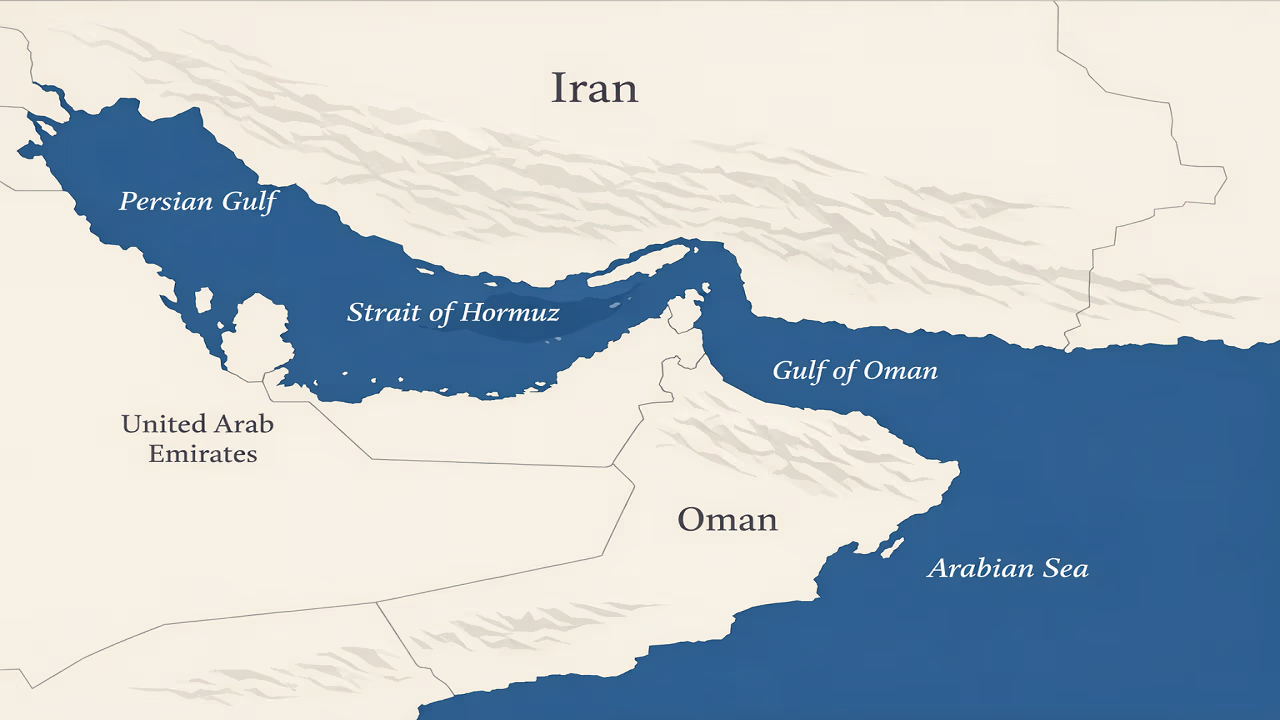
Shipping routes between countries become newsworthy only when their normal operations face interruptions. The Strait of Hormuz has become a news topic again because escalating regional tensions and security matters have emerged in West Asia. The global economy experiences economic effects from any uncertain situation that develops in this small waterway, which affects energy markets, insurance companies, and governments worldwide. The strategic value of the Strait of Hormuz can be learnt through its definition and its comparison with other vital global maritime chokepoints that exist across the globe.
ALSO READ- PM Modi Israel Visit 2026: 17 MoUs, Important Partnership Uncovered
Why Is the Strait of Hormuz Talk of the News?
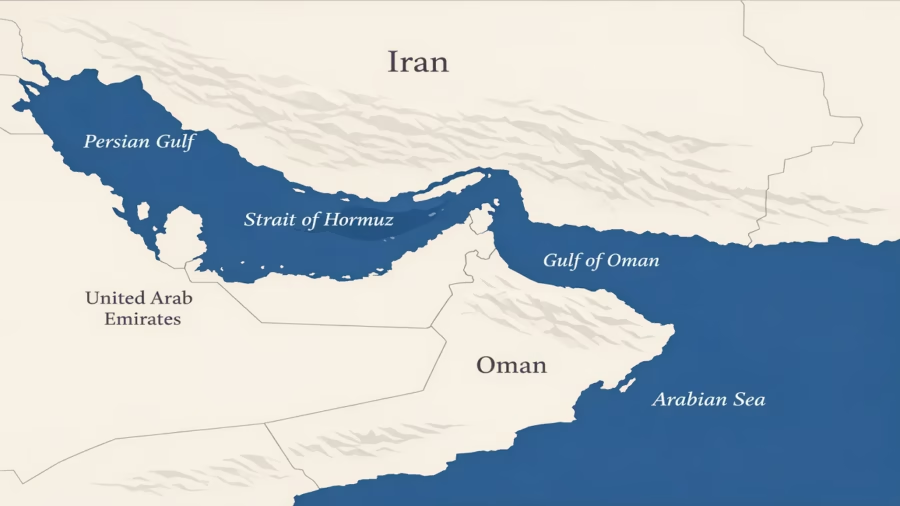
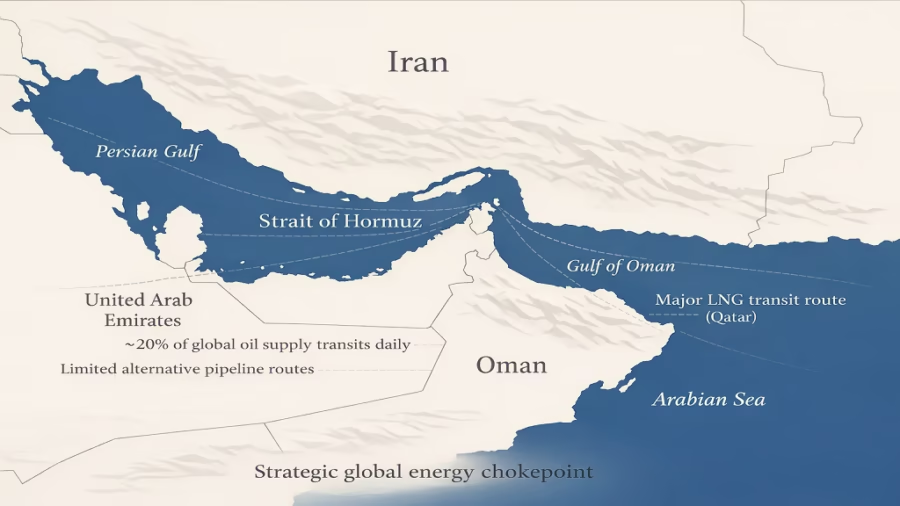
The Strait of Hormuz exists as a waterway linking the Persian Gulf with the Gulf of Oman and the Arabian Sea through the territorial areas of Iran and Oman. The international energy agencies report that estimately 20% of the region’s oil supply moves through this narrow passage each day.
Recent Triggers for Concern:
Reports of:
- Escalating the navy rhetoric within the vicinity
- Naval deployments and exercises
- Disruptions or warnings to business vessels
- Geopolitical tensions involving Iran, Gulf states, and global powers
Even without an actual blockade, uncertainty by myself can:
- Boost oil charges
- Growth delivery coverage expenses
- Disrupt international supply chains
- cause volatility in economic markets
Due to the fact that the worldwide energy system remains interconnected, trends inside the Strait of Hormuz hardly ever stay local.
Why the Strait of Hormuz Is So Strategic-
The strait is best about 33 kilometres wide at its narrowest point, with shipping lanes even narrower. But it serves as one of the main export courses for oil manufacturers like Saudi Arabia, Iraq, Kuwait, the UAE, and Iran.
Key statistics:
- Almost one-5th of worldwide oil intake flows through it every day
- Major volumes of liquefied natural gas (LNG), in particular from Qatar, transit through it
- It hyperlinks the oil-wealthy Persian Gulf to worldwide markets
- There are limited alternative routes. Even as some pipelines pass the Strait, they can’t fully update maritime capacity.
This is why policymakers describe it as a “chokepoint”—a narrow passage wherein disruption could have oversized international consequences.
What Happens If the Strait Is Blocked?
A complete closure remains not likely, given the intense financial results for all facets. However, even partial disruptions can have an effect.
Potential results:
- Sudden spikes in crude oil charges
- Deliver chain delays in Asia and Europe
- Strain on global inflation
- Strategic petroleum reserve releases by means of the predominant economies
History suggests that during preceding regional tensions, oil fees answered almost straight away—even if actual shipping persisted.
Other Important Straits in the World-
The Strait of Hormuz is not the only maritime chokepoint with global importance. Several others play similar roles in trade and security.
Strait of Malacca:
Located between Malaysia, Singapore, and Indonesia, the Strait of Malacca connects the Indian Ocean to the South China Sea.
Why It Matters:
- One of the busiest transport lanes inside the international
- Important for China, Japan, and South Korea’s power imports
- Handles a large share of worldwide container visitors
- Any disruption right here would have a heavy effect on the Asian economy
Suez Canal (Connected to Bab el-Mandeb):
Even though technically, the Suez Canal links the Mediterranean Sea to Crimson Sea, making it the main global connection. The Bab el Mandeb links the Red Sea to the Gulf of Aden.
Why it matters:
- Shortens the change route between Europe and Asia
- essential for oil and field transport
- Disruptions force ships to reroute around Africa
The 2021 blockage of the Suez Canal validated how quickly worldwide supply chains may be affected.
The Bosporus and Dardanelles:
The Turkish straits join the Black Sea to the Mediterranean.
Importance:
- Vital for grain exports from Ukraine and Russia
- Strategic military significance
- Ruled by way of the Montreux Convention
At some stage in conflicts in Eastern Europe, those waterways received renewed attention.
Strait of Gibraltar:
Located between Spain and Morocco, it links the Atlantic Ocean with the Mediterranean Sea.
Significance:
- Gateway to European and North African trade
- Heavy military and commercial traffic
Although wider than Hormuz, it remains strategically important.
Panama Canal:
Connecting the Atlantic and Pacific Oceans, the Panama Canal is crucial for travel between the Americas and Asia.
Why It’s vital:
- Reduces journey time between coasts
- Essential for U.S. and worldwide change
- Sensitive to weather troubles such as drought
The latest water shortages have proven how environmental factors also can disrupt key maritime routes.
Why Maritime Straits Matter in a Globalised World-
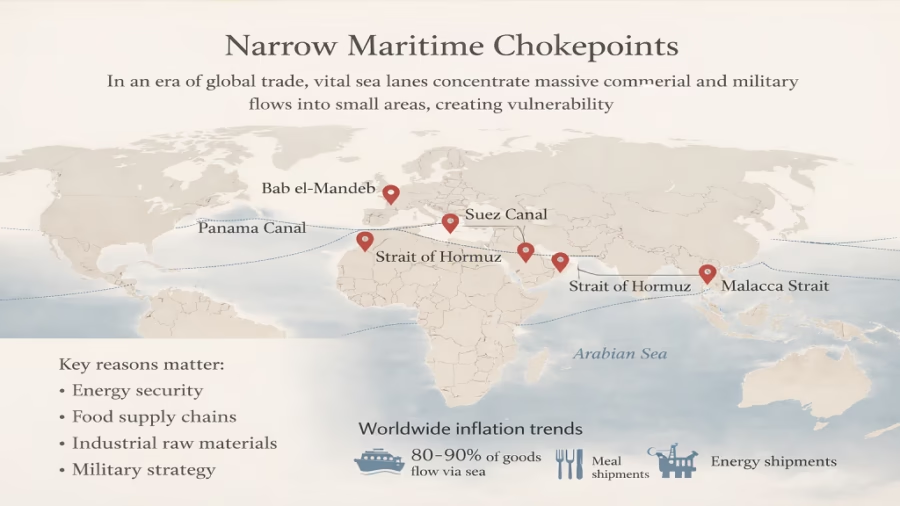
In an era of global trade, approximately eighty ninety% of goods flow by way of sea. slim waterways—chokepoints—pay attention to massive alternate volumes into small geographic areas. This creates vulnerability.
Key motives are counted:
- Power safety
- Meal delivery chains
- Industrial uncooked materials
- Army method
- Worldwide inflation tendencies
While any of these chokepoints face instability, markets react fast.
ALSO READ- India Rolls Out Free HPV Vaccine for Teen Girls
Are Countries Reducing Dependence on Chokepoints?
Yes, gradually. Some steps include:
- Building overland pipelines
- Diversifying energy sources
- Expanding strategic petroleum reserves
- Investing in renewable energy
However, maritime trade remains irreplaceable at the current scale.
More Geopolitical Context-
The Strait of Hormuz displays a much wider truth: geography is the one that still shapes politics.
Regardless of technological advancement, the physical routes linking oceans continue to steer international relations, defence methods, and monetary coverage.
Essential powers preserve naval presence near key straits no longer simply for protection but also to ensure freedom of navigation under worldwide regulation.
Conclusion: Small Passages, Large Impacts-
The Strait of Hormuz may be seen on the map as just a slender stretch of water, but its importance is international. The universe’s dependence on maritime energy transport services guarantees that chokepoints, including Hormuz, will continue to play a vital role in worldwide political relations.
In a lot of approaches, the straits remind us that geography still governs global power. And that is why the Strait of Hormuz continues to make headlines.