
The U.S. Food and Drug Administration has reached a groundbreaking regulatory milestone by officially qualifying AIM-NASH as the world’s first AI-based drug development tool for assessing metabolic dysfunction-associated steatohepatitis (MASH), a severe and progressive type of fatty liver disease.
This qualification marks one of the significant milestones in the integration of artificial intelligence into clinical research, enabling faster diagnoses, more consistent biopsy evaluation, and dramatically improved drug development timelines.
ALSO READ- Transforming Crisis into Opportunity: GEO-7’s Roadmap for Food, Energy & Biodiversities
What Is AIM-NASH?
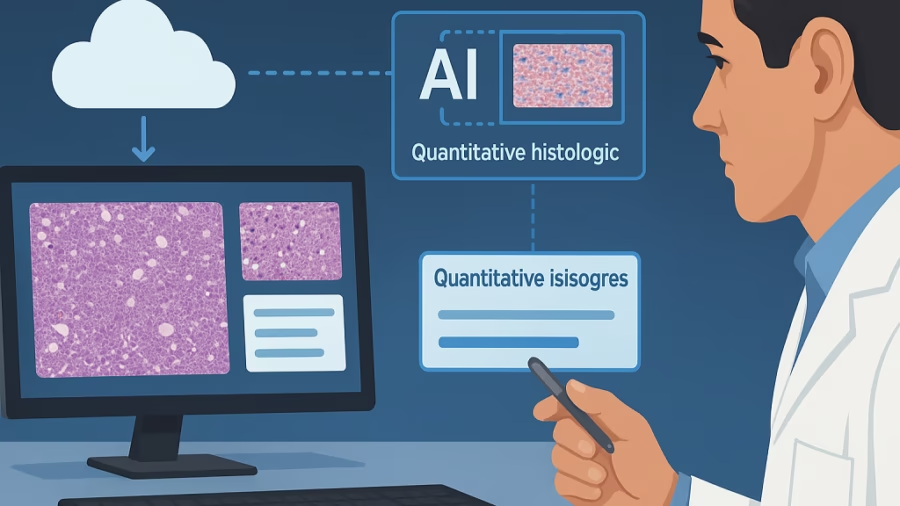
AIM-NASH is a cloud computer AI designed to analyse digital images of liver biopsies. The tool, therefore, assesses key histological markers of liver impairment that the clinicians use in diagnosing and monitoring MASH.
It assesses four major indicators:
- Steatosis (fat accumulation in the liver)
- Hepatocellular ballooning (swollen, injured liver cells)
- Lobular inflammation
- Fibrosis (scarring stage)
Having been anchored in large biopsy datasets employing deep learning algorithms, AIM-NASH renders standardised, quantitative scores. Pathologists review these AI-generated scores and make final interpretations, keeping the emphasis and decision in human hands.
Why This Approval Matters?
MASH happens to be one of the fastest-moving metabolic diseases on earth. Millions of people in the United States alone are affected, but diagnosing and tracking the progression of the disease have been extremely difficult.
Major problems in current MASH trials include:
- High variability between pathologist evaluations
- Long review times due to multiple independent assessments
- High costs associated with specialised biopsy analysis
- Slow clinical development for potential new drugs
AIM-NASH directly addresses these issues by introducing automation, standardisation, and rapid processing.
How AIM-NASH Works-
AIM-NASH utilises state-of-the-art deep learning techniques for the analysis and extraction of features from liver biopsy images. The resulting quantitative measures correspond to the NASH Clinical Research Network (CRN) scoring system, which is conventionally regarded as the global standard for assessment of MASH.
Workflow of the AI Tool:
- Biopsy images are uploaded to the cloud-based system.
- AI algorithms analyse features such as fat infiltration, inflammation, and fibrosis.
- The system generates quantitative histology scores.
- Pathologists review both the full-slide image and AI outputs.
- The pathologist accepts or rejects the AI score, ensuring accuracy and accountability.
This hybrid human-AI model delivers both precision and reliability while maintaining clinical oversight.
How AIM-NASH Will Transform MASH Drug Development-
The FDA qualification shows strong regulatory confidence in AI’s ability to support medical diagnostics without replacing human experts.
Key ways AIM-NASH improves clinical trials:
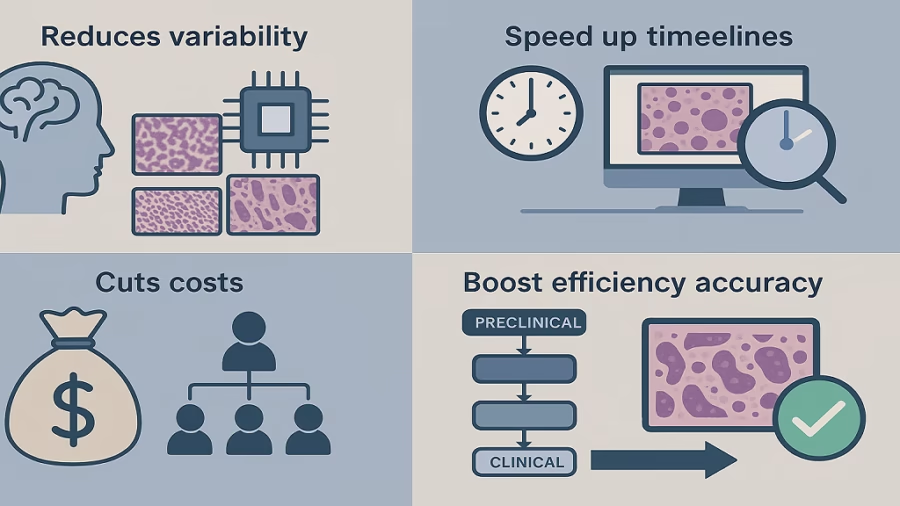
Reduces variability: AI provides consistent scoring across trials
- Lessen human subjectivity that often results in debates in biopsy interpretation.
- Establish good scoring standards to function among different clinical sites
- More reproducible and hence trial outcomes are more reliable on the whole.
Speeds up timelines: Automated analysis shrinks review periods significantly
- This avoids the delays of waiting for evaluations from many experts.
- So speedy is image processing that it permits the most timely decision at each trial stage.
Thus, it shortens the overall period for verifying the safety and effectiveness of any drug.
Cuts costs: Fewer manual assessments reduce expenses
- Less Dependence on many specialist pathologists.
- Decreased operational costs for the long and convoluted trial workflows
- Strategically allocate resources for pharmaceutical companies.
Boosts efficiency: Developers can move drug candidates through pipelines faster
- Fast-tracks the identification of therapies worthy of follow-up.
- Facilitates communication between researchers, clinicians, and regulators.
- Aids development from preclinical into the clinic and into advanced trials.
Enhances accuracy: AI measurements match expert-level performance
- The subtle biopsy features might be missed when assessing numerous histopathological slides manually.
- Thereby reduces the risk of a serious diagnostic error that could compromise the integrity of the entire trial.
- Therefore, it strengthens confidence in the data provided to regulatory agencies.
Given that MASH drug development has been historically slow and difficult, AIM-NASH is poised to reshape the research landscape dramatically.
The Rising Role of AI in Pharmaceutical Innovation-
The FDA’s decision reflects a growing trend: artificial intelligence is becoming indispensable throughout the drug development lifecycle.
AI is transforming multiple stages of R&D:
- Target identification & discovery
- Predictive modelling for drug behaviour
- Automated image analysis
- Optimised clinical trial design
- Patient recruitment and monitoring
Experts predict AI could cut drug development costs and timelines by up to 50% in the coming years. As the first qualified AI tool in this field, AIM-NASH signals a broader shift toward an AI-driven pharmaceutical future.
ALSO READ- DHRUVA: Transforming Physical Addresses to DIGIPIN for Efficient E-Governance
Why Consistent MASH Diagnosis Is Critical-
MASH (Metabolic Dysfunction-Associated Steatohepatitis) is a dangerous form of fatty liver disease that worsens silently over time.
Without treatment, MASH can progress to:
- Severe fibrosis (scarring)
- Cirrhosis
- Liver failure
- Liver cancer
- Need for a transplant
- Premature death
Traditional biopsy interpretation differs widely among pathologists. Most drug trials fail not because their associated medications cannot cure conditions, but due to variability in scoring. AIM-NASH aims to resolve this chronic issue by means of reliable, reproducible scoring.
Key Takeaways-
AIM-NASH qualifies as the first AI tool in the world in support of liver biopsy assessment in MASH clinical trials, fully accredited by the FDA.
- The AI system evaluates key markers like steatosis, inflammation, ballooning and fibrosis.
- AIM-NASH promises accelerated drug development, cost savings, and increased scoring consistency.
- However, human pathologists would continue to play a central role in this process of security and oversight.
- Now, it is proof of the growing trust of the FDA in the medical technologies that are propelled by artificial intelligence.
FAQs-
A. AIM-NASH helps assess MASH, which is a serious fatty infiltration of the liver involving inflammation and scarring.
A. No. Currently, this instrument is qualified for drug development; it is supportive of clinical trials but not the diagnosis of an individual patient.
A. Not at all. The final decision is still made by the pathologist. AI only provides faster and more efficient standardised scoring.
A. By reducing time-consuming, manual biopsy reviews, reducing variability in scoring, and reducing the number of experts needed, perhaps this will help speed up trial flow.
A. Sure. AI slashes all research and development costs significantly by enhancing efficiency, reducing errors, and cutting down trial timelines.