
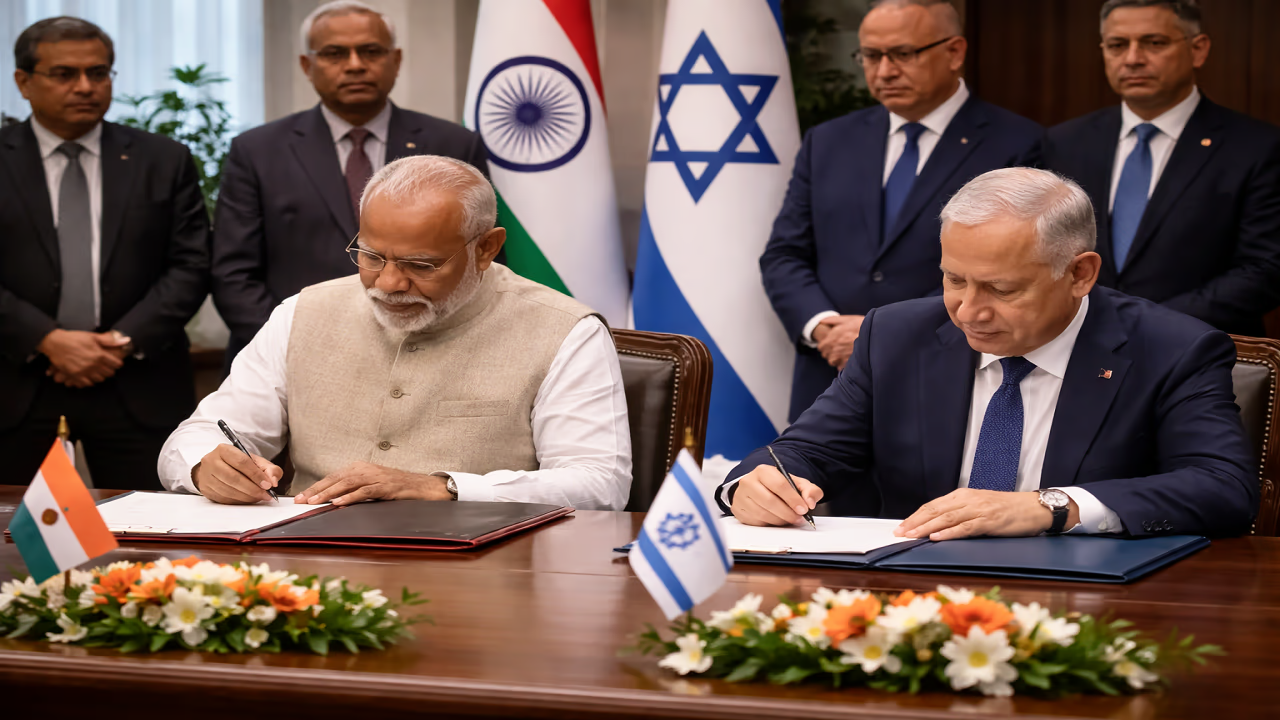
Narendra Modi announced a two-day country visit to Israel from February 25 to 26, 2026, identifying the second-best visit by an Indian prime minister to the country officially invited by Israeli Prime Minister Benjamin Netanyahu, Modi participated in business talks, delegation-level dialogues and witnessed the formal signing of many Memoranda of Understanding (MoUs) that increased cooperation across strategic, financial and technological domains.
The visit was praised as a reaffirmation of India–Israel family members, who have constantly multiplied since diplomatic ties were established in 1992, and acquired unique attention after Modi became the first Indian PM to address the Knesset (Israel’s Parliament) at some stage in this journey.
ALSO READ- India Rolls Out Free HPV Vaccine for Teen Girls
India–Israel Special Strategic Partnership-
In the course of the visit, each government introduced the elevation of bilateral ties to a special Strategic Partnership. This framework seeks to align the two countries on shared pastimes including defence, era cooperation, monetary increase and broader innovation ecosystems.
In their joint statement, India and Israel emphasised the need to expand cooperation in:
- Emerging technologies
- Cybersecurity and innovation
- Agriculture and water resource management
- Defence and security
- Entrepreneurship and economic collaboration
17 MoUs Across Diverse Sectors-
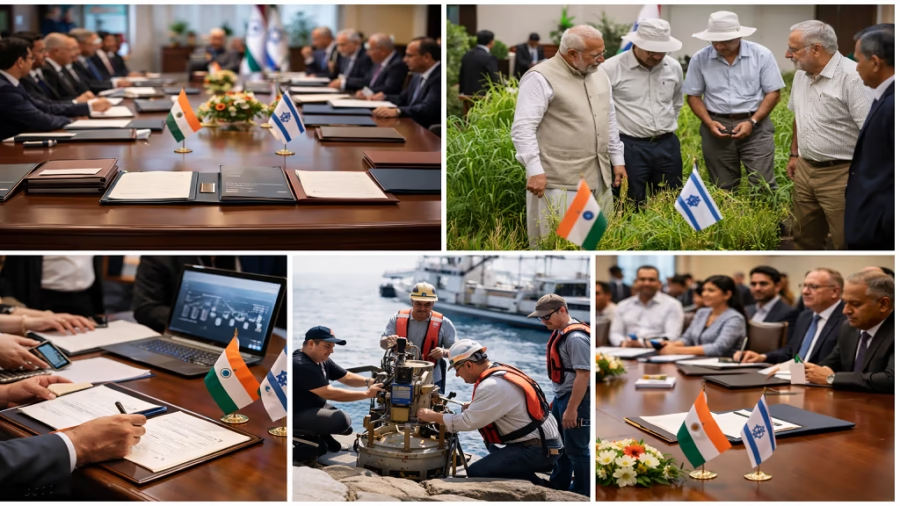
A total of 17 MoUs and agreements have been signed, underscoring the breadth of cooperation. The important areas of collaboration involve generation, financial systems, agriculture, schooling, cultural alternatives, and maritime background.
Innovation and Technology:
- AI and digital education: Agreements to sell joint research, AI-pushed mastering and era trade among Indian and Israeli institutions.
- Cybersecurity Centre of Excellence: A pact to establish cooperative cybersecurity tasks.
- Horizon Scanning Cooperation: A declaration of purpose between the science and era departments of each country.
Fintech and Digital Payments:
UPI Linkage: The National Payments Corporation of India (NPCI) and Israel’s MASAV signed a partnership to permit the conventional payments Interface (UPI) popularity in Israel, facilitating cross-border digital transactions.
Agriculture and Innovation:
India-Israel Innovation Centre for Agriculture (IINCA): a new centre under the Indian Council of Agricultural Research (ICAR) and Israel’s MASHAV to focus on precision farming, irrigation technologies and crop studies.
Fisheries, Aquaculture and Blue Economic System:
A MoU to boost sustainable fishery technologies, aquaculture innovation and training exchanges between India and Israel.
Geophysical Exploration & Maritime History:
Agreements to promote collaboration in geophysical technology and joint heritage initiatives like the national Maritime history complex projects.
Cultural Exchange and Education:
- MoUs to enhance people-to-people ties, student mobility, cultural programs and exchange residencies.
Other Protocols and Frameworks:
- Commercial arbitration cooperation
- International financial services and securities cooperation
- Protocols in commerce, manufacturing, services and restaurant sectors are expected to boost bilateral trade.
Defence and Security Cooperation-
Alongside MoUs, India and Israel agreed to boost defence cooperation, which includes discussions on joint development of defence structures, transfer of superior technology, and extra alignment on strategic safety problems. Each aspect additionally reaffirmed their method of running closely in the generation switch and capability building.
Whilst unique defence MoUs had not been made public, each government emphasised the synergy in technology regions like defence electronics, radar structures, counter-terrorism technologies, and missile defence platforms — such as exchanges on systems like Iron Dome and Iron Beam under evaluation — to strengthen India’s protection posture.
Economic and Trade Dialogues-
The visit additionally bolstered ongoing discussions toward a likely loose change settlement (FTA). Leaders underscored the need to increase change past the modern-day annual bilateral turnover — which stood around US$3.6–four billion in 2025 — by enhancing marketplace access and decreasing limitations to funding.
Bilateral agreements signed during the visit are expected to facilitate:
- Increased private sector investment
- Faster technology transfer
- Simplified business engagement frameworks
- Enhanced collaboration in critical and emerging sectors
Mutual Statements from Leaders-
Prime Minister Modi and Prime Minister Netanyahu highlighted shared democratic values and a common imagination and vision for peace, stability and prosperity.
Netanyahu defined the connection as taking into consideration one of “genuine friendship” and ancient cooperation, even as Modi reaffirmed that India’s 0-tolerance coverage on terrorism aligns with Israel’s efforts and emphasised guidance for peaceful answers and negotiated settlements.
Modi additionally extended invitations to Israeli leaders for state visits to India, signalling enduring engagement at the very best political tiers.
Why This Visit Matters for India-
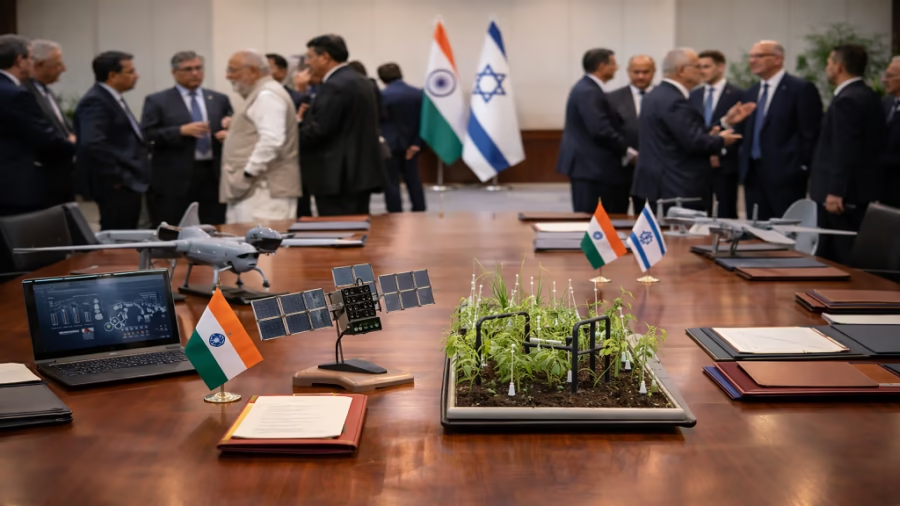
This is going to occur at a complex geopolitical moment. India has sought to keep balanced members of the family with the broader Middle East, even as improving cooperation with Israel across the era, in agriculture, defence and innovation.
Key strategic implications include:
- Diversifying defence partnerships
- Strengthening digital and AI collaboration
- Expanding bilateral trade and investment
- Collaborating on future-oriented technologies
- Boosting people-to-people and cultural ties
The elevation to a unique Strategic Partnership indicates India’s commitment to deepen ties without compromising its broader diplomatic engagements throughout the place.
Conclusion: A New Chapter in India–Israel Ties-
Prime Minister Modi’s 2026 visit to Israel has extensively elevated the India–Israel strategic partnership through a big selection of MoUs and agreements. From technological collaboration and virtual finance linkages to agriculture innovation and heightened defence cooperation, the agreements mirror a ahead-searching agenda shaped through shared pastimes, mutual respect and geopolitical considerations.
This deepening of ties marks no longer just a diplomatic milestone, but a realistic roadmap for destiny cooperation that could form innovation, financial engagement and protection cooperation among the two global powers for years yet to come.