
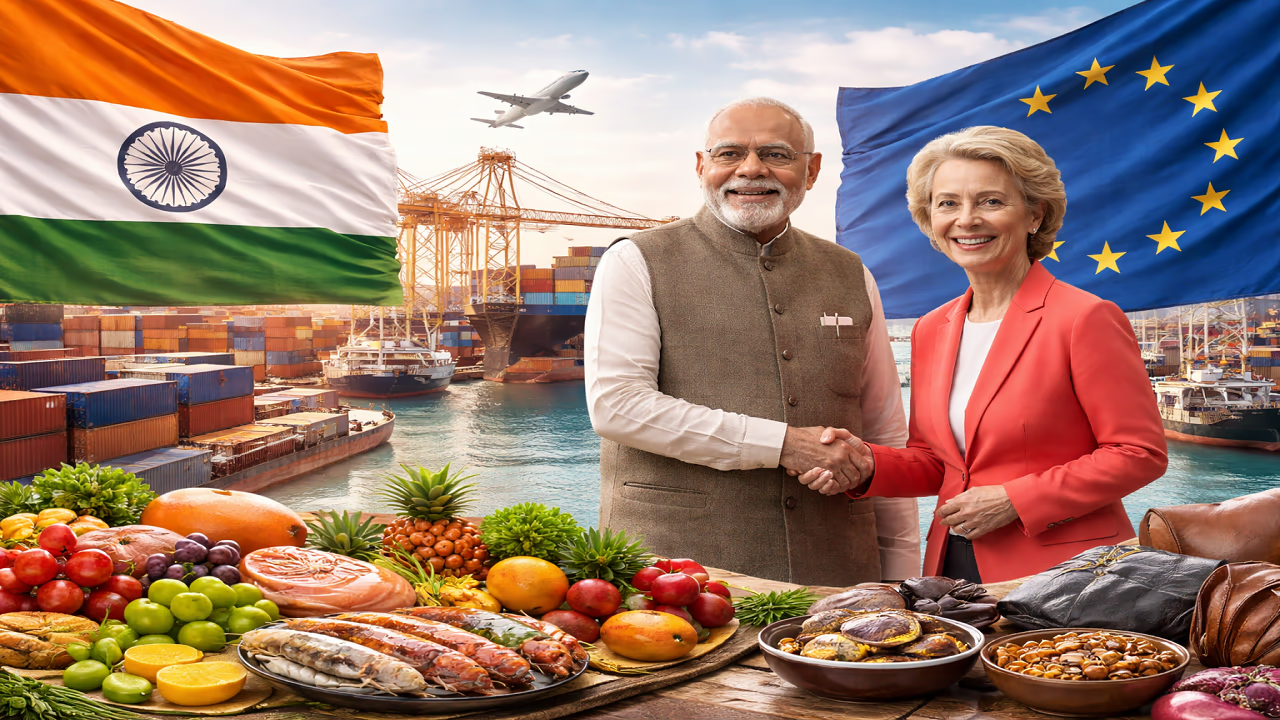
The new trade agreement creates a fundamental shift which affects international trade, employment opportunities and economic expansion.
The FTA serves a purpose that extends beyond tariff reductions. The treaty establishes confidence between the two nations, which hold global economic power as the fourth-largest economy.
ALSO READ- Exploding Trees in Extreme Winter: Myth, Science, and Midwest Reality
Vital Events in India-EU Relations-
The India-EU Free Trade Agreement will be documented through the financial collaboration between India and the EU, which will start after the 16th India-EU Summit in January 2026. The economic advancement of India reached its peak through the treaty, which Indian Prime Minister Narendra Modi signed with European Commission President Ursula von der Leyen. India and the European Union together represent 25% of the world’s GDP and almost one-third of international trading activity.
Why the India–EU FTA Matters Around the World-
The India–EU FTA is being widely explained as a game-changer because of its scale and depth.
Main Reasons This Agreement Is Historic:
- The agreement establishes trade rules for goods and services, digital trade and micro, small and medium enterprises and mobility solutions.
- The agreement provides more than 99 per cent of Indian exports with special trade privileges to the European Union.
- The initiative enhances India’s participation in worldwide production networks.
- The program connects economic progress with both environmental sustainability and technology development, and workforce training.
- The agreement establishes review processes which enable parties to adjust their system to emerging technologies and upcoming regulatory requirements.
Trade Numbers That Explain the Scale-
The economic impact of the India–EU FTA is massive.
India–EU Trade Snapshot:
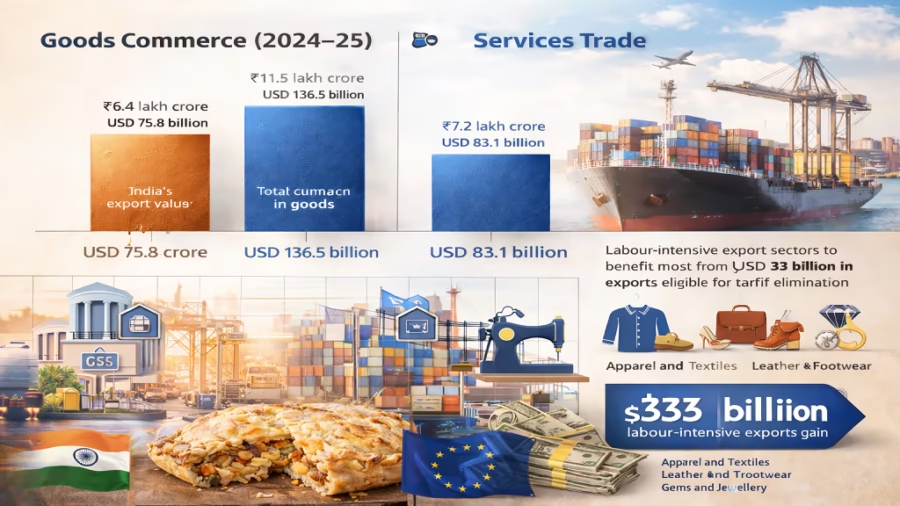
Goods Commerce (2024–25):
- The sum amount is ₹11.5 lakh crore, which converts to USD 136.5 billion.
- India’s export value stands at ₹6.4 lakh crore, which equals to USD 75.8 billion.
Services trade:
- The total value of services trade reaches ₹7.2 lakh crore, which equals to USD 83.1 billion.
- The sectors which depend on labour-intensive exports will experience maximum benefits from the tariff elimination, which applies to USD 33 billion worth of their exports.
Unprecedented Market Access for Indian Exports-
One of the strongest outcomes of the FTA is preferential access for more than 99% of Indian exports by value into the EU market.
Sectors Set to Benefit Most:
- Textiles and apparel
- Leather and footwear
- Gems and jewellery
- Marine products
- Handicrafts
- Engineering goods
- Automobiles and auto components
This directly supports Make in India by making Indian products more competitive in Europe.
Boost for MSMEs, Women, and Employment-
The agreement places strong emphasis on inclusive growth.
Who Benefits on the Ground:
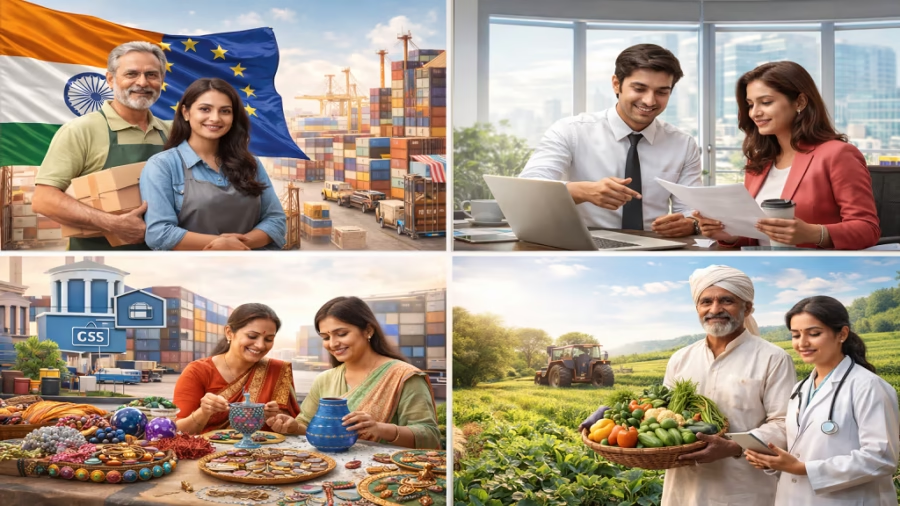
- MSMEs gain easier EU market entry
- Women artisans and home-based producers see new export opportunities
- Youth and professionals benefit from services, trade and mobility
- Rural producers gain from improved agri-export access
By connecting MSMEs to European supply networks, the FTA moves beyond trade into long-term capacity building.
Agriculture and Prepacked Foods: Growth with Defence-
India’s agricultural exports receive a major boost, while sensitive sectors remain protected.
Gaining Market Access:
- Tea & coffee
- Spices
- Local fruits and green vegetables
- Prepacked foods
Safeguarded Sectors:
- Dairy Items
- Cereals
- Poultry
- Soymeal
- Select fresh fruits and vegetables
This balance ensures export growth without harming local farmers.
Services, Trade and Global Mobility: A Big Win for India-
Services form the fastest-growing component of India–EU trade.
Important Services Covered:
- IT and IT-enabled services
- Professional and business services
- Education
- Financial services
- Tourism and construction
Mobility Framework Highlights:
Easier movement for:
- Business visitors
- Contractual Service Suppliers (CSS)
- Independent Professionals (IP)
- Entry and work rights for dependents
- Framework for social security agreements
- Support for student mobility and post-study work
This positions India as a global talent hub.
Automobiles and Manufacturing: Calibrated Liberalisation-
The FTA introduces a quota-based, carefully sequenced auto liberalisation.
What This Means:
- EU carmakers can introduce high-end models in India
- Indian auto manufacturers gain access to EU markets
- Encourages Make in India and future exports
- Consumers benefit from better technology and competition
CBAM, Sustainability, and Emerging Technologies-
The agreement consists of forward-looking stock on the Carbon Border Adjustment Mechanism (CBAM).
Key Sustainability Commitments:
- Dialogue on carbon pricing
- Recognition of carbon verifiers
- Technical and financial support for emissions reduction
- MFN-based flexibilities, if extended to other countries
Additionally, cooperation expands into:
- AI
- Clean technologies
- Semiconductors
- Digital trade frameworks
Tactical and Geopolitical Importance-
Above all, the India–EU FTA strengthens :
- Commitment to a rules-based international law.
- Deeper security and defence cooperation
- Decreased vulnerability to global trade disruptions
- Stronger positioning amid geopolitical uncertainty
With FTAs now covering the UK, EFTA, EU, Australia, UAE, and New Zealand, India effectively gains access to the entire European market.
ALSO READ- Chagos Islands Deal That Angered Trump
Conclusion-
The India–EU Free Trade Agreement functions as a trade agreement which establishes a long-term economic development framework between the two parties. India achieves its status as a dependable global partner through its ability to combine large-scale operations with inclusive solutions and sustainable practices and flexible business approaches, which help the nation achieve its Viksit Bharat 2047 development goals. The agreement enables India to take charge of international trade operations through its participation in various global trading systems, which have grown increasingly complex.