
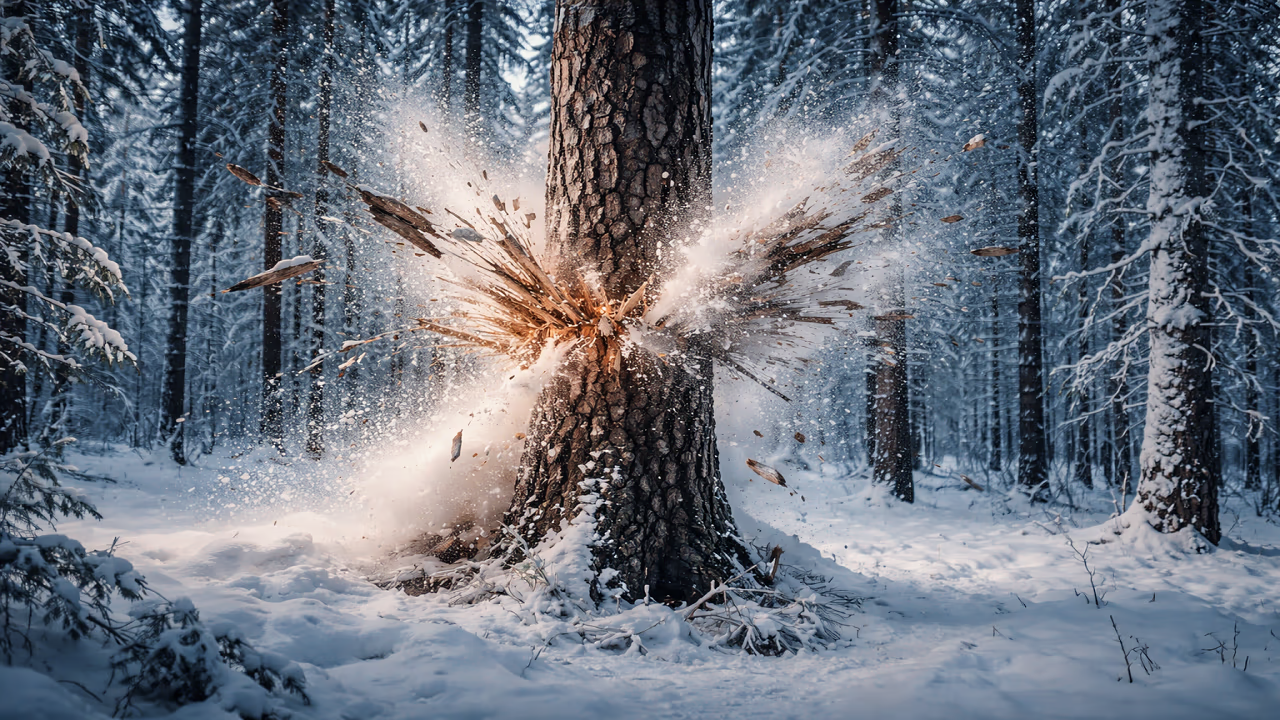
Online media platforms have been flooded with people sharing their fears about “exploding trees” after an Arctic blast brought temperatures to lower than -20°F over the American Midwest. The set of viral posts, dramatic graphics, and sensational headlines has created both curiosity and worry across multiple states, which include Minnesota, Iowa, South Dakota, Wisconsin, and Michigan. People express doubt about whether this phenomenon exists or whether it represents a typical winter rumour that social media has amplified. The reality exists between two opposite extremes. Trees don’t explode like fireworks, but a particular natural process creates loud cracking sounds which people interpret as explosive sounds. The United States readers will find a scientific explanation that distinguishes between actual events and false information.
ALSO READ- Chagos Islands Deal That Angered Trump
Why Are “Exploding Trees” Trending in the US?
The rumour gained traction after several meteorologists and influencers warned that extreme cold could cause trees to “explode.” The first viral post reached a viewership of millions at the same time that weather forecasts recorded low temperatures for the Northern Plains. The idea immediately spread across platforms like X (formerly Twitter), TikTok, and Facebook—prompting fears of falling trees, property damage, and safety risks during the cold snap. The specialists say that the popular viral display of information contains incorrect information.
What People Mean by “Exploding Trees”-
There is a real phenomenon behind the phrase, but it’s not an explosion in the traditional sense.
The scientific term is:
- Frost cracking
- Cryoseismic booming
When internal tree pressure reaches its summit, the tree trunk and branches will experience immediate cracks that create a loud sound resembling either a gunshot or a thunderclap.
How Frost Cracking Really Happens-
The tree’s inner structure holds its sap and moisture within minuscule channels. Under specific conditions:
- The temperature decreases with extreme rapidity
- The sap and water immediately transform into ice
- The frozen material experiences an increase in volume
- The tree’s interior space experiences rising pressure levels
- The tree’s bark or wood breaks apart with a powerful blast sound.
The likelihood of these incidents occurring reaches its peak during the following period.
- The time period after a cold snap which follows a period of mild weather.
- The situation happens when temperatures drop below the threshold of –20°F.
Which Trees Are Most Harmed?
Not every tree behaves the same in extreme cold. Trees with high moisture content are more vulnerable to frost cracking, in Maples, Oaks, Sycamores, Lindens, and Fruit trees. The cold weather tolerance of evergreen trees surpasses that of thin-barked trees, which experience greater cold weather vulnerability.
Is the Current Midwest Cold Snap Dangerous for Trees?
Meteorologists and forest specialists have determined that the current risk level remains at a minimal state. The experts predict that tree explosions will not occur at a widespread level because they have studied the current conditions. The Midwest region has already experienced multiple weeks of subzero temperatures that have affected its entire area. The sap inside trees has likely reached its frozen state. The areas throughout the region experience temperature drops that do not meet the sudden requirements for all locations. According to WCCO meteorologist Mike Augustyniak, the temperature shift from –3°F to –20°F does not emit enough coldness to cause vast frost cracks. The meteorologist from FOX 9, Cody Matz, explained that the current possibility of winning the Powerball lottery matches the possibility of winning the lottery itself.
What About the Loud Thunders People Hear?
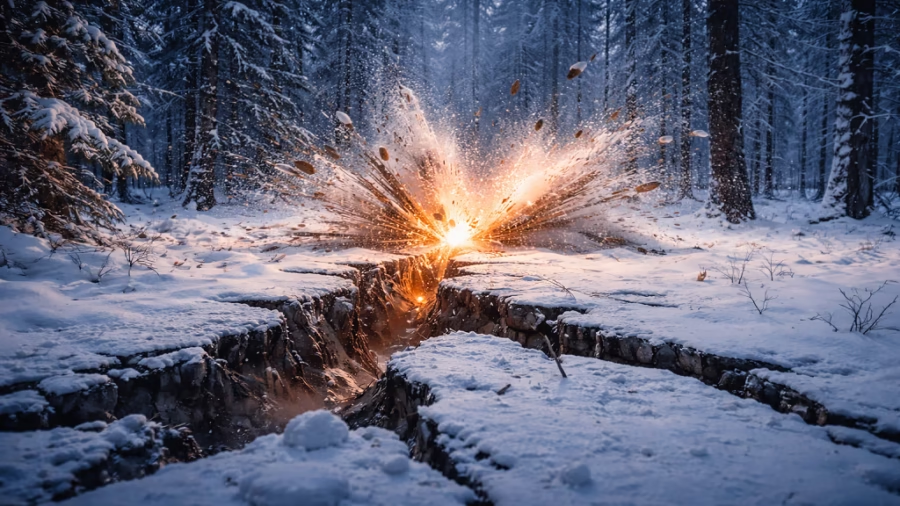
People who reported “explosions” during the extreme cold weather actually witnessed frost quakes, which resulted from tree damage. Frost quakes occur when:
- Frozen ground contracts rapidly
- The ground material underneath the soil surface develops cracks
- The process generates powerful sound waves, which create loud booms
- The process creates small vibrations, which people experience as ground movement
- The events happen more frequently than frost cracking that affects trees.
Are Exploding Trees Dangerous?
- Experts reached a consensus about indoor spaces which carry low risks for people.
- The dangers to people indoors are minimal, according to experts.
- Trees evolve cracks, which take time to heal without any intervention.
- People who live close to nature should practice two safety measures.
- People should stay away from areas directly beneath trees which show visible cracks.
- People should contact an arborist to assess their trees when they find substantial cracks in them.
What Forest Experts Say-
Forest health specialists emphasise that:
- Trees are highly adapted to cold climates
- Frost cracks usually become permanent scars, not fatal damage
- Complete structural failure is extremely rare
- Trees can live for several decades despite the occurrence of cracks in their structure.
Rumour vs. Reality: Quick Comparison-
Rumour:
- The public believes that trees will burst open during periods of extreme cold.
- The first statement claims that human lives and their homes are in danger, while the second statement describes multiple environmental threats to the Midwest region.
- The Midwest region of the United States will experience extensive tree destruction.
Reality:
- Frost cracking occurs only in specific environmental conditions because it needs those conditions to happen.
- The risk to people and property exists because of the specific location of the threat.
Why the Internet Amplified This Story-
The phrase “exploding trees” creates dramatic content with emotional power, which attracts digital viewers because it has viral potential. The speed of spreading information about issues is slower than the speed of spreading information about dangers. Meteorologists stress the significance of context because temperature history records serve as essential background information for understanding weather patterns. The impact of sudden temperature shifts represents a greater danger when compared to extreme freezing temperatures. The chances of experiencing freezing conditions decrease after a person has already experienced their first freeze.
ALSO READ-India Launches Its First Open-Sea Marine Fish Farming Initiative
Should Americans Be Worried This Winter?
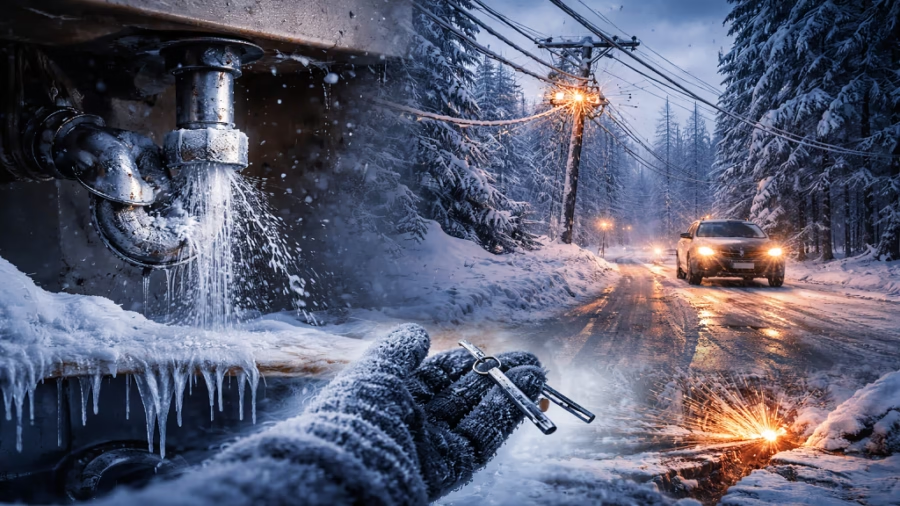
For most Midwesterners, the answer is No. The bigger risks during Arctic blasts remain:
- Frostbite
- Hypothermia
- Icy roads
- Burst pipes
- Power outages
Tree cracking is far down the list of winter hazards.
Final Verdict-
Exploding Trees are Myth –Frost Cracking is Real:
The final decision requires the determination of which possibility exists between a rumour and a factual occurrence. The existence of exploding trees remains unproven because scientists have confirmed that frost cracking occurs in nature. The viral warnings exaggerate a rare natural process which creates a widespread fear that scientific evidence and expert analysis do not support. The loud crack you hear during the night most likely comes from natural processes that occur when temperatures drop to extreme cold, instead of a tree explosion that would happen in your yard. Americans need to maintain their body heat while driving their vehicles safely, and allowing trees to naturally endure wintertime conditions, which they have always done.
FAQs-
A. The sounds usually come from frost cracking in trees or frost quakes in frozen ground. The frozen soil experiences frost quakes when extreme cold causes sudden freezing of its frozen soil. The two events produce sounds which resemble gunshots or thunder, but they exist as natural phenomena that last for a short time.
A. The events are extremely uncommon because of their infrequent occurrence within extremely cold areas. The weather condition occurs after sudden temperature drops that follow milder weather pattern changes. Cold weather that lasts for long periods actually decreases the chances of trees experiencing cracks.
A. The people who stay inside face minimal risk from people who spend time outside. The primary danger stems from branches that will fall down because of trees that have already suffered damage or show signs of cracked branches. People should stay away from standing directly under large trees during extreme cold weather because it serves as a safety measure.