
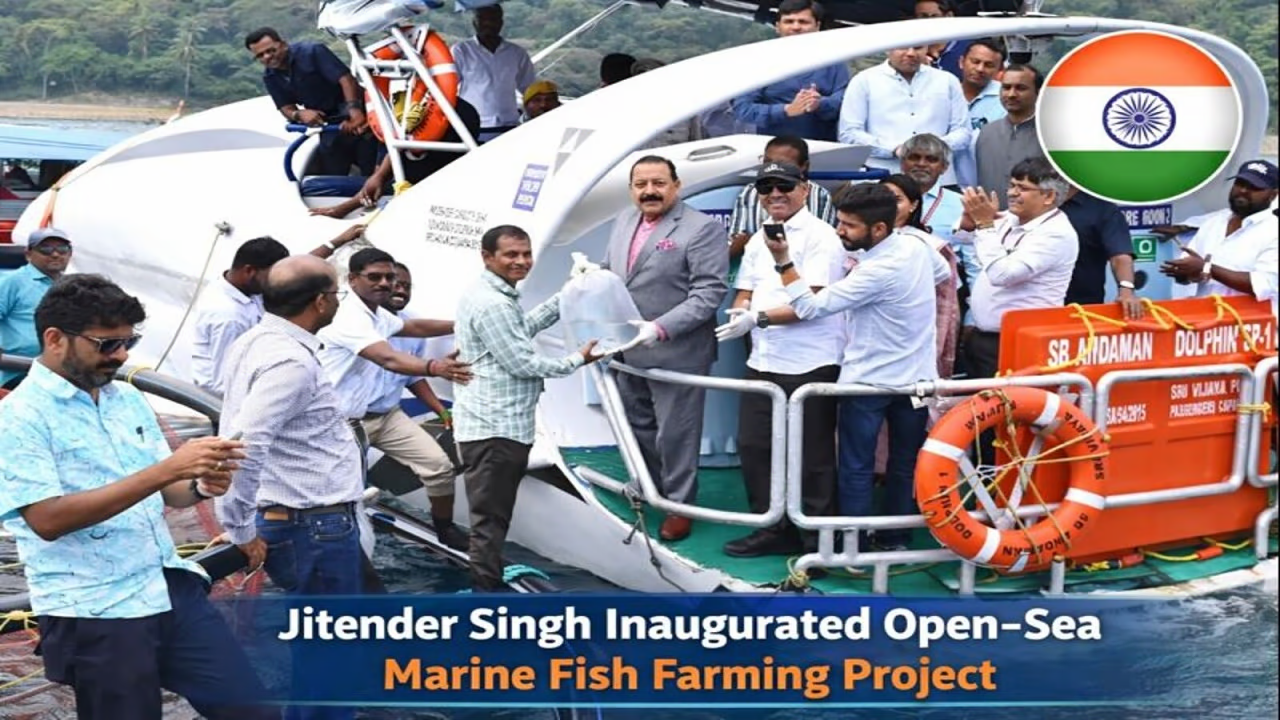
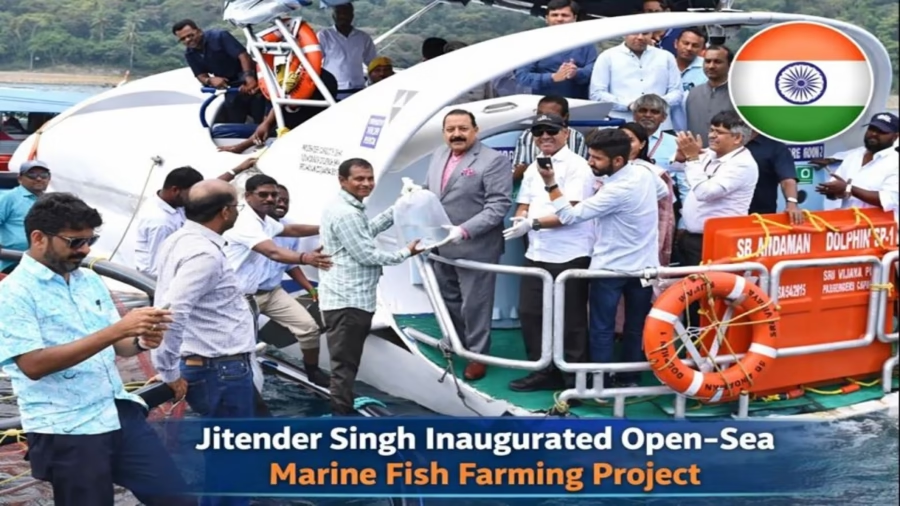
India registers a historical achievement in its blue economy as the first Open Sea Marine fish farming Initiative in the country is established in North Bay in the Andaman Sea. The Initiative has been inaugurated by the Minister of State (Independent Charge) for Science & Technology and Earth Sciences, Dr Jitendra Singh, marking a new beginning in using the resources of the oceans sustainably. The Initiative developed by NIOT under the Ministry of Earth Sciences uses advanced open-ocean cage technology for the farming of marine fin fishes and deep-water long-line techniques for seaweed farming in association with the Andaman & Nicobar administration. Read further to know more details on the Open-Sea Marine Fish Farming Initiative, harnessing India at the forefront of innovative aquaculture and livelihoods.
ALSO READ- NASA’s Artemis II Nears Launch for Moon Mission
What is the Open-Sea Marine Fish Farming Initiative?
The Open-Sea Marine Fish Farming Initiative was inaugurated by Union Minister Dr Jitendra Singh at North Bay, Sri Vijaya Puram, in the Andaman Sea, the first-ever initiative by India for open-sea aquaculture. According to reports, the Initiative was inaugurated on Sunday, January 18, 2026, or a recent Sunday, during the field visit of Dr Jitendra Singh.
- This constitutes a crucial step in implementing Prime Minister Narendra Modi’s vision for the Blue Economy through the harnessing of India’s vast, unexplored ocean resources that remained largely neglected for several decades following Independence, but have been prioritised since 2014.
- The pilot implementation is carried out in collaboration between the Ministry of Earth Sciences through its technical arm, the National Institute of Ocean Technology, and the Andaman & Nicobar Islands UT Administration, for marine finfish rearing in open-sea cages developed by NIOT and for seaweed under deep-water longline methods in natural oceanic conditions.
- During the event, Dr Jitendra Singh distributed seaweed seeds for cultivation in deep water, as well as finfish seeds for caging, thereby contributing towards livelihoods.
- The initiative showcases the special advantage that exists along all the seaboards of India, namely the western, southern, or eastern coast, thereby providing the necessary momentum for scalability through partnerships for the Blue Economy ecosystem.
- The application of scientific innovations, along with community engagement, has come into play, as evidenced during the Minister’s visit to the neighbouring Mahatma Gandhi Marine National Park.
A Brief on India’s Blue Economy-
The Blue Economy in India symbolises the eco-friendly utilisation of the ocean’s resources for the growth of the economy, livelihood, and conservation of the ocean. The Blue Economy presently contributes to 4% of the Indian GDP in the following sectors: fisheries, aquaculture, shipping (which handles 95% of trade by sea), tourism, offshore energy, and biotechnology. The plan is to achieve a $1 trillion valuation by 2030 through various programs, namely Sagarmala, Pradhan Mantri Matsya Sampada Yojana (PMMSY) scheme, Deep Ocean Mission, and Blue Economy 2.0, which was launched in the 2024 Interim Budget.
How will this Initiative impact the Blue Economy?
- A major step for the Blue Economy of India, the Open-Sea Marine Fish Farming Initiative, with the adoption of novel, scaled-up aquafarm designs that leverage the enormous resource potential within the unexploited Exclusive Economic Zone (EEZ).
- It also boosts the marine productivity, sustainable fisheries, enhances exports and strengthens food security.
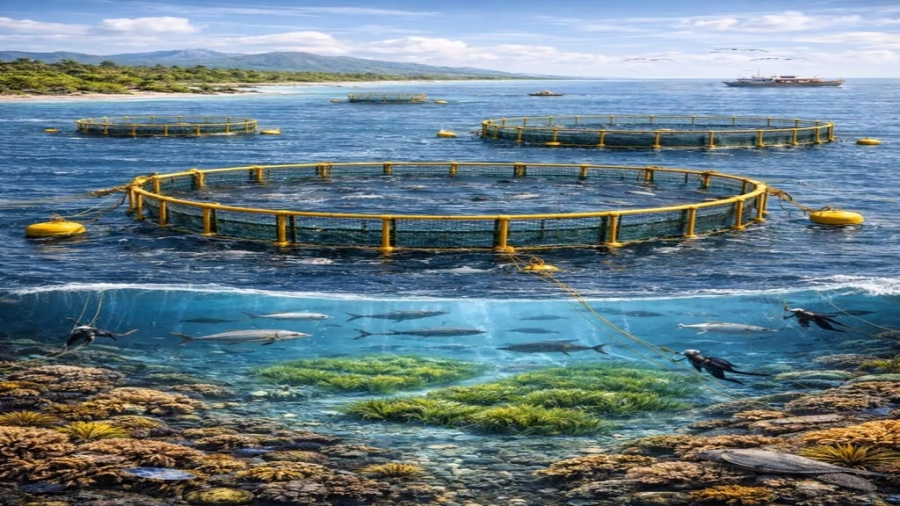
- The application of open-sea cages for finfish farming and deep-sea long lines for seaweed farming developed by NIOT, allows for 365-day farming within natural ocean conditions without land access on coasts.
- It helps increase fish output, improve exportable quality, and job opportunities for fishing community members through seed supply and capacity building for fish farming, thus directly addressing the PMMSY scheme.
Objectives of the Initiative-
The primary focus of this Initiative is to promote the cultivation of high-value fish species like Asian seabass, tuna, pompona, cobia, etc. and seaweeds like Kappaphycus alvarezii, in a natural marine environment.
- The major focus lies in increasing fish output from 15-20 tons per ha per year, reducing fish imports, increasing exports, and providing employment opportunities to 3.5 million fishers.
- It has been integrated into government programs like Pradhan Mantri Matsya Sampada Yojana (PMMSY) & Deep Ocean Mission.
- The Initiative makes use of India’s 7,517 km coastline and 2.02 million square km EEZ to achieve the goal of a $1 trillion Blue Economy by 2030.
Technology used in the Open-Sea Fish Farming Initiative-
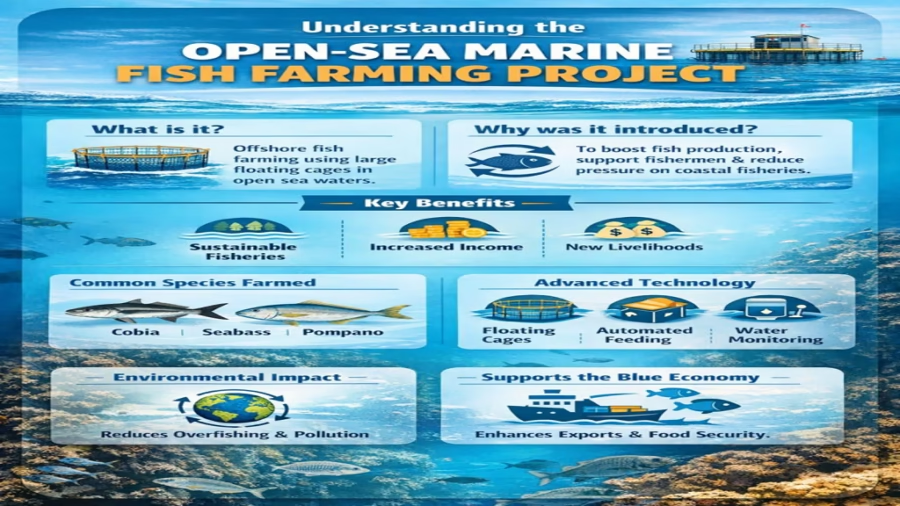
- Indigenous technology developed by NIOT for the Open-Sea Marine Fish Farming Initiative will use heavy-duty cages that can withstand strong waves, currents, and even monsoons.
- Made from HDPE-based (galvanised iron) cages of 9-meter diameter, these can be used for rearing marine finfish like cobia or sea bass in natural waters, enabling high-density farming independent of any coastal infrastructure.
- Smaller 6m seed-rearing cages are used for supporting juveniles from 6g to 24g in 45 days at 90% survival rate. Mooring is accomplished by the use of GI/HDPE anchors and buoy chains for open sites.
- Deep long-line systems (rope height of 100-200m with buoyant rope laid at depths of 10-20m) support seaweed cultivation using natural nutrients, such as Kappaphycus alvarezii.
- The systems are designed for dense stocking rates (weight of 20-30 kg/m³).
- Both innovations include real-time monitoring of ocean quality parameters, sustainability, and scalability within the Indian EEZ.
Benefits to Community & Livelihood-
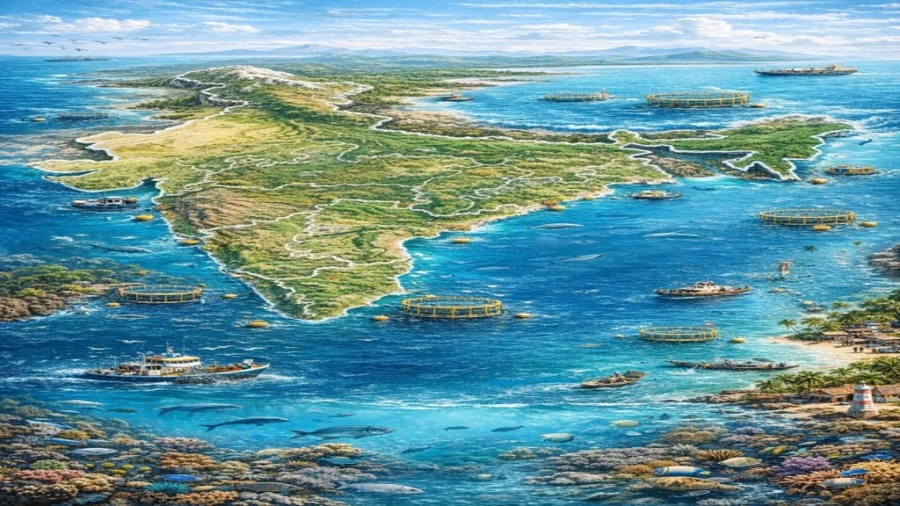
The Initiative, Open Sea Marine Fish Farming, brings direct socioeconomic benefit to the Andaman coast by helping the community shift from a fluctuating fishery to a stable farming business.
- Income Growth for Farmer: The Initiative will enable farmers’ income rise up to 2 or 3 times, generating ₹3-5 lakh/unit annually, with sea bass fetching a price of ₹400-600/kg and seaweed ₹80-120/kg dry weight. This system is supported by assured buy-back arrangements and eco-certification for premium exports.
- Development of Skills: Practical training includes cage management, seed handling, feed allocation (FCR with a 1.2:1 ratio), and remote monitoring through NIOT apps, benefitting 500+ households.
- Market Linking: Integration of the PMMSY cooperatives will provide supply chain services to the mainland processors, which will enhance their resistance to seasonal/monsoon risks.
- Inclusion of Women: The chief groups involved in seaweed farming are Women Self-Help Groups or SHGs, which help supplement the income (₹20,000-30,000) of many people by restricting fishing in the surrounding regions and thus sustaining natural stocks.
Challenges under this Initiative-
- Extreme Weather: Cyclones and monsoons with waves over 3 m and currents of 1.5-2 m/s could displace cages. This is mitigated by 8-point GI moorings and breakaway systems tested during the Andaman trials.
- Algae/Mussel Growth and Net Clogging: Algae/mussel buildup on HDPE fishing nets hampers water current flow; this problem is currently solved through the use of copper-free antifouling coating and fortnightly cleaning.
- Seed Demand Shortages: Low availability of marine fin fish from hatcheries (<50% quality juveniles); NIOTCMFRI is expanding seabass/cobia production.
- Seed Demand Shortfalls: Marine finfish hatcheries producing less than 50% good quality seeds; NIOT/CMFRI hatcheries scaling up sea bass/cobia
- Feed Accessibility: High-cost pelleted feeds (₹100-120/kg, FCR 1.2:1); indigenous fish meal substitutes and automatic feed to reduce dependence.
- High capital cost requirements per cage setup: ₹15-20 lacs, which is overcome by subsidies under PMMSY (60%) or Kisan Credit Cards (KCC) for small fishermen.
- Skills Gaps: Technical implementation demands training; NIOT Courses include 500+ Andaman fishermen every year.
Global Strategic Importance-
The Open-Sea Marine Fish Farming Initiative in India has major global implications by making the country one of the leaders in offshore fishing:
- Food Security Leader: With the estimated per-capita consumption of fishery products to reach 21kg by the year 2030 (FAO), the Indian solution to its import dependence by 40% can now export 1-2 million tons of high-quality sea bass/cobia to the US/EU to fulfil the deficit.
- Blue Economy Template: The vision of pioneering Blue Economy exploitation in EEZs corresponds to United Nations SDG14 (Life below water), inspiring Global South nations through technology transfer in India-ASEAN Maritime MoU and the Quad fisheries dialogue.
- Geoeconomic Edge: Andaman’s smart EEZ (6.6 lakh sq km) improves MDA, safeguards against Chinese overfishing in the Indian Ocean, and secures protein supply chains for its 1.4 billion people.
- Climate Resilience Model: Storm-resilient designs developed by NIOT (resistant to Cat 3 cyclones) provide templates for developing countries affected by the effects of sea-level rise on coastal farming communities in Bangladesh, Vietnam, and Indonesia.
- Innovation Export: HDPE cage/IoT sensor IP sparks collaborations in Norway/Chile; pilots in NIOT attract World Bank/FAO investments for scaling up in over 20 island countries.
FAQs-
A. The Open-Sea Marine Fish Farming Initiative is the first-ever fish farming Initiative in open seas and offshore for open-sea aquaculture. The Initiative was inaugurated by Union Minister Dr Jitendra Singh at North Bay, Sri Vijaya Puram, in the Andaman Sea.
A. The Initiative was inaugurated on Sunday, January 18, 2026, or a recent Sunday, during the field visit of Dr Jitendra Singh.
A. The indigenous tech developed by NIOT, such as floating cages (9 m diameter), mooring systems, an automatic feeding system and advanced monitoring systems that can withstand strong waves, currents, and even the vagaries of monsoons.
A. The fish species that were undertaken for fish farming under the “Open-Sea Marine Fish Farming” Initiative are seabass, tuna, cobia, pompano, and groupers, which are now being cultured using open-sea cages, which are of high value.
A. The Open-Sea Marine Fish Farming Initiative supports the Blue Economy of India with the application of novel and innovative aquafarm models, boosting marine productivity, sustainable fisheries, enhanced exports and strengthening food security.