
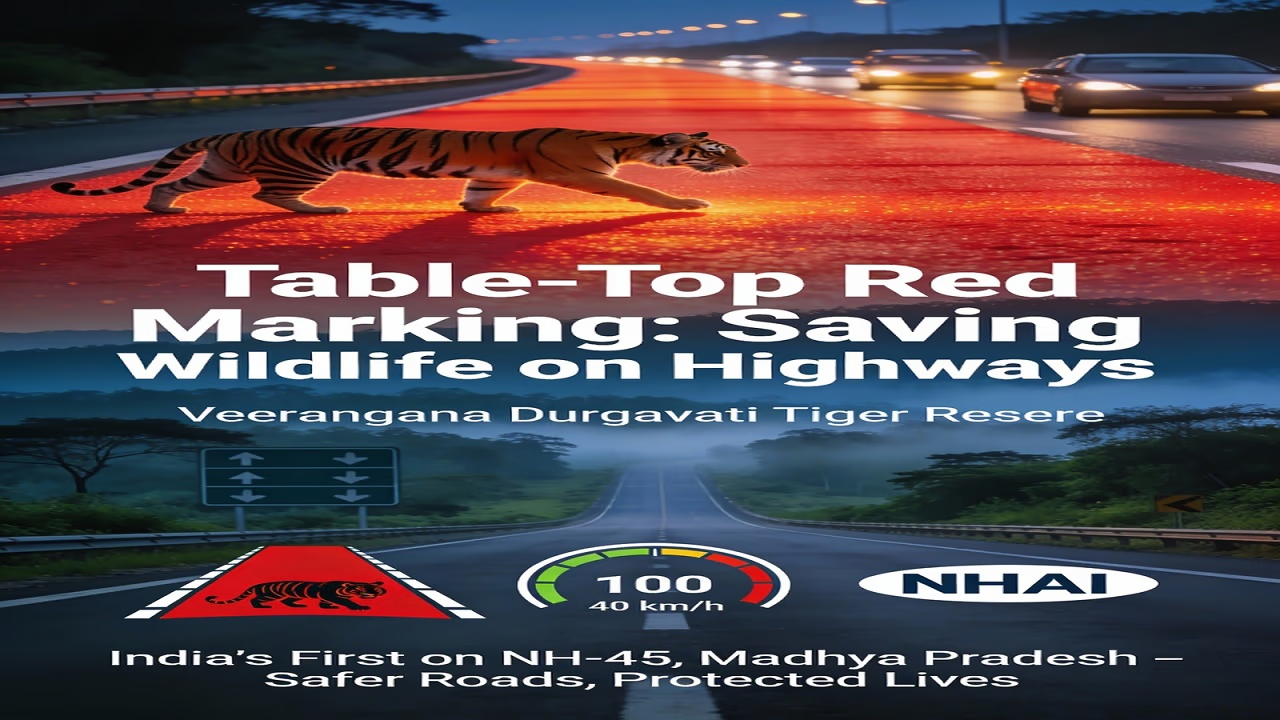
With the inauguration of its first “wildlife-safe” highway on NH-45 in Madhya Pradesh, India sets a new standard among other countries in terms of sustainable infrastructure and environmental preservation. Not only does this innovation protect the environment, but it also provides much-needed safe transport routes, teeming wildlife, and a vision for all of India’s roads to look toward in the name of growth, while embracing the beat of nature with the Green Highways Policy. Discover how this balance of progress and nature works wonders with this innovative solution.
ALSO READ- VB–G RAM G Bill 2025: New Rural Jobs Law Replacing MNREGA
What is Table-Top Red Ranking?
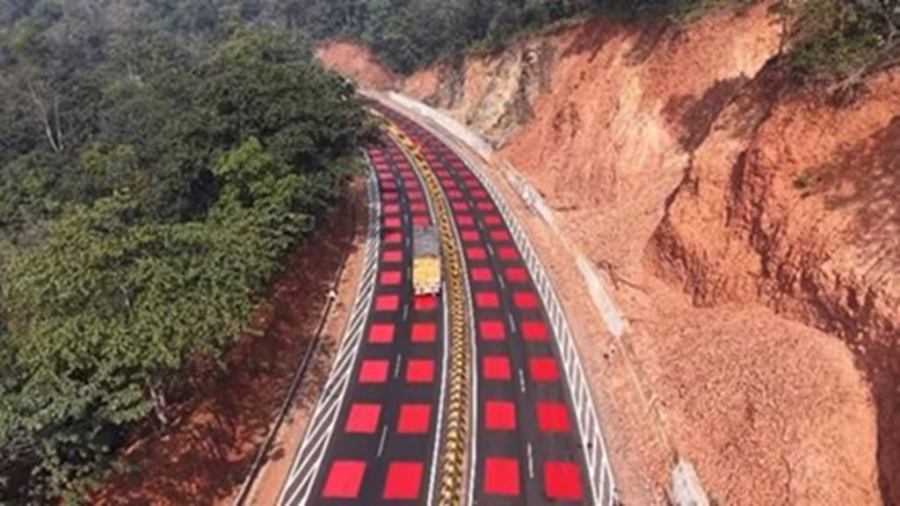
The Table-Top Red Marking is a slightly raised, 5 mm thick thermoplastic red surface applied in patterned blocks along a 2 km ghat-section of NH-45. Its texture and colour are designed to catch motorists’ attention immediately, encourage reduction of speed and improve driver awareness at the entry point of wildlife-sensitive stretches – without causing abrupt braking or damage to vehicles. The effect is partly visual, high-contrast red patches, and partly tactile, a subtle rumble, which together help calm the traffic in areas where animals frequently cross.
Objectives:
- Reduce animal-vehicle collisions and fatalities in the Hiran Sindoor forest corridor, home to a rich wildlife population.
- Ensure safety for humans and animals while maintaining smooth traffic flow.
- Facilitate eco-friendly infrastructure under NHAI’s Green Highways Policy 2015.
- Improve tourism with income generation around protected areas like the Nauradehi Sanctuary.
- Create a replicable model for other national highways through forest zones.
Location of India’s First Wildlife-Safe Highway-
- Developed on National Highway-45 (NH-45), located in the Bhopal-Jabalpur Corridor.
- Hiran-Sindoor forest stretch, a known wildlife movement area, where the system has been implemented.
- Situated near Nauradehi Wildlife Sanctuary & Veerangana Durgavati Tiger Reserve.
- The pilot intervention extends over a 2 km stretch of ghat road within an 11.96 km highway.
Safety Features of Tap Top Red Ranking-
- NHAI has implemented table-top red markings on a ghat section measuring 2km on this highway.
- The markings on this road include slightly elevated spots (5mm) that generate mild vibrations for cars.
- The strong red colour serves as an indication to drivers to reduce their speed.
- The speed-reducing and alerting device is used as an effective speed-calming and alerting system without any harm.
Reasons for Table-Top Red Ranking-
Here are a few reasons why there was a need for the emergence of Table-Top Red Ranking:
- Collision risk high: The stretch of Hiran Sindoor witnesses regular animal crossings by tigers, deer, sambar, and jackals, owing to the vicinity to both Nauradehi Sanctuary and Durgavati Tiger Reserve.
- Human-wildlife conflict: The contiguous dense forest corridor along NH-45 has long witnessed deadly vehicle-animal crashes, dangerous for both the road users and the biodiversity.
- Balancing Development with Ecology: The rapid expansion of highways across the world through habitats is essential to innovate safety in order to avoid habitat fragmentation and species loss.
- Policy imperative: This is supportive of the Green Highways Policy 2015 by integrating conservation and reducing ecological damage because of the increase in infrastructure.
Why is it important?
Tabletop red marking is important because:
- Its strong visual and physical cues instantly inform the driver that they are entering a sensitive or high‑risk zone, prompting a reduction in speed without traditional, harsher speed breakers.
- By combining the slightly raised “table” structure with bright red, high-friction surfacing, it can slow down vehicles in a controlled way, significantly reducing the chances of accidents that result in fatal and/or grievous injuries to wildlife and humans.
- This design reduces fatal wildlife-vehicle collisions in wildlife corridors and areas proximate to protected reserves, while keeping national highways functional to serve long-distance traffic.
- Unlike abrupt speed bumps, which pose risks to fast-moving or heavy vehicles, the table-top format allows traffic to decelerate smoothly, minimising risks such as loss of control, skidding, and even damage to vehicles.
- It also serves as a model for future road infrastructure in how safety engineering and environmental protection can be integrated into highway design rather than treated as competing priorities.
Wildlife Underpasses and Supporting Infrastructure-
- 25 wildlife underpasses: Established along the NH-45 corridor to facilitate the crossing of animals under the highway without affecting the flow of traffic.
- Eight-foot-high iron fencing: Erected on both sides of the road to direct animals towards underpasses, reducing random crossings.
- Speed Detection Devices: Used for detecting speeds and warning motorists about responsible speeds in designated areas.
- Wildlife monitoring cameras: Installed on small bridges used as crossing sites for monitoring the wildlife.
Cost & Completion Time of Project-
The table-top red marking is part of an 11.9–11.96 km highway widening project on NH-45 (Bhopal–Jabalpur section) through Veerangana Durgavati Tiger Reserve in Madhya Pradesh, expanding from two to four lanes.
- Total project cost is ₹122–122.25 crore, with the 2 km stretch featuring the red marking completed as part of this initiative.
- Construction began around 2021–22 as a brownfield project and reached substantial completion by July 2025, with the full wildlife-safe features operational by December 2025.
- No separate cost for the red marking alone is specified, as it forms an integrated element of the overall ₹122 crore upgrade, including underpasses and fencing.
Monitoring Systems and Planning Ahead-
- High Visibility Warning Strip: Its bright red checkerboard design provides a stark contrast against the road and serves as a much more effective warning than a simple white or yellow line when indicating zones where wildlife is likely to be found.
- Natural Speed Reduction: Slightly elevated (5mm) table top with slight vibrations and resistance to the natural urge to reduce speed instinctively.
- Psychological effect: Tabletop road design mimics pedestrian crosswalks, teaching drivers to drive slowly over the 12-kilometre route.
- Durability and Safety: Non-slip texture resists rainwater, while uniform application eliminates discretion based on signage.
Conclusion-
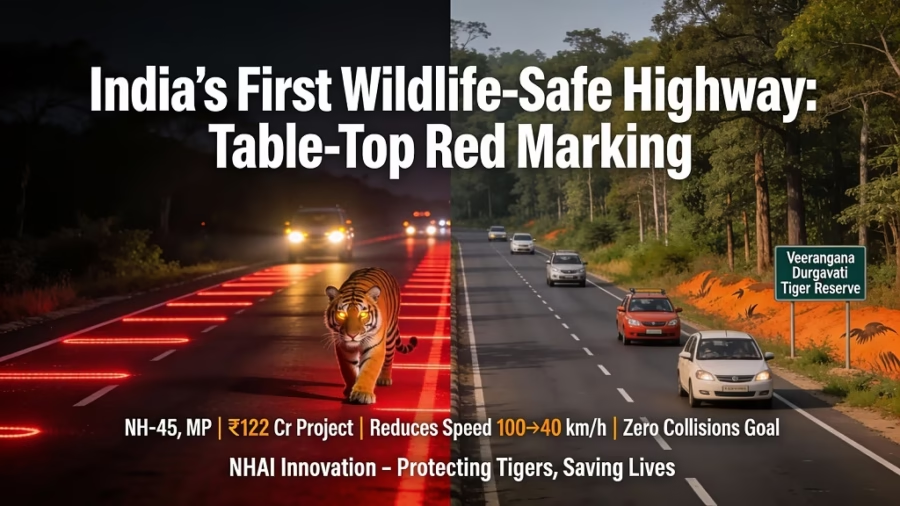
Table-Top Red Marking is one such innovative leap in the field of road engineering that combines the best of visible markings with the most important functionality of ensuring safety for both the wildlife and the commuters on the rapidly growing roads of India. With the implementation of such a wildlife-friendly innovation on the routes along the protected reserves on the NH-45, the NHAI has shown the way ahead on how such innovative developments can coexist with development on the roads.