
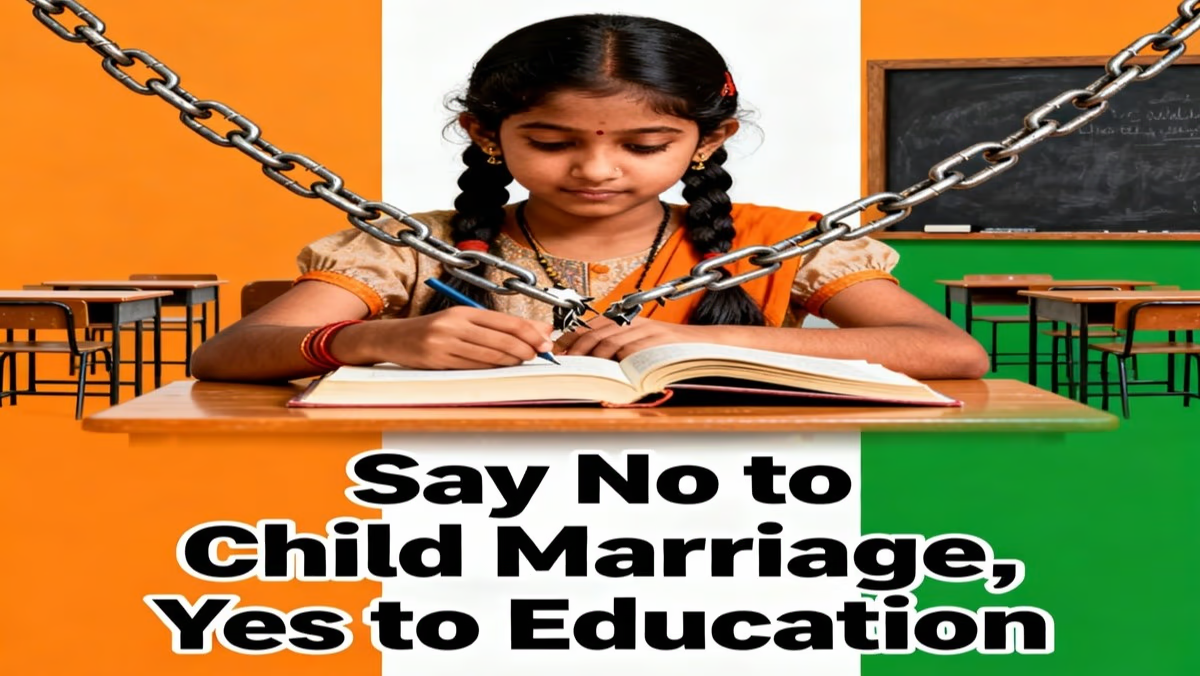
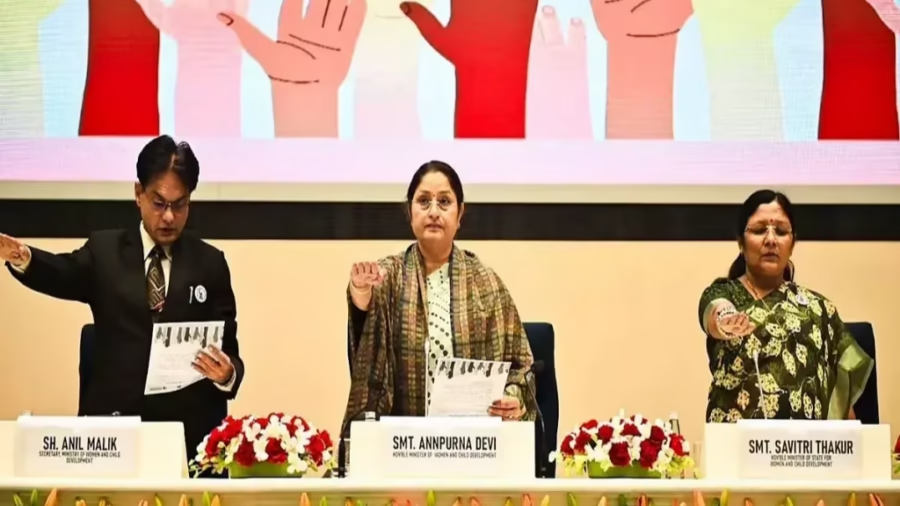
The fight against child marriage in India took a major leap on December 4, 2025, when Union Minister Annpurna Devi launched the 100-Day Intensive Awareness Campaign for a Child Marriage Free Bharat at Vigyan Bhawan, New Delhi. This strong initiative on the first anniversary of Bal Vivah Mukt Bharat Abhiyan addresses the repugnant practice that steals girls’ childhood, forces them into early maternity, and starts a lifetime of suffering for them. Deep-rooted social norms challenge prospects, health, and education despite significant progress from 47% prevalence two decades ago to 23% today, as per NFHS-5. This national campaign mobilises communities, frontline workers, and technology to establish zero-tolerance zones to empower the next generation. Read about the bold strategies of this campaign that have been inspiring success stories and the roadmap leading to eradication by 2030.
ALSO READ- Election of UN General Secretary 2026: Know All Details, Process and Candidates
Highlights of the 100-Day Campaign-
- Union Minister Smt. Annpurna Devi launched the 100-Day Intensive Awareness Campaign on December 4, 2025, at Vigyan Bhawan, New Delhi, marking the 1st anniversary of Bal Vivah Mukt Bharat Abhiyan.
- The campaign will run from November 27, 2025, through to March 8, 2026, for International Women’s Day. It is designed to be divided into three phases for maximum grassroots impact.
- More than 26 lakh citizens participated, 1.32 lakh devices viewed the livestream, and 50,000-plus portal pledges were recorded last year, with 22 lakh interactions.
- More than 1.32 lakh devices watched it live, which shows mass participation. Secretary Shri Anil Mallik launched the enhancements of the Bal Vivah Mukt Bharat Portal (stopchildmarriage.wcd.gov.in) in 22 languages for more than 38,000 CMPOs across the country.
- Events were held, such as the National Pledge, a special film on change-makers, testimonials from CMPOs / ASHAs / NGOs; survivor stories from Roshni Parveen (Bihar), Shilu (Odisha), Jyotsana Akhtar (Tripura).
What is the 100 Days Child Marriage Free Bharat Campaign?
The 100 Days Child Marriage Free Bharat Campaign is a national initiative for eradicating child marriages through an intensive, focused action plan of 100 days. It unites government departments, police, agencies for the protection of children, schools, and community groups to identify and stop child marriages across vulnerable regions. It enhances the implementation of the Prohibition of Child Marriage Act, 2006 and raises awareness on the adverse impact of child marriage on health, education, and the future of children. The campaign aims at creating safer environments for children through community mobilisation, counselling, and strict legal action, thus taking India closer to being a truly child marriage–free country.
Reason for the Campaign-
- Combat Early Maternity Risks: Averts health crises like 5x higher maternal mortality, anaemia, fistula for girls under 18.
- Empowering Girls’ Education: Prevents dropout rates by 4-5 times; secures ₹1,827 crore scholarships, 15% increase in enrollment.
- Breaking Poverty Cycles: Educated girls raise household income by 30%, thereby ending intergenerational traps.
- Reduce Prevalence: From 47% (2005-06) to 23% (NFHS-5); target < 5% by 2029, full eradication by 2030.
- Shift Social Norms: Challenge deep-rooted customs via youth, faith leaders, and panchayat resolutions.
- Strengthen Legal Enforcement: Empower 38,000 CMPOs under the Prohibition Act 2006 for prevention/prosecution.
- Mobilise Grassroots: 26 lakh frontline workers-ASHAs and ANMs counsel families proactively.
- Create Zero-Tolerance Zones: Panchayats declare child marriage-free areas like Chhattisgarh’s 75 successes.
Historical Framework & Role of Government-
India’s battle started with the Sarda Act of 1929 to uproot the evil of child marriage.
- Evolving into the robust Prohibition Act of 2006 that fixes 21 for women and 18 for men as marriage ages.
- Complementing this, Beti Bachao Beti Padhao has increased the Sex Ratio at Birth from 918 in 2014-15 to 929 as per NFHS-5; girls today constitute 43% of India’s STEM workforce, ranking among the highest in the world.
- Schemes like PMMVY, Poshan Abhiyaan, and One Stop Centres provide nutrition, maternity support, and crisis aid.
- Minister of State Smt. Savitri Thakur commended the grassroots initiatives of Anganwadi workers, ASHAs, ANMs, SHGs, and teachers for their efforts in preventing marriages through counselling.
- Accomplishments such as Chhattisgarh’s Surajpur district, with a scalability of 75 panchayats, have been child-marriage-free for two years.
Three-Spell Approach: 100 Day Campaign Structure-
The nationwide campaign materialises in three phases to ensure efficiency:
- Spell 1 (Nov 27 to Dec 31, 2025): School, college, and university activations consisting of debates, essay competitions, interactive workshops, and mass pledge events that ignite awareness amongst youth.
- Spell 2 (Jan 1 to 31, 2026): Targeted outreach to faith leaders, community influencers, and marriage service providers was conducted to reinforce child rights, safety, and empowerment messaging.
- Spell 3 (Feb 1 to Mar 8, 2026): Grassroots mobilisation in the form of Gram Panchayats and Municipal Wards passing formal resolutions declaring their areas child marriage-free.
Assistance and Broader Schemes to Protect Children’s Rights-
- PMMVY (Pradhan Mantri Matru Vandana Yojana): Provides ₹5,000 financial assistance to first-time pregnant women, tackles malnutrition, and ensures better maternal health among girls to prevent early marriages.
- Poshan Abhiyaan: National Nutrition Mission reduces child stunting from 40% to 25%, and incorporates nutrition support for vulnerable girls in high child marriage districts.
- One Stop Centres: 700+ centres provide legal aid, medical care, counselling through helpline 181-lifeline for survivors of child marriage in quest of justice and rehabilitation.
- Save the Girl Child-Beti Bachao Beti Padhao: Improves Sex Ratio at Birth from 918 to 929 by campaigning for gender awareness, harmful child marriages, and girls’ rights.
- CHILDLINE 1098: It is an emergency service that operates 24 hours a day and seven days a week, which rescues endangered children, undertakes counselling for prevention, and coordinates rehabilitation efforts in cases of child marriage across the country.
- Multi-Ministry Convergence: Women & Child Development coordinates with Health, Panchayati Raj, Rural Development, and Education for effective targeting of 257 child marriage hotspot districts.
- Scholarship Program: This scholarship program put ₹1,827 crore into the education of girls, spurring a 15% rise in secondary enrollment and making women 43% of India’s STEM workforce.
- Child Marriage Free Villages: 12,407 villages certified free, Odisha model; panchayats earn recognition like ODF for sustained prevention efforts.
ALSO READ- India Back on Executive Board, Re-Elected for UNESCO 2025-29
Success Achieved by the Campaign-
India’s Bal Vivah Mukt Bharat Abhiyan showcases transformative wins:
- Chhattisgarh’s Surajpur district achieved 75 panchayats free from child marriage for two years through vigilant community reporting.
- Bihar’s Roshni Parveen, a survivor, now rescues dozens; Odisha’s Shilu pursues her diploma while preventing unions.
- Tripura’s Jyotsana Akhtar mobilised her village.
Conclusion-
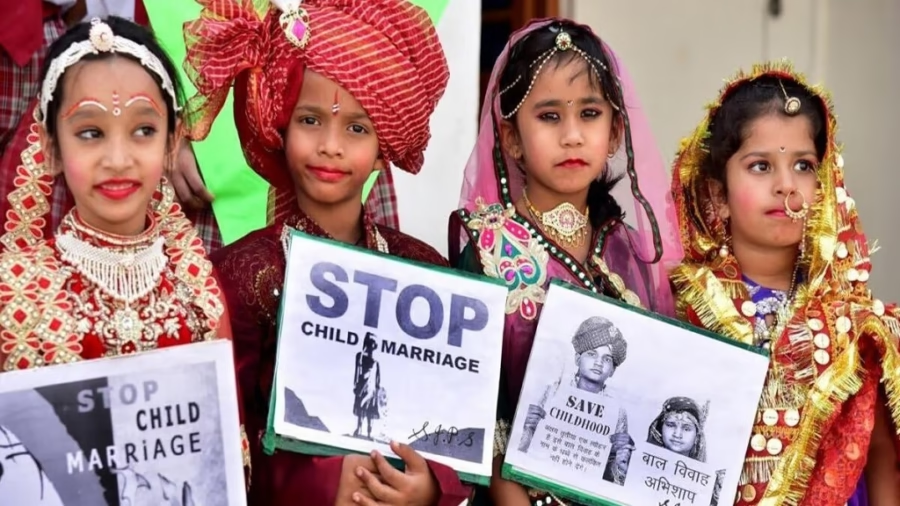
India’s 100-Day Intensive Awareness Campaign thus stands as a beacon of hope that collective will can bring down deep-rooted social evils. It unites the ministries, communities, and citizens in changing awareness into action, thus saving early suffering and unlocking girls’ potential. These campaigns matter because they shift norms, save futures, and build equitable societies-demonstrating that sustained national commitment delivers lasting change. Every pledge, resolution, and prevented marriage advances a brighter Bharat wherein no child has to sacrifice their childhood.