
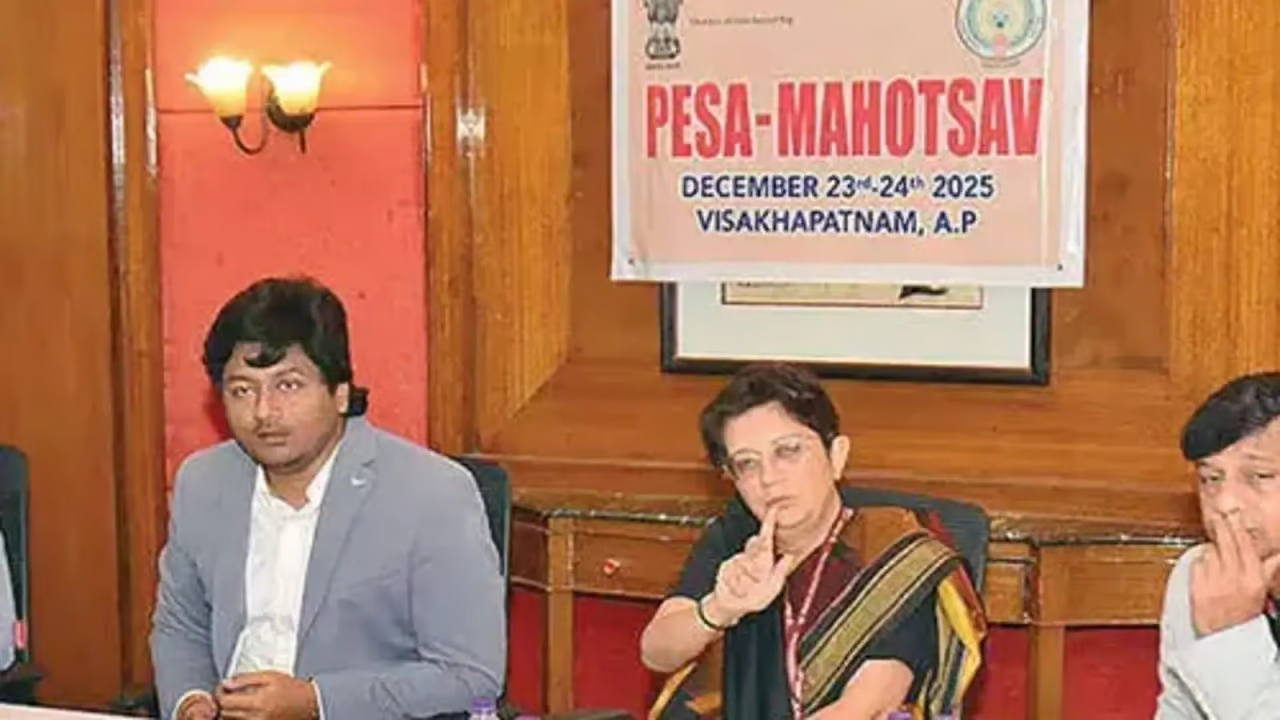
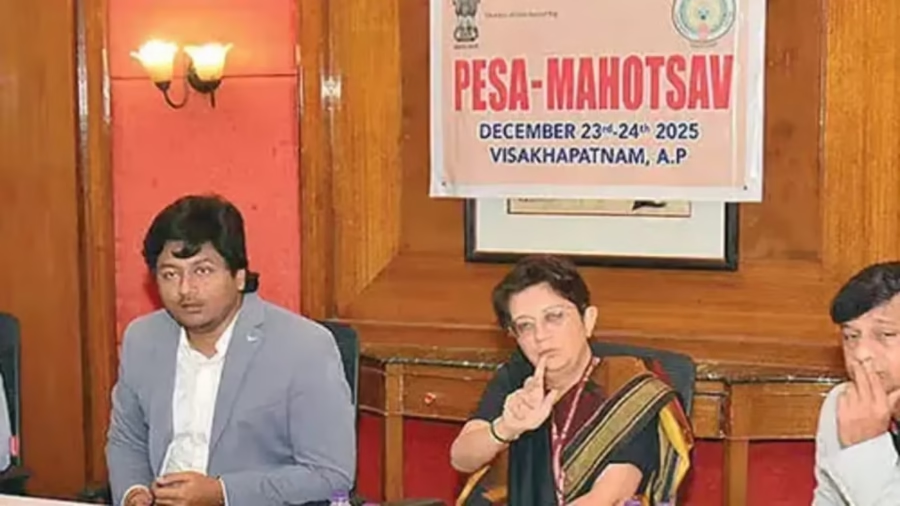
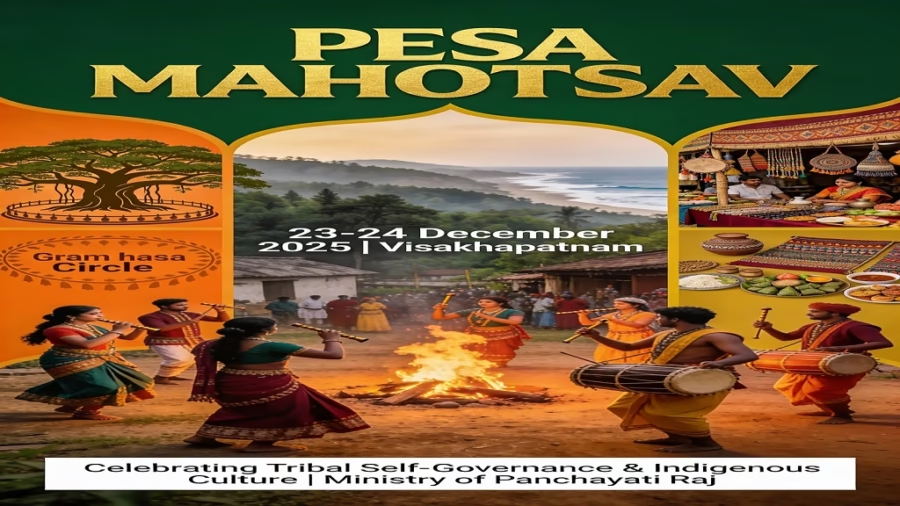
On 21 December 2025, a two-day event, “PESA MAHOTSAV: Utsav Lok Sanskriti Ka”, was organised in Vishakhapatnam, Andhra Pradesh. This event marks the anniversary of the implementation of the Panchayat Extension to Schedule Areas (PESA) Act on 24 December 1996. The two-day national celebration will commence from 23 to 24 December 2025. The focus of the community-driven governance under the PESA Act (1996) reshapes the local democracy in tribal regions. Organised by the Ministry of Panchayati Raj, the festival also intends to empower tribal communities in Fifth Schedule areas. With the motive of strengthening grassroots governance and tribal culture, let’s know the key highlights of the PESA Mahotsav and the initiatives introduced for the welfare of tribal communities.
ALSO READ- DPIIT Launches Digital Sponsorship Module for e-B4 Visa
What is the PESA Act of 1996?
The Provisions of Panchayats (Extension to Schedule Areas) Act, 1996, also known as the PESA Act, give decisive power to the Gram Sabhas in the tribal areas, as it enables the villagers to decide on their own governance and development issues in their areas. The major aim of this law is to safeguard the rights, culture, traditions, and self-government institutions of the tribals. The Act is enforced in Fifth Schedule areas, which include 10 states, such as Andhra Pradesh, to ensure that development in tribal areas is achieved through community-driven, inclusive, and sustainable processes.
As per PESA, Gram Sabhas have powers to:
- Approve Development Plans & Projects
- Manage minor forest produce and natural resources
- Protect customary laws and traditions
- Protect people against land alienation and reclaim land usurped through unlawful means.
- Control local markets, money lending, and village institutions
Fifth Schedule Areas: Fifth Schedule (5th Schedule) Areas in India are designated areas in ten states that contain a large number of tribals.
- These states are treated individually compared to other states in the country, since they have ‘aboriginals’ who are socially and economically backwards, and special attention has to be given to their improvement.
- A special form of administration is also contemplated in the Constitution for such areas, and the entire administrative machinery that exists in a state does not extend to such areas.
Major Updates of PESA Mahotsav-
- The function shall be inaugurated by Deputy Chief Minister and Panchayati Raj Minister Pawan Kalyan. The senior officials of both the Central and Andhra Pradesh Governments shall be present on the occasion.
- Approximately 2,000 participants from all 10 PESA States will be in attendance. These include elected Panchayat members, tribal heads, cultural artists, and sportspersons.
- Some major giveaways that will start from 24 December are:
- PESA Portal for Dissemination of Information and Implementation Monitoring.
- PESA indicators for evaluation on a state level.
- Modules on the PESA Act were delivered in Tribal languages for awareness at the Grassroots level.
- An E-book about the Kinnaur district, Himachal Pradesh, that captures tribal culture and heritage.
- Special Gram Sabhas will be organised in PESA Gram Panchayats in the State of Andhra Pradesh, and simultaneously in all 10 PESA States, on themes such as community participation, natural resource conservation, conservation of customary practices, and issues of livelihoods and social justice.
Key Initiatives to be Implemented in PESA Mahotsav-
- Introduction of the PESA Portal: An online platform will be developed that will facilitate adequate information on the PESA Act. Furthermore, the implementation process shall be monitored. This will all be done in all Scheduled Areas.
- Introduction of PESA Indicators: The Standardised PESA Indicators will be implemented to monitor the implementation of PESA among the states on the basis of progress made. This will also enable policymakers to identify areas of improvement.
- Training Modules in Tribal Languages: Modules for capacity-building and awareness in rural and tribal languages would be introduced to empower the Gram Sabhas and Panchayat representatives.
- Launch of PESA-based e-book: An E-book on Kinnaur district, Himachal Pradesh, on the culture, traditions, and indigenous knowledge systems of the tribes, will also be launched to promote heritage conservation.
- Strengthening Community Led Governance: Collectively, all these efforts seek to empower the tribes, improve participative governance, and ensure the proper, people-oriented implementation of the PESA Act.
ALSO READ- India’s First Wildlife-Safe Road on NH-45 in Madhya Pradesh
Cultural and Heritage Programmes at Mahotsav-
In the PESA Mahotsav, some cultural, sports and programmes are organised to showcase the real tribe vibes:
- Tribal Cultural Performances
The event will include colourful folk dances and cultural performances of various tribal artists from states associated with PESA, showcasing the diversity of the tribal cultures in India.
- Displaying Indigenous Arts & Crafts
Stalls and exhibition sections would be hosting tribal handicrafts, paintings, textiles, and artefacts, thus giving the artists a chance to showcase their skills.
- Traditional Sports & Folk Games
Indigenous sports/folk games exclusive to tribal culture will be organised, emphasising physical heritage, team spirit, and the practice of recreation.
- Heritage Exhibitions
Special exhibitions would be organised to display the history and culture of the tribes, habits of eating and socialising, as well as the tools and indigenous knowledge systems.
- Youth & Community Participation
The youth from tribes, communities, and cultures will be actively engaged, which will help boost cultural pride. Lessons will be learned across generations. Communities will be brought together.
- Promotion of Cultural Preservation
These showcases are intended to preserve, promote, and make tribal heritage mainstream, and strengthen the cultural identities of the communities in the Scheduled Areas within the PESA context.
Special Grams and Discussion-
The following are the Special Gram Sabhas and Thematic Discussions during PESA Mahotsav:
- Special Gram Sabhas in PESA Areas: Special Gram Sabhas will be conducted in PESA-notified Gram Panchayats of Andhra Pradesh and will be attended by representatives from other PESA states.
- One-time simultaneous nationwide observance: Special Gram Sabhas will be held simultaneously in all the 10 PESA states along with Andhra Pradesh, lending national significance to the day.
- Community Participation: It will focus on discussions where the participation of tribal communities is active in decision-making processes on aspects of local governance and development.
- Protection of Natural Resources: The key themes would be community control over forests, land, water, and minor forest produce as envisioned under the PESA Act.
- Preservation of Customary Laws & Traditions: Gram Sabhas shall discuss and mark their decisions on issues of safeguarding the traditional customary practices, governance systems, and cultural identity of the tribal communities.
- Livelihoods & Social Equity: These discussions will highlight the strengthening of sustainable income opportunities, inclusive growth, greater women’s voice in decision-making, and equitable and balanced development in the Scheduled Areas.
- Grassroots Democracy Strengthening: These Gram Sabhas seek to emphasise the centrality of Gram Sabhas in processes of self-government and translate the PESA Act into effective practice at the grassroots level.
Importance of PESA Mahotsav-
- The meeting reiterates the importance of GramSabhas in Scheduled Areas, ensuring that the tribals are themselves part of the decision-making process as required by the PESA Act.
- It acts as an effective platform that brings together delegations from all PESA States and thus enhances awareness regarding the legal rights and duties conferred on the tribal communities.
- Cultural and Heritage Displays showcase the native cultures of the people, their artwork, games, and knowledge. These are important in ensuring the preservation of the identity of the tribe.
- The launch of PESA portals, indicators, and training modules is helpful for the effective implementation of the Act. Encourages community-led development. The prime emphasis of the Thematic Gram Sabhas is on sustainable livelihoods, natural resource management, and social justice.
- The Mahotsav serves as a national forum for best practices in, and collaboration towards, more inclusive governance in Scheduled Areas through coordination by States.
Conclusion-
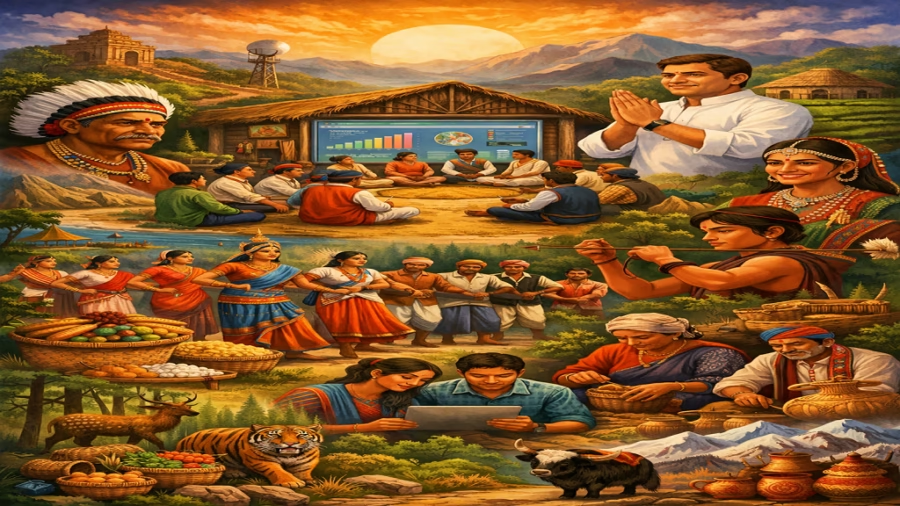
The PESA Mahotsav is an appropriate platform for re-emphasising the spirit of the Panchayats (Extension to Scheduled Areas) Act, 1996, highlighting self-governance of the tribal communities, and this is achieved through participatory democracy. While policy measures are being strengthened through such programs, the inclusion of culture helps promote awareness of the powers of the Gram Sabha, ultimately implementing the PESA Act. The development of online resources, training, and assessment indicators improves the process of transparency and grassroots-level capacity building. Cultural programs, Special Gram Sabhas, and discussions on sustainable livelihoods, resource management, and social justice help celebrate tribal culture, also initiating dialogue among tribal communities.