
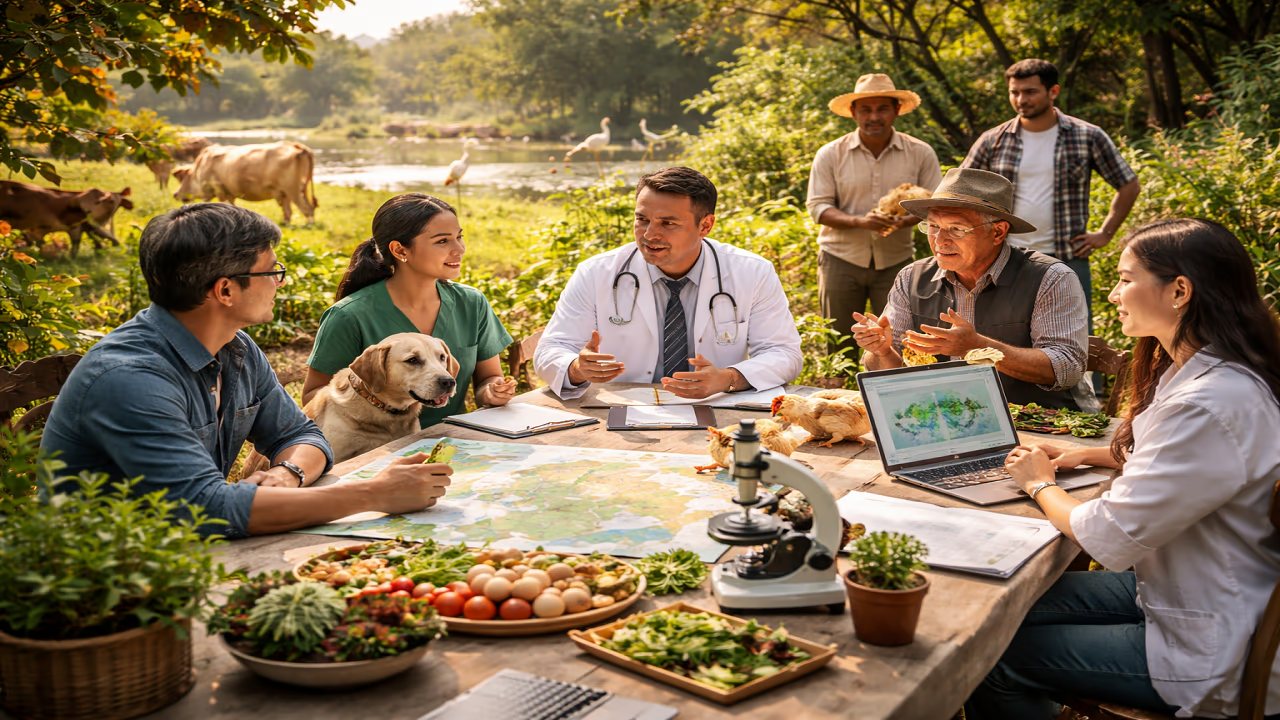
On World Health Day, Indian experts called for the One Health Approach, which protects the country from pandemics, superbugs and climate-related health emergencies. The combined strategy, which connects human, animal, and environmental health needs, needs to be executed immediately due to the dangerous zoonotic threats, including Nipah and bird flu. As India rolls out its National One Health Mission, the target sharpens on avoidance over cure in a biodiversity hotspot teeming with threats.
This comes amid globalising, a fashionable term because it functions as a fundamental principle that states that human health depends on the well-being of animals and plants and entire ecosystems. The meeting functions as a team huddle, which brings together doctors, vets, ecologists and farmers to establish their collective understanding.
ALSO READ- Powering a Greener Future: 1200 MW Kallai-II Project
World Health Day Limelight ‘Together for Health’-
All of WHO’s World Health Days since 1948 have aimed to promote global awareness in the health sector. This year’s theme, “Together for health. Stand with science,” underscores One Health as the backbone for pandemic readiness.
France’s G7-backed International One Health Summit rallied nations for multisectoral industry teamwork, while the WHO’s Global Forum integrated 800 institutions from 80 countries—the UN’s biggest science network ever. These occasions hammer home that isolated efforts won’t cut it against shared dangers such as antimicrobial resistance and vector shifts.
In India, the day amplified calls for coordinated action, drawing from recent outbreaks to stress holistic defences.
Decoding One Health: An Integrated Health Blueprint-
The One Health approach goes beyond summits, pushing for science-led partnerships, positioning India at the forefront of equitable health security. From Nagpur’s new One Health hub to AI surveillance tools, the country is bridging silos for a resilient future.
The WHO defines it as balancing these realms through collaboration at every level, from villages to the UN. The system operates from birth to death by using preventive methods through surveillance and detection methods, which rely on data sharing and operational methods that use joint strategies to tackle challenges. The initiative uses food safety programs and AMR control initiatives, and biodiversity protection strategies to create fair solutions that require multiple sectors to work together for their execution.
The new method enables India to stop its existing practice of handling emergencies through firefighting by establishing preventive measures for safeguarding its territory.

India’s Critical Requirement: Zoonotics in a Biodiversity Giant-
India serves as a zoonotic hotspot because humans share their surroundings with wildlife that inhabit only 2.4% of global land, yet preserve 8% of the world’s animal species. Over 60-70% of emerging infections here jump from animals—Nipah from bats, H5N1 avian flu from birds, rabies from strays.
The world’s largest livestock herd creates ideal conditions for disease transmission because these animals frequently interact with wild animal populations.
Climate change worsens it: deforestation and warming create new mosquito habitats that allow dengue to spread northward while Kyasanur Forest Disease reaches suburban areas.
AMR looms too, with antibiotic overuse in farms and clinics creating untreatable bacteria that spread through contaminated water, soil and food. The health system of India collapses under its multiple health system failures because it lacks the One Health framework.
National One Health Mission: India’s Bold Cross-Sector Leap-
Approved via PM-STIAC, the NOHM integrates 13 ministries under ICMR’s wing, with Nagpur’s National Institute for One Health as ground zero. A dual governance setup—an Executive Committee for policy and a Scientific Steering Committee for tech—drives it forward.
Key pillars include:
- AI-powered early pathogen alerts across species.
- Streamlined R&D for vaccines, diagnostics, and wildlife monitoring.
- A National Wildlife Health Policy to track spillovers.
The country shifts from its emergency response system to establish a comprehensive defence system that protects 1.4 billion citizens and large animal populations, and delicate environmental systems.
Hurdles on the Ground: Silos, Funds, and Eco-Pressures-
The process of implementation encounters multiple challenges, which lead to difficulties.
Human health, veterinary, and environment arms operate in bubbles, starving data flows and joint ops.
- Veterinary networks lack funds, staff, and labs, hobbling animal surveillance.
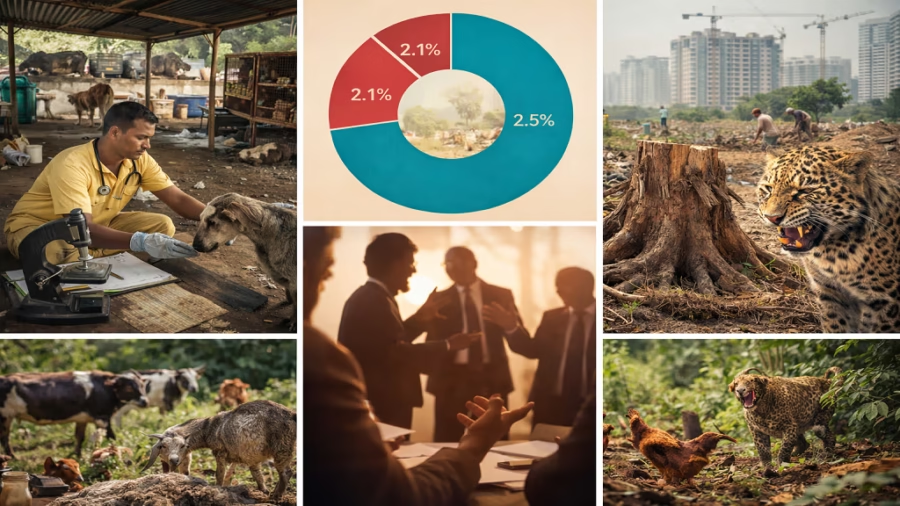
- The government spends 2.1% of GDP, which falls short of the 2.5% target, creating difficulties for primary education funding.
- Urban expansion, together with tree-cutting activities, increases conflicts between people and wildlife, which leads to higher danger levels.
- Political support for the project appears to diminish while the planning process takes too long, and team partnerships dissolve because of missing direct instructions.
- The existing resource shortages, which affect low-resource situations, produce greater problems.
Pathways Forward: Building a Rock-Solid Framework-
Turning vision to reality demands grit:
- Form a statutory One Health body with ministry reps for seamless policies.
- Roll out real-time surveillance fusing human-animal-env data.
- Pump up Ayushman Arogya Mandirs for grassroots detection.
- Clamp antibiotic curbs in livestock to starve AMR.
Global lessons—like G7 action tracks on zoonotics and food risks—offer blueprints. Stronger primary care, public-private ties, and eco-regs can close gaps fast.
ALSO READ- Bharat Tribes Fest 2026 Ends with Record Sales Increment
Global Echoes: Why One Health Defines Health Security-
Worldwide, One Health curbs pandemics, slashes AMR, and guards food chains. FAO-WHO pushes to highlight integrating the environment into health, from vector control to ecosystem integrity. CDC stresses its role in biodiversity, too—healthy habitats mean fewer outbreaks.
India’s mission aligns with these, exporting a model for the Global South where similar threats brew.
Conclusion: Prevention as India’s Health North Star-
Facing pandemics, climate chaos, and resistance, One Health is India’s shield against the triple threat. By weaving farmer, fowl, and forest health into one tapestry, we pivot from damage control to enduring strength. As the WHO urges, stand with science—together for health.
FAQs-
A. It links human, animal, and environmental health for balanced, collaborative disease control—from prevention to response—boosting global security.
A. High wildlife-human overlap, large livestock, zoonotics like Nipah/rabies, AMR, and climate shifts make separate efforts futile.
A. April 7 spotlights themes like 2026’s “Together for health,” rallying science networks for One Health against shared risks.
A. Warming alters vectors, deforestation spikes spillovers—One Health counters via eco-monitoring and land-use smarts.
A. Siloed departments, underfunded vets, low health spend, and habitat loss; fixes involve unified surveillance and stricter AMR rules.
A. Yes—by curbing farm antibiotics, tracking resistance across chains, and fostering cross-sector data for smarter interventions.