
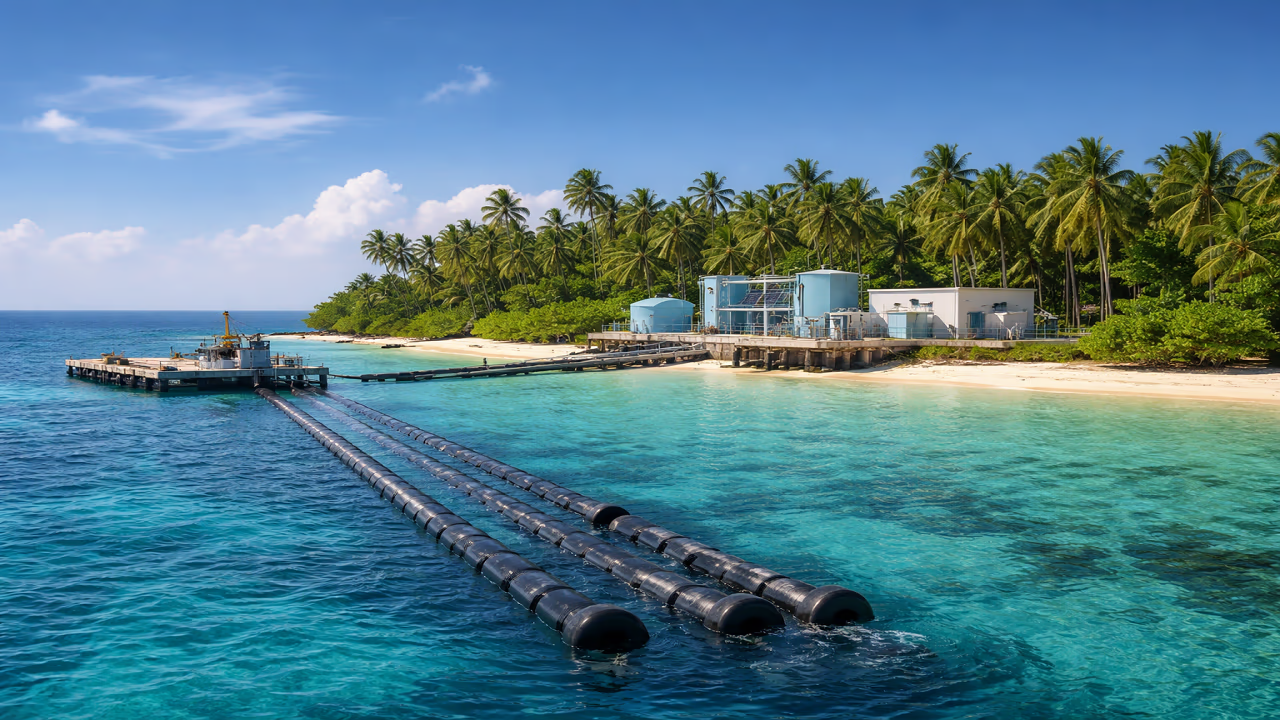
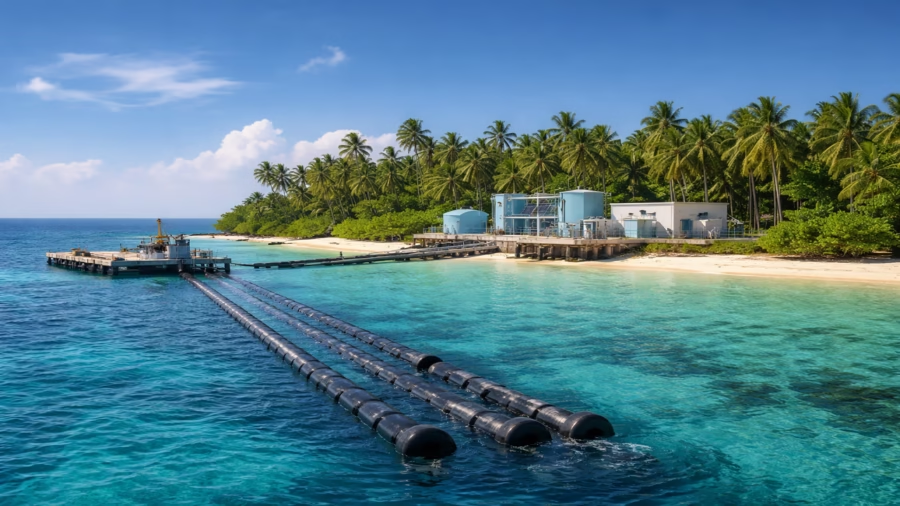
India is implementing ocean technologies to safeguard its water resources and satisfy energy requirements for its islands. The Union Minister for Earth Sciences and Science and Technology, Dr Jitendra Singh, has done his official duties in Lakshadweep by checking the functional potential of Low Temperature Thermal Desalination LTTD plants and evaluating the growth status of the Ocean Thermal Energy Conversion OTEC project, which is now being built in Kavaratti.
The two initiatives leverage natural temperature differences between warm surface water and cold deep-sea water to produce potable water from seawater. The chosen island projects will deliver clean energy solutions by increasing freshwater availability, officials say. The whole history of Lakshadweep has displayed that the islands suffer from drinking water supply problems. The island communities suffer water management difficulties because they have fewer sources of groundwater reserves, which experience salinity intrusion, and they rely more on seasonal rainfall. The government considers that ocean-based technologies can provide a permanent solution to this issue.
ALSO READ- Hormuz Crisis: Why Global Shipping Is Watching
Addressing Water Scarcity in Island Territories-
The geographical conditions of Lakshadweep create problems for maintaining traditional freshwater systems. The islands rely more on rainwater harvesting, together with their few groundwater resources, because they acquire almost no natural freshwater storage capacity. The sources experienced more demand because of increased population, expanded tourist activities, and transforming environmental conditions.
Groundwater quality suffered from rising salinity levels, which affected certain areas of the region. The ministerial review of desalination projects intends to achieve continuous, reliable access to safe drinking water throughout the archipelago. The officials reported that the program has already increased water access across multiple islands while decreasing rainwater system usage.
Understand the Low Temperature Thermal Desalination (LTTD) System-
The National Institute of Ocean Technology (NIOT) developed LTTD technology, which produces drinking water from seawater by utilising natural ocean temperature variations.
How the LTTD Process Works:
The system follows a relatively simple but effective process:
- The desalination plant receives warm surface seawater through its pumping system.
- The warm water transforms into vapour through fast evaporation under low pressure conditions.
- The process requires cold seawater, which operators draw from deep ocean layers that extend 350 to 400 metres below the ocean surface.
- The system produces fresh drinking water through the process of cold water condensing vapour.
- The process uses natural temperature differences to create efficient desalination results because it eliminates the need for heavy mechanical pressure found in traditional desalination methods.
Environmental Advantages of LTTD:
Scientists who are in the project explained that the technology offers many environmental advantages:
- There is no requirement for chemical additives during the desalination method.
- The system ignores increased -pressure filtration membranes.
- It emits a limited ecological impact on near marine ecosystems.
- It removes the discharge of concentrated brine that could trouble coral reefs.
These features make LTTD particularly suitable for ecologically sensitive regions like Lakshadweep.
LTTD Plants Now Operating Across Eight Islands-
The first LTTD plant in Lakshadweep was commissioned in Kavaratti in 2005. After its success, similar facilities were gradually introduced across other islands.
Currently, LTTD-based desalination plants operate on eight islands:
- Kavaratti
- Minicoy
- Agatti
- Amini
- Kalpeni
- Kadamat
- Chetlat
- Kiltan
The drinking water availability has importvised for thousands of residents through these facilities.
The local authority reported that communities have the best sanitation outcomes because their water supply is continuously available, which decreases the occurrence of water-borne diseases.
The second major result from the project showed that people depended less on seasonal rainwater harvesting systems, which faced issues in providing enough water during drought conditions.
Engineering Challenges Beneath the Sea-
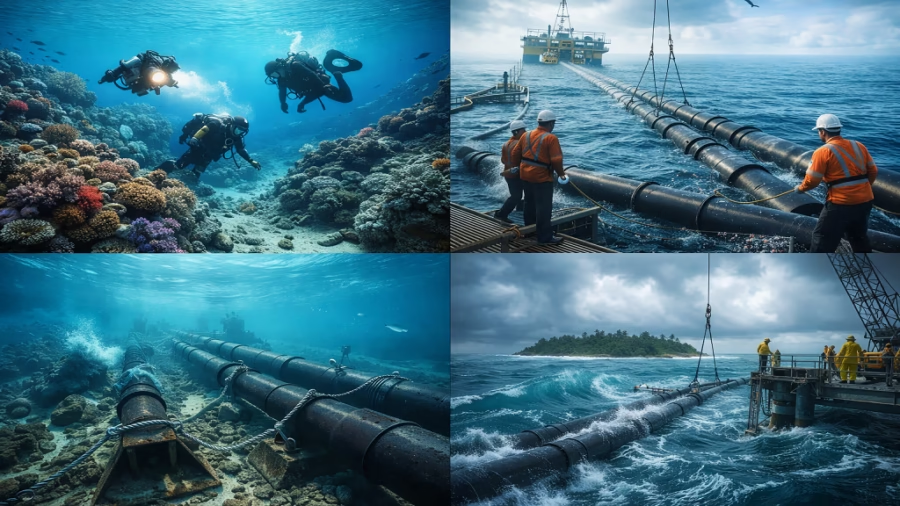
Desalination systems require engineers who possess specialised skills to create operational systems through their planning work. The scientists from NIOT identified deep-sea pipeline installation as the project’s most difficult challenge to complete. The pipelines must extract cold seawater from depths of several hundred meters while maintaining operational stability throughout different ocean conditions.
Important technical challenges included:
- Exploring coral formations and rocky seabed designs
- Managing deep-sea pipeline installation
- Designing systems capable of withstanding strong ocean currents
- Working within narrow construction windows during the monsoon season
The Lakshadweep administration operates the installed desalination plants through local staff who received training despite the challenges that existed during the installation process.
OTEC Project: Generating Energy and Freshwater-
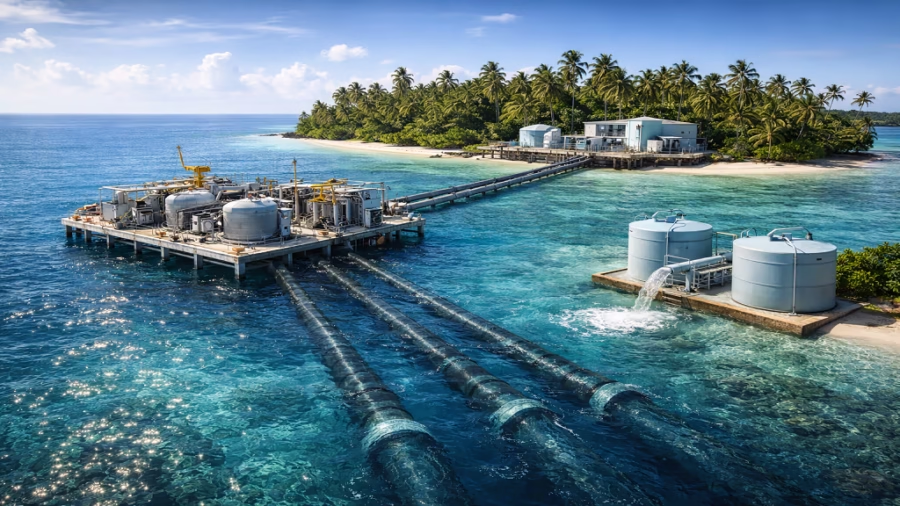
Dr Jitendra Singh inspected during his visit to evaluate the status of the Ocean Thermal Energy Conversion OTEC project, which is presently under construction in Kavaratti. The OTEC system produces drinking water and electricity, while LTTD operates as a desalination system.
How It Works:
The OTEC system relies on warm surface water and cold deep ocean water to produce its electricity. The system uses this difference to acquire energy through a turbine generator. The electricity produced can power desalination units, which convert seawater into drinking water.
Key Advantages of the OTEC system consist of :
- Continuous renewable energy production
- Reduced dependence on diesel-powered electricity systems
- Lower fuel transportation costs for island territories
- Reduced carbon emissions
- Stable freshwater supply
Officials believe the system could eventually replace or supplement diesel-powered desalination units currently used in some island locations.
Support India’s Blue Economy Strategy-
The desalination and renewable energy projects in Lakshadweep belong to India’s big Blue Economy system, which aims to achieve sustainable ocean resource management. The project helps the Deep Ocean Mission, which is a national program that aims to enhance marine research, ocean technology growth and deep-sea research.
Dr Jitendra Singh explained that island areas encounter special difficulties that affect their ability to access water resources and acquire energy. The minister shared that sustainable energy sources for these areas will be achieved through the combination of renewable ocean energy resources with desalination technologies. He explained that the knowledge gained from Lakshadweep would help create solutions for areas with water shortages that include coastal and island regions.
Universal Importance of Ocean Thermal Energy-
Ocean Thermal Energy Conversion remains an emerging technology around the world. Only a few countries have experimented with large-scale OTEC systems. The Lakshadweep project in India establishes India as one of the few countries that explore this renewable energy source. OTEC systems operate best in tropical island areas, according to experts, because these locations experience intense temperature contrasts between warm surface waters and cold deep-sea waters. The Lakshadweep facility will function as an essential test site for upcoming ocean energy technologies if it achieves successful operation.
ALSO READ- PM Modi Israel Visit 2026: 17 MoUs, Important Partnership Uncovered
A Worthy Path Toward Sustainable Island Development-
The island territories will transform their water and energy management systems through the implementation of desalination plants and renewable ocean energy technologies. The people of Lakshadweep experience a significant improvement in their daily lives through better drinking water access. Public health and sanitation services, together with economic activities that include tourism, require a dependable water supply.
The OTEC project will improve island energy security through its upcoming completion while decreasing the island’s need for imported fuel supplies. The combined efforts of these programs demonstrate how ocean technology systems increasingly help India’s coastal and island territories achieve their sustainable development goals.