
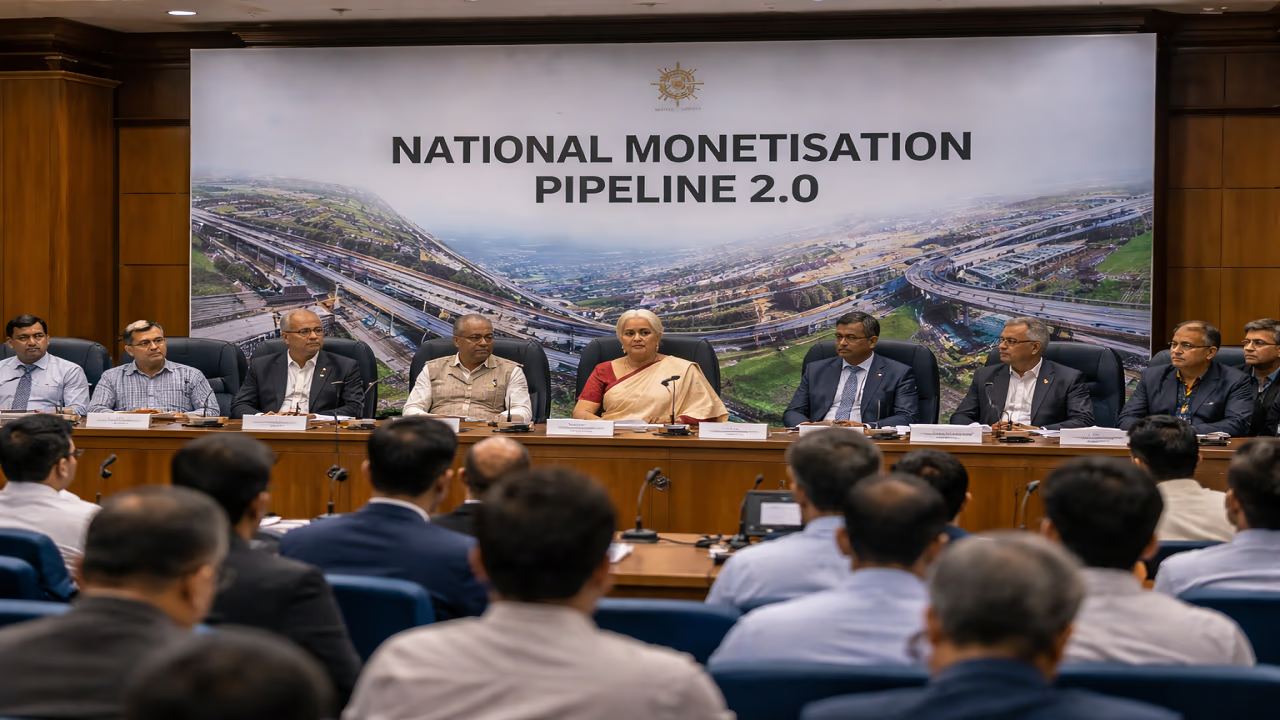
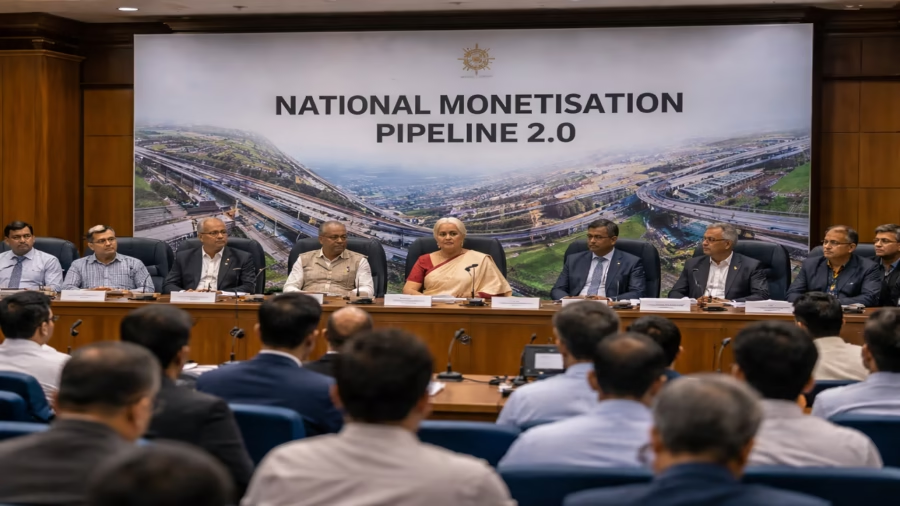
Nirmala Sitharaman, the Union Minister, initiated the NMP 2.0 in New Delhi on February 23, 2026. The scheme, created with the help of NITI Aayog with experts from the capital challenge sector, defines a 5-12 months route to monetise crucial public property from FY 2026 to FY 2030. The program applies the announcement that the Union Budget 2025–26 made for the entire Asset Monetisation Plan 2025–30. The NMP 2.0 program extends the government’s infrastructure funding method through asset recycling, with an estimated pipeline value of ₹16.72 lakh crore and private-sector investments of ₹5.8 lakh crore.
ALSO READ- How to Become a Pilot in India (2026)?
What is National Monetisation Pipeline 2.0?
NMP 2.0 establishes a systematic approach to extract value from public operational assets through public infrastructure by allocating revenue rights to private entities for predetermined durations while ownership stays with the government.
Core Objectives:
- Monetise operational “core assets” across ministries and PSUs
- Recycle capital for new infrastructure creation
- Attract long-term private investment
- Reduce pressure on public finances
The National Monetisation Pipeline 2.0 asset monetisation program uses structured revenue-sharing and leasing, securitisation and public-private partnership (PPP) models to achieve its goals instead of complete asset privatisation methods. The National Monetisation Pipeline 2.0 program estimates its total monetisation value at ₹16.72 lakh crore, which represents more than 2.6 times the size of the initial pipeline.
Mastering from NMP 1.0-
The National Monetisation Pipeline, launched in 2021, established its first operational period between 2021 and 2025 with a monetary purpose of ₹6 lakh crore. authorities’ data display that the goal became almost met, with ninety per cent of the aim being reached.
Finance Minister Sitharaman stated that the NMP 1.0 operational experience through process standardisation and inter-ministerial coordination would serve as the foundation for the upcoming second phase.
NMP 2.0 builds on those learnings with:
- Improved transaction frameworks
- Greater clarity on sectoral pipelines
- Enhanced stakeholder consultations
- Institutional monitoring mechanisms
Sector-Wise Targets Under NMP 2.0-
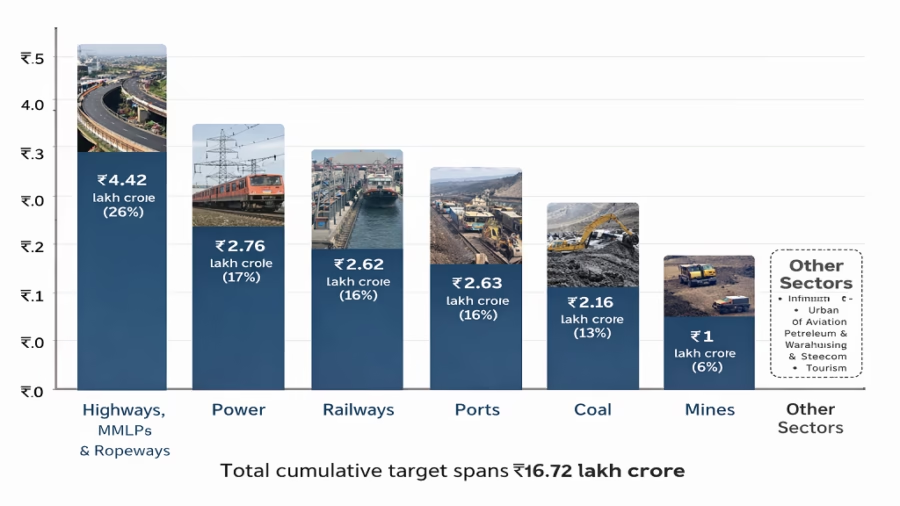
The ₹16.72 lakh crore target spans 12 major sectors. Highways and power account for the largest shares.
Important Contributors:
- Highways, MMLPs & Ropeways: ₹4.42 lakh crore (26%)
- Power: ₹2.76 lakh crore (17%)
- Railways: ₹2.62 lakh crore (16%)
- Ports: ₹2.63 lakh crore (16%)
- Coal: ₹2.16 lakh crore (13%)
- Mines: ₹1 lakh crore (6%)
Other Sectors Include:
- Urban infrastructure
- Civil aviation
- Petroleum & natural gas
- Warehousing and storage
- Telecom
- Tourism
Highways remain the largest component, reflecting India’s continued focus on transport infrastructure as a growth driver.
Annual Phasing: Immediate Scale-Up-
The award targets under NMP 2.0 are phased to increase steadily over five years:
- FY26: ₹2.49 lakh crore
- FY27: ₹3.26 lakh crore
- FY28: ₹3.46 lakh crore
- FY29: ₹3.68 lakh crore
- FY30: ₹3.81 lakh crore
This natural progression allows ministries to systematically get ready with projects while adjusting to market preferences and investor tastes.
Monetisation Framework and Instruments-
NMP 2.0 is essentially NMP 1.0, but NMP 2.0 is the next generation, in terms of resource supplementary instruments.
Important Instruments consist of :
- Public-Private Partnership (PPP) concessions
- Infrastructure Investment Trusts (InvITs)
- Real Estate Investment Trusts (REITs)
- Strategic commercial auctions
- Securitisation of cash flows
- Minority stake divestment in listed entities
The choice of instrument depends on sector characteristics, asset maturity, investor profile, and regulatory conditions.
Where Will the Money Go?

One of the distinguishing features of NMP 2.0 is clarity on fund allocation.
Proceeds may flow into:
- Consolidated Fund of India (for central ministry assets)
- PSU or Port Authority accounts (for enterprise-led monetisation)
- State Consolidated Funds (especially for mining and coal royalties)
- Direct private investment (in projects requiring construction or maintenance upgrades)
The government has indicated that the largest share is expected to flow into the Consolidated Fund of India, which will be followed by direct private investments.
Governance and Oversight-
The Core Group of Secretaries on Asset Monetisation (CGAM) will conduct monitoring of the program with their empowered status under the leadership of the Cabinet Secretary.
NITI Aayog will continue to coordinate with:
- Ministry of Finance
- Infrastructure line ministries
- Law and regulatory bodies
- Chief Economic Adviser
The NMP 2.0 is presented by the government as a “whole of government” initiative made for simplifying processes and improving the execution of transactions.
Why NMP 2.0 Matters for India-
NMP 2.0 is central to India’s infrastructure financing strategy.
It supports:
- Capital recycling into new greenfield projects
- Reduced fiscal strain
- Increased private participation
- Improved asset maintenance and operational efficiency
- The broader goal of “Viksit Bharat”
The process of asset monetisation establishes an ongoing investment cycle that operates independently from budgetary funding. The authorities make use of operational asset monetisation to generate capital, which funds new infrastructure projects while retaining debt ranges beneath manipulate.
Potential Demanding Situations-
Whilst ambitious, the plan faces sensible hurdles.
ALSO READ- Sarvam AI: From Startup to Sovereign AI Power
Vital risks include:
- Fluctuating market conditions
- Investor confidence levels
- Legal and regulatory delays
- Valuation disputes
- Execution capacity across ministries
NMP 2.0 indicative values are subject to change based on market demand and transaction timing.
Conclusion: A Larger Push for Infrastructure Financing-
The National Monetisation Pipeline 2.0 expansion represents a major enhancement to India’s asset monetisation program. The government uses infrastructure recycling as its main strategy for economic development by setting a target of ₹16.72 lakh crore. The NMP 2.0 program can improve India’s infrastructure system and strengthen public-private partnerships while increasing capital investment over five years. The plan will succeed based on how well markets respond, how precisely institutions carry out their duties and how agencies work together. The NMP 2.0 program contains both ambitious goals and potential benefits for the future development of India’s infrastructure financing sector.