
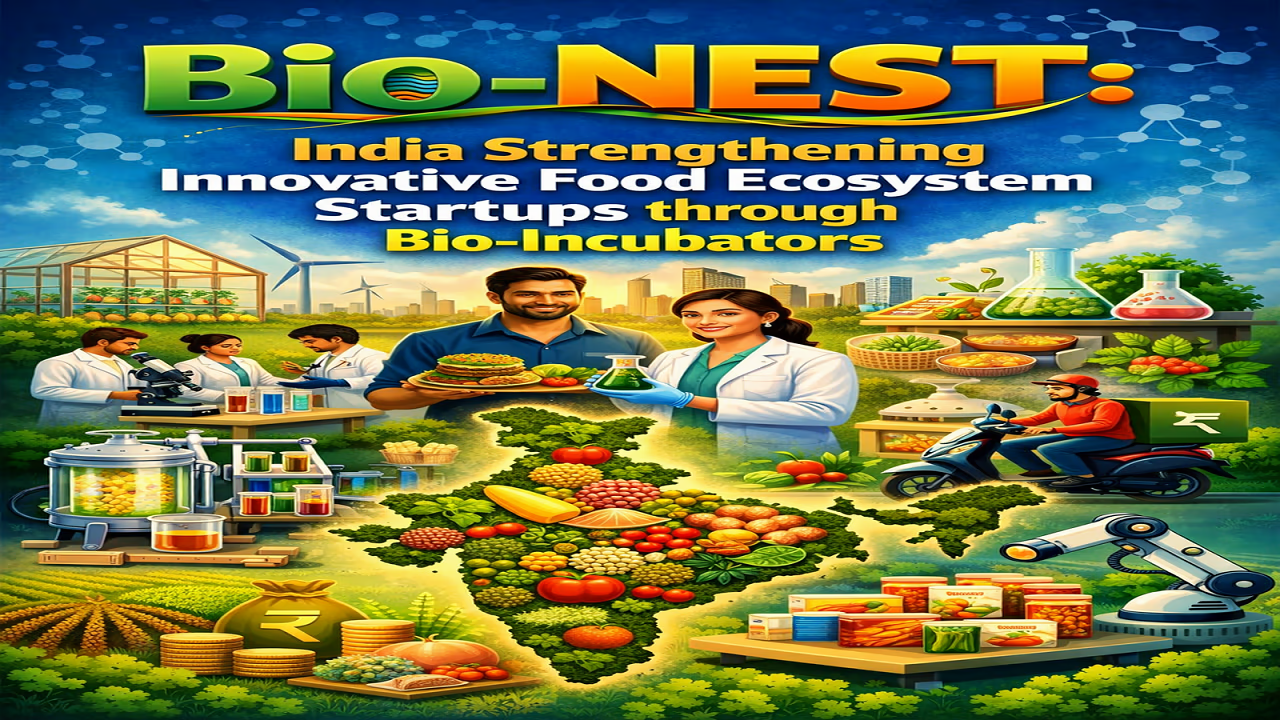
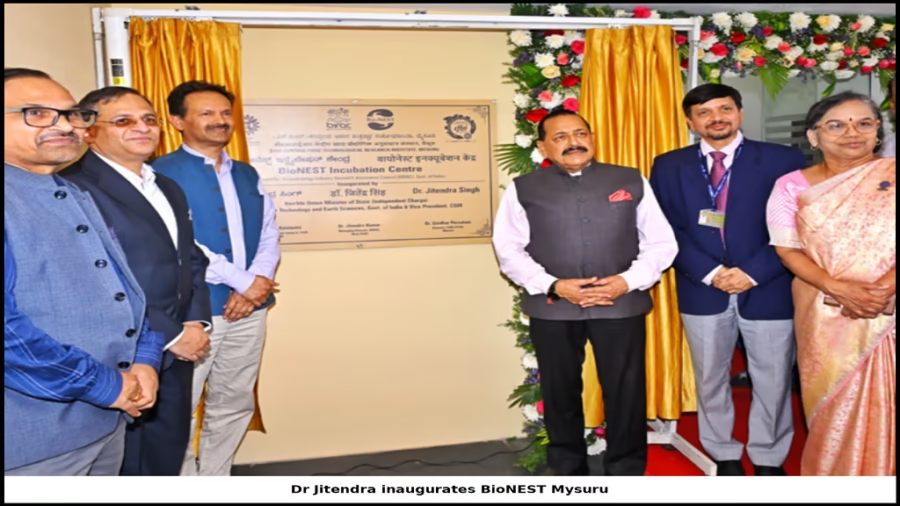
The BIRAC in March 2026 has initiated a nationwide incubator programme, called BioNEST, which was officially launched by the Union Minister of Science & Technology, Dr Jitendra Singh, to foster the biotech innovation ecosystem in India. The development of incubation centres is essential for the biotech sector innovation, which needs landing places to run its projects, unlike I.T. startups. The BIRAC-BioNEST was launched at the Central Food Technology and Research Institute (CFTRI). This implementation is a revolutionary step towards India’s food ecosystem, a robust system not based on traditional agricultural inputs but on science-based, biotech startups.
ALSO READ- FCRA Amendment Bill 2026
What is BioNEST by BIRAC?
BioNEST or Bio-Incubation Nurturing Entrepreneurship for Scaling Technologies is an innovative scheme launched by BIRAC (Biotechnology Industry Research Assistance Council) with the Department of Biotechnology. The initiative was inaugurated by Dr Jitendra Singh (Union Minister of Science & Tech). The concept underlying the BioNEST scheme is the establishment of advanced facilities that could assist the entrepreneurs in developing innovative biotech/food-tech technologies at the lab level into practical commercial products.
More than 420 crores are invested in this project, with more than 10 lakh square feet covered to build incubation centres around India and deploy more than 2500 incubatees. BioNEST is not a single institution but a network of 73 bio-incubators that are located at different places in India to cover biotech innovations from different regions.
Here is the list of some BioNESTs situated in different parts of India:
- BioNEST-CSIR-CFTRI at Mysuru
- Banaras Hindu University BHU-BioNEST
- University of Hyderabad (ASPIRE-BioNEST)
- Indigram Lab Foundation (ILF-BioNEST)
- BioNEST DMIHER
- Bioinnovation Centre in Bangalore
- Amal Jyothi Rural Technologies Business Incubator
- NIPER-Ahmedabad BioNEST
- IIT Delhi (FITT) BioNEST
- IKP Knowledge Park (Hyderabad/Bangalore)
- IIT Madras HTIC MedTech Incubator
- KIIT-Technology Business Incubator, Bhubaneshwar
- BSC BioNEST Bio-Incubator, Faridabad
Role of BioNEST in a Food Startup-
The Indian food sector is full of potential for creating a disruption within the food and agricultural sectors via techniques like bio-processing, fermentation, probiotics, botanical extraction, and nutraceuticals. Nevertheless, most innovative ideas never materialise owing to reasons such as:
- Expensive infrastructural costs and pilot plant setup.
- Lack of expertise regarding regulations (FSSAI, Biosafety, Clinical Validation).
- Weak industrial contacts and financial backing.
BIRAC Bio-NEST reduces these gaps by enhancing the areas through:
- Allowing the innovators to access the features such as fermenters, column chromatography units, and analytical tools that are subsidised for research purposes.
- The innovators will get special advice from the experts on how to conduct the experiments and scale up from the most knowledgeable people.
- Introduction of startups to investors, corporations, and pilot-scale production facilities through various events and collaboration MOUs.
- For instance, a startup focusing on producing lower-glycemic index (low GI) millet food items or health-enhancing probiotics through their food technology solutions would find Bio-NEST a great starting point for validation purposes.
Features of the BIRAC BioNEST-
Here are some important features of the BIRAC BioNEST that will foster the future of India’s food ecosystem:
- Advanced facilities and techniques: The BioNEST Incubation Centre was built as a contemporary hub equipped with incubator suites and facilities to help entrepreneurs in research, development, and regulations. Its main aim is to develop innovative science into commercial products in the areas of food bioprocessing and biotechnology for growth in food procurement and standards in India.
- New Fields And Specific To The Industry: The companies that have been grown by the incubation centre are engaged in some of the latest areas such as nutraceuticals, precision fermentation, probiotics, postbiotics, CRISPR technologies, and botanicals. This highlights the phenomenon of venturing into high-value-added areas of food technology and biotechnology.
- Industry Collaboration and Technology Transfer: In addition to this, four MOUs were signed, and two new products were introduced at the event, highlighting active industry collaboration. It marks 75 years of BIRAC’s life as an organisation with a successful transfer of 450 technologies to various licensing organisations. This project continues to get acclaim at both the national and international levels, thereby emphasising the role of CFTRI in establishing the link between research, incubation, and entrepreneurship.
- Startups, Growth & Innovations: Till March 2026, the centre had helped nurture 26 startups, which included current startups along with startups that have moved on from here. Some of the startups have been able to commercialise their products as well. The total number of 12 patents and innovations was published.
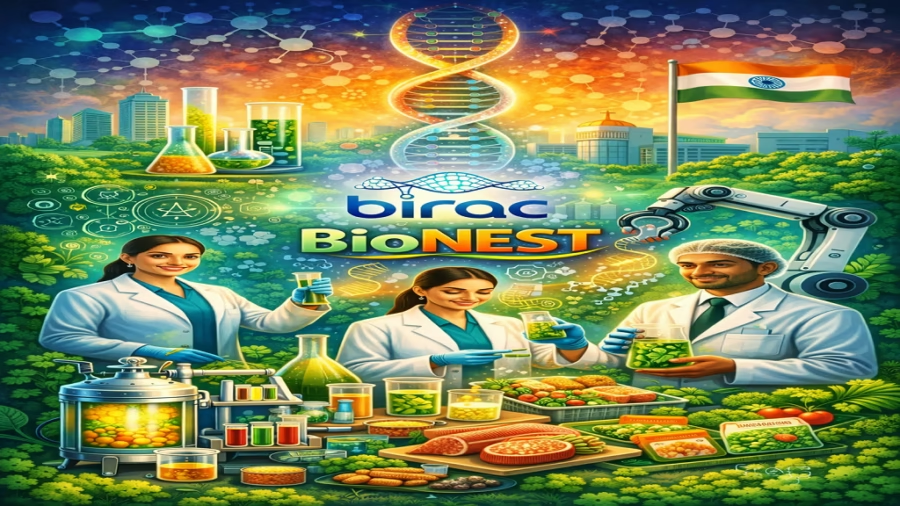
How are the BioNEST Foster Startups of the Indian Food Ecosystem?
The Birac BioNEST Innovation was implemented with the thought of accelerating the startup’s growth and encouraging new ideas to enhance the food ecosystem in India:
- Infrastructure Development with R&D: The purpose of the BioNEST is to create a strong infrastructure for startups and an incubation centre that consists of facilities required to support them. With BIRAC BioNEST, you will get access to advanced food laboratories for testing, pilot-scale production units, and research tools for developing food products.
- Access to Financial Assistance: Earlier startups and innovations faced financial assistance or funds that led to a slow pace of biotechnology growth in India. With BIG (Biotechnology Ignition Grant), one can secure funding and grants, access to funding-related government schemes, and invite collaborators and investors to become partners in the startups.
- Mentoring and Development of Skills: BioNEST assist start-up firms by giving them mentoring and guidance from specialised professionals in various areas, including food technology and safety, business strategies and growth, and regulatory compliance (FSSAI).
- Validation and Regulations: With the assistance of CFTRI and others, numerous food-tech start-ups are able to undergo stability tests, safety testing, and human efficacy trials.
- Market Entry and Networking: The network at BIRAC BioNEST serves a crucial function since it is instrumental in helping start-ups interact with their potential partners, including industries, logistics networks, distribution networks, and markets.
BIRAC BioNEST Impact on the Indian Food Sector-
The start-up enterprises that have received support from BioNEST are not just smartly tackling the existing biotechnology system but also addressing problems such as food security, nutrition, and waste management. BioNEST incubators have greatly helped in boosting and advancing the Indian Food Ecosystem by providing an environment with assistance and a platform to showcase:
- Sustainable and environmentally friendly food production for safe, secure and nutrition-rich food production benefitting all sections of society.
- Closing the gap between laboratory research and commercial products to produce high-quality food products with optimum standards.
- By experimenting with millet-based foods, low-GI products, and functional ingredients, Bio-NEST ensures that India transitions from exporting raw materials to exporting nutrition-tech innovations.
- Over 2000 biotech startups have been identified within the larger Startup India-BIRAC ecosystem, with Bio-NEST being a central component of the delivery framework.
- The number of patents and publications generated by companies incubated in CFTRI and other Bio-NEST nodes is indicative of the indigenous IP ecosystem in food-tech innovations for research-based entrepreneurship.
Conclusion-
The BioNEST Incubator Centres by BICAR have been a driving force behind nurturing innovations in India’s food sector. They provide all that is needed for the success of an idea, be it facilities, money, direction, and networking possibilities. As India prepares itself to be among the top players in terms of food technology, initiatives like BioNEST will go a long way in shaping its technological future.